The Hypothalamus and Posterior Pituitary: Hormonal Regulation
This article explains the neuroendocrine connection between the hypothalamus and the posterior pituitary gland, detailing the synthesis, release, and functions of key hormones like Arginine Vasopressin (AVP) and Oxytocin (OT). It covers their roles in water homeostasis, reproductive functions, and uterine contractions.
In the complex landscape of the endocrine system, the relationship between the brain and the body is perhaps most elegantly demonstrated by the connection between the hypothalamus and the posterior pituitary gland. While many endocrine glands function by producing their own hormones in response to signals, the posterior pituitary operates differently. It acts as a specialized neuroendocrine relay station, storing and releasing hormones that are actually synthesized within the neurons of the hypothalamus.
This article explores the two primary neurohormones managed through this pathway: Arginine Vasopressin (AVP) and Oxytocin (OT), detailing their synthesis, release, and vital physiological targets.
The Hypothalamic-Posterior Pituitary Axis
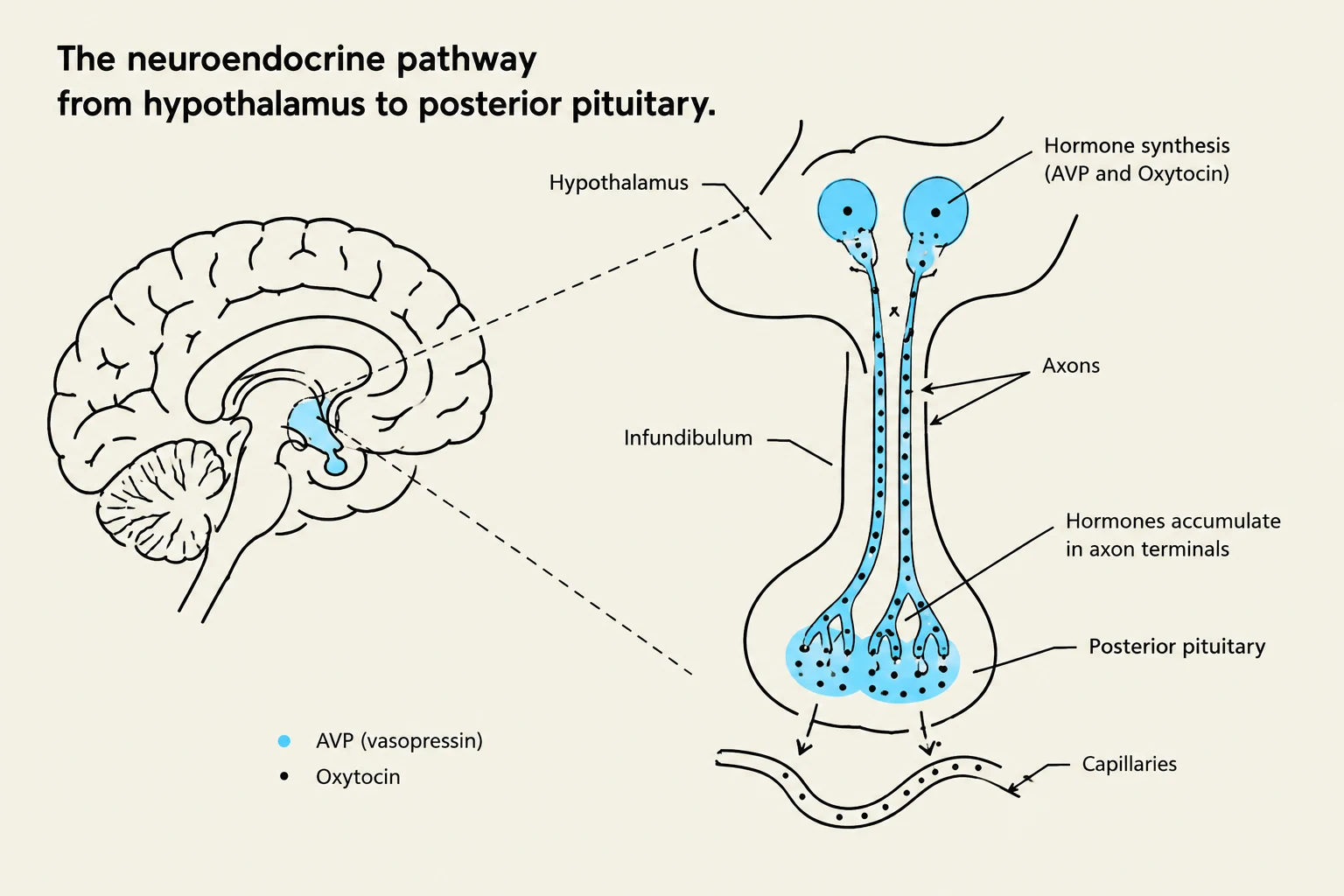
Diagram illustrating the neuroendocrine pathway from the hypothalamus to the posterior pituitary, showing hormone synthesis and release.
To understand these hormones, one must first distinguish between the two main parts of the pituitary gland (hypophysis). The anterior pituitary is a true glandular structure that produces its own hormones (such as GH, TSH, and ACTH) under the direction of "releasing hormones" from the hypothalamus.
In contrast, the posterior pituitary does not synthesize hormones. Instead, it serves as a storage and release site for hypothalamus hormones. The hormones are produced in the cell bodies of neurons located in the hypothalamus, transported down their axons, and stored in the posterior pituitary until a signal triggers their release into the bloodstream.
Exam Tip: If a question asks which part of the pituitary synthesizes its own hormones, the answer is the Anterior Pituitary. If it asks which part stores and releases hormones produced by the hypothalamus, the answer is the Posterior Pituitary.
Arginine Vasopressin (AVP) and Water Homeostasis
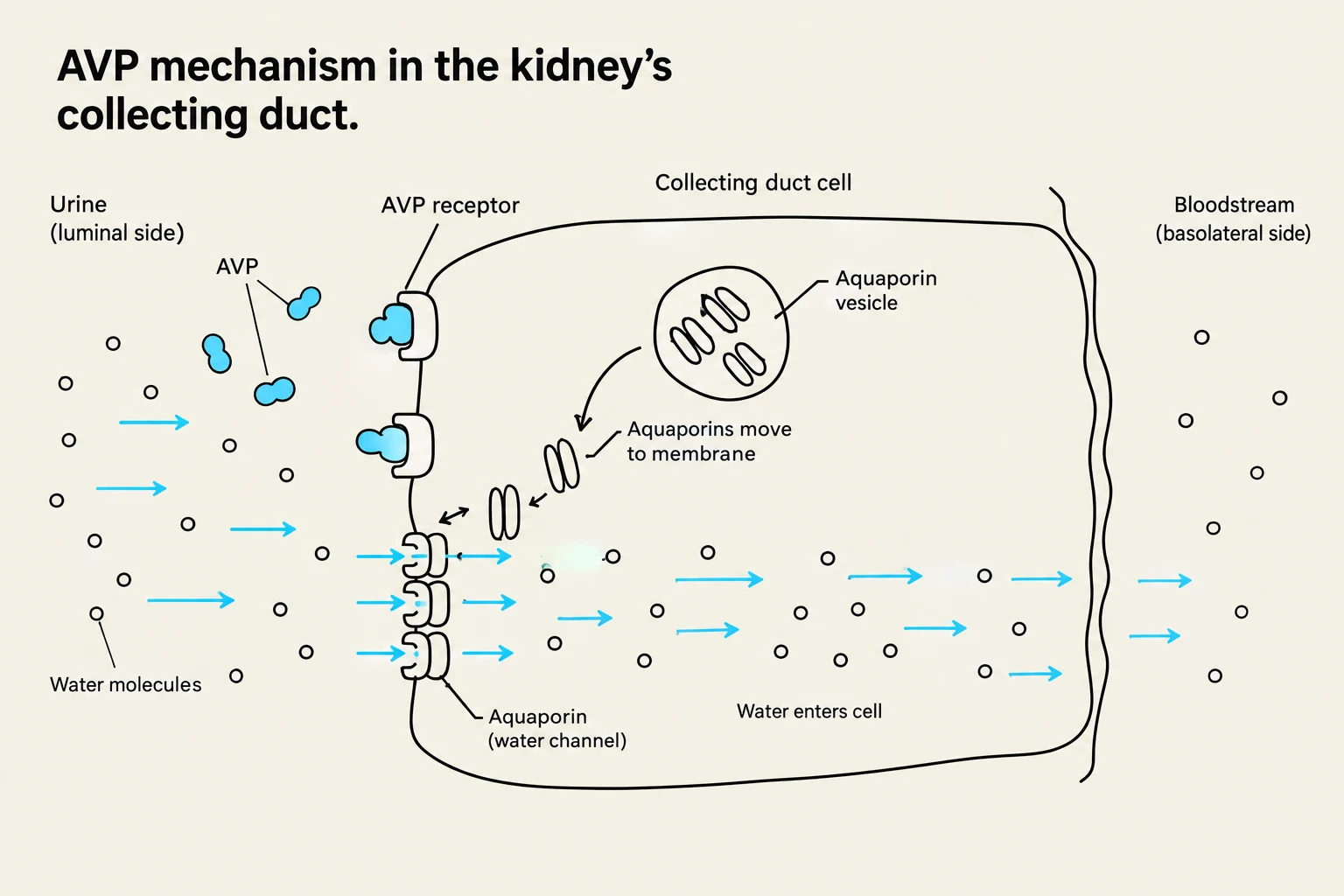
This diagram illustrates the mechanism of Antidiuretic Hormone (ADH), also known as vasopressin (AVP), in the collecting duct of the kidney. AVP binds to receptors on the collecting duct cells, triggering the insertion of aquaporin channels into the cell membrane. This increases water reabsorption from the urine into the bloodstream, helping to regulate body fluid balance.Arginine Vasopressin (AVP), frequently referred to as Antidiuretic Hormone (ADH), is a critical regulator of fluid balance and blood pressure.
Synthesis and Mechanism
AVP is synthesized in the hypothalamus and released via the posterior pituitary. Its primary mission is to manage the body's water levels by targeting the kidneys.
Target: The Collecting Duct
The specific target organ for AVP is the collecting duct within the renal system. When the body detects dehydration or high blood osmolarity, AVP is released. Its mechanism of action involves:
Binding to receptors in the collecting duct.
Increasing the water permeability of the duct walls.
Facilitating the reabsorption of water from the urine back into the bloodstream.
By increasing water permeability, AVP ensures that the body retains water, thereby concentrating the urine and maintaining stable blood pressure and hydration levels.
Oxytocin (OT) and Reproductive Functions
The second major hormone managed by this neuroendocrine pathway is Oxytocin (OT). Like AVP, it is synthesized in the hypothalamus and released through the posterior pituitary. While AVP focuses on fluid homeostasis, Oxytocin is primarily involved in reproductive and lactational processes.
Oxytocin targets two distinct physiological systems:
1. The Uterus
During childbirth, Oxytocin plays a fundamental role in labor. It targets the smooth muscle of the uterus to stimulate uterine contractions. This positive feedback loop ensures that contractions become strong enough to facilitate delivery.
2. The Mammary Glands
In the context of lactation, Oxytocin is essential for the "let-down" reflex. It targets the mammary glands to facilitate milk ejection. This is distinct from milk production (which is regulated by Prolactin from the anterior pituitary); Oxytocin is specifically responsible for the ejection of the milk already present.
Summary Table: Posterior Pituitary Hormones
The following table summarizes the key differences between the two hormones managed by the posterior pituitary axis:
Hormone
Synthesis Site
Primary Target
Physiological Effect
AVP (ADH)
Hypothalamus
Collecting Duct
Increases water permeability; water reabsorption
OT (Oxytocin)
Hypothalamus
Uterus
Stimulates uterine contractions
OT (Oxytocin)
Hypothalamus
Mammary Gland
Facilitates milk ejection
Study Check: Can you distinguish between the roles of the anterior and posterior pituitary? Remember:
Anterior: Produces hormones (e.g., PRL for milk production).
Posterior: Releases hypothalamic hormones (e.g., OT for milk ejection).
By coordinating these neurohormones, the hypothalamus and posterior pituitary ensure that the body can respond rapidly to changes in hydration, the onset of labor, and the needs of nursing infants.
Keep reading for free.
Create an account to finish this reading and make it part of your study routine.