


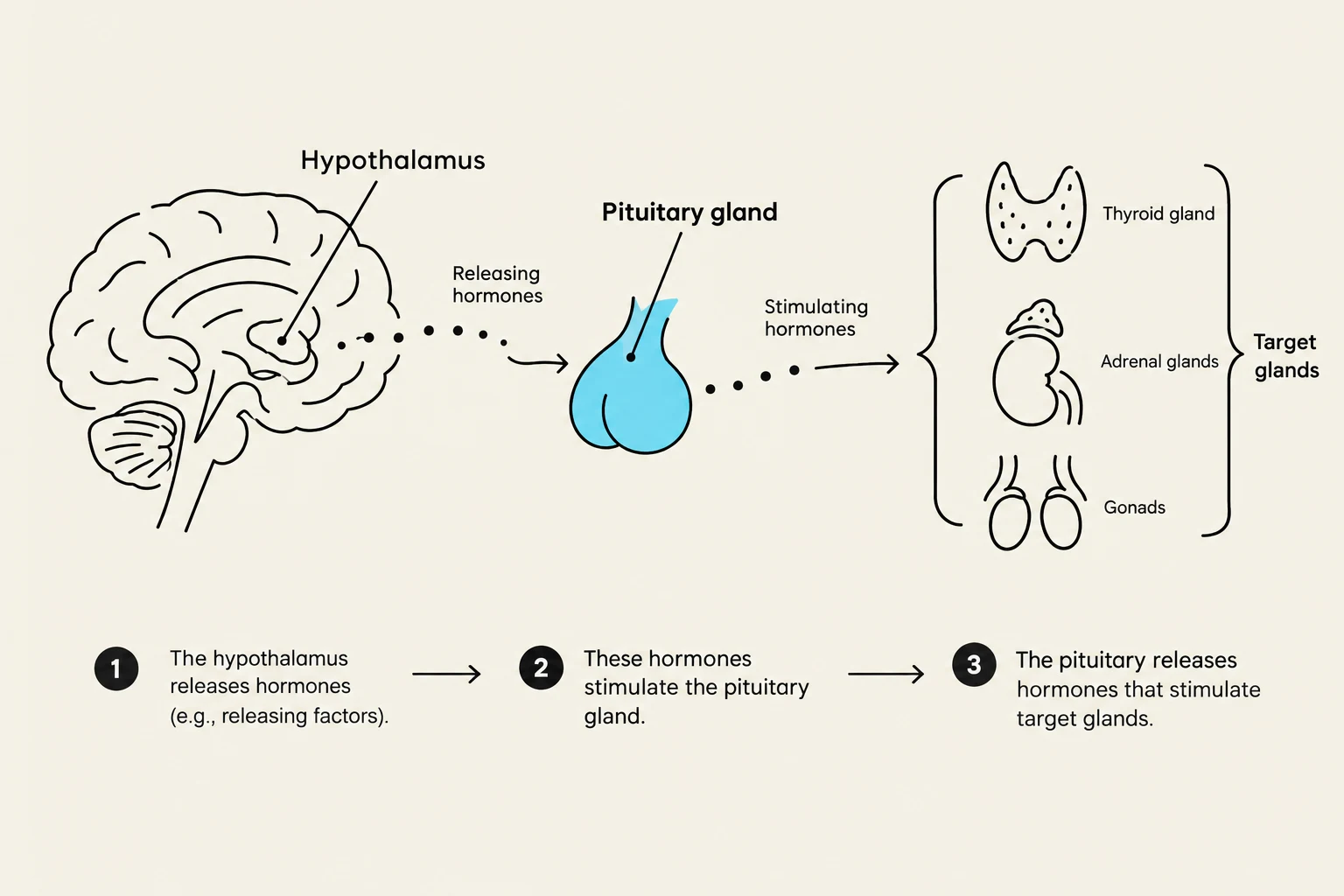
The endocrine system is a sophisticated communication network that ensures the body maintains homeostasis—a state of relatively stable dynamic equilibrium between interdependent elements. At the heart of this regulation lies the hypothalamic-pituitary endocrine system, a master control center that coordinates various physiological processes by communicating with distant target glands.
The Three-Tiered Axis
To maintain precise control over bodily functions, the endocrine system typically operates through a three-tiered axis. This hierarchy ensures that hormonal signals are amplified and regulated with high sensitivity.
- The Hypothalamus: Acts as the command center, secreting releasing or inhibiting hormones.
- The Pituitary Gland: Acts as the relay station, responding to hypothalamic signals by releasing its own hormones.
- The Target Gland: Responds to pituitary hormones by secreting final hormones that act on peripheral tissues.
The Anatomy of Control: Anterior vs. Posterior Pituitary
The pituitary gland is divided into two distinct functional units: the anterior pituitary (adenohypophysis) and the posterior pituitary (neurohypophysis). While they are physically connected via the pituitary stalk, they utilize entirely different methods of communication and hormone transport.
The Anterior Pituitary and the Hypophyseal Portal System
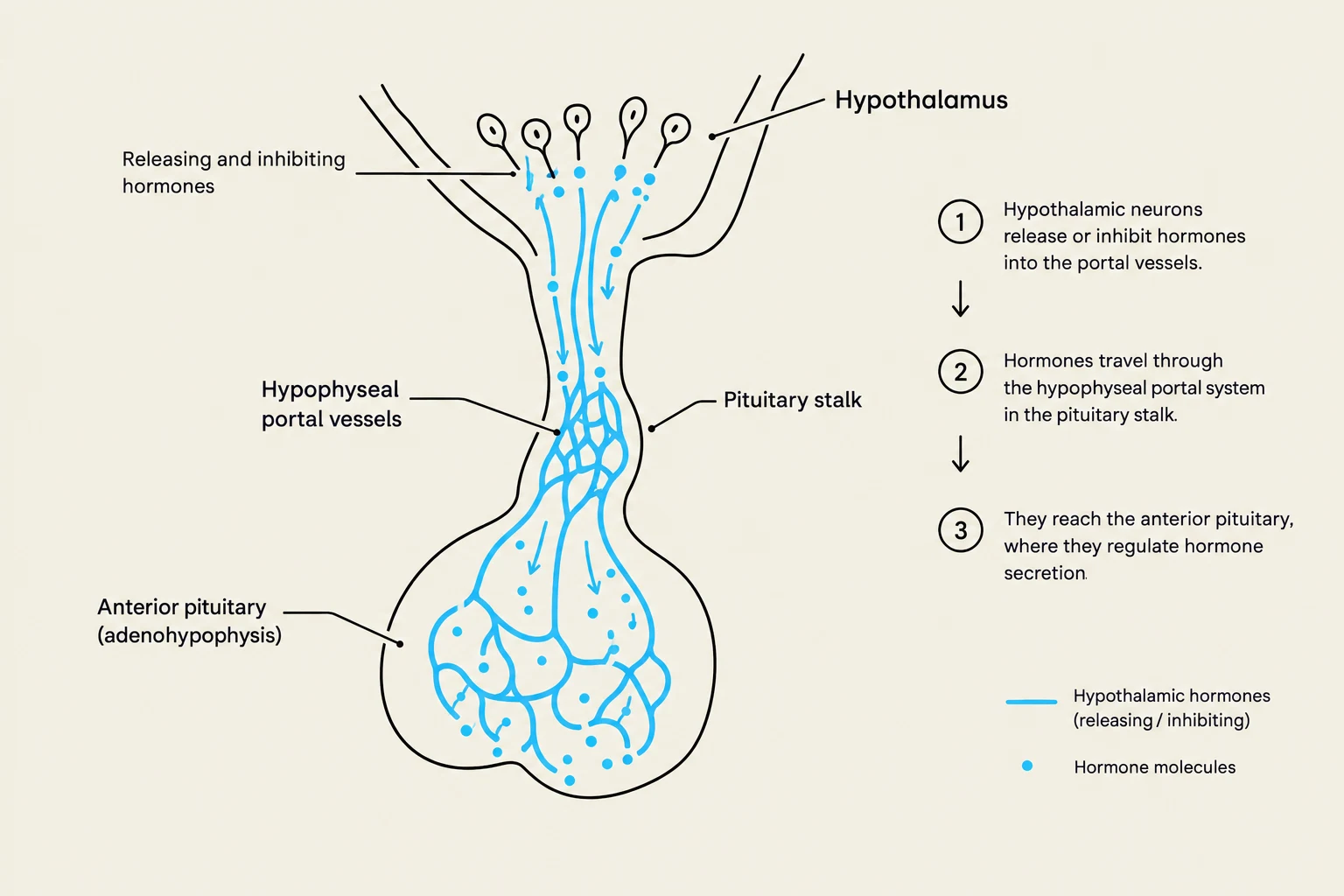
The anterior pituitary is a glandular structure that produces and secretes six major hormones. However, it does not receive direct neural stimulation. Instead, it is controlled by the hypothalamus via the hypophyseal portal system. This is a specialized network of blood vessels that carries stimulatory releasing factors and inhibitory hypothalamic factors directly from the hypothalamus to the anterior pituitary.
Keep reading for free.
Create an account to finish this reading and make it part of your study routine.
Continue reading freeAlready have an account? Log in
Updated