Explores the human microbiome, defining pathogens, the stages of pathogenesis, and disease transmission. Covers concepts like microbial antagonism, virulence factors, and disease progression.
Every human being is a walking ecosystem. We are not just single organisms, but complex hosts to trillions of microorganisms that form the human microbiome. While we often associate "bacteria" with disease, the vast majority of these microbes are essential to our survival, helping to regulate our health and protect us from external threats. Understanding the delicate balance between these resident microbes and invading pathogens is fundamental to the study of microbiology and infectious disease.
The Human Microbiome: Residents and Visitors
The human microbiome is the total collection of microorganisms unique to an individual. This microbial community is not static; it is a dynamic collection shaped by a person's genetics, diet, environment, age, sex, and even stress levels.
Microbes within the host are generally categorized into two groups based on their duration of stay:
Colonized bacteria: These are resident microbes that live on or in the host for long periods, ranging from days to many years.
Transient bacteria: These are "visitors" that exist on or in the host for only a short time, typically hours to days.
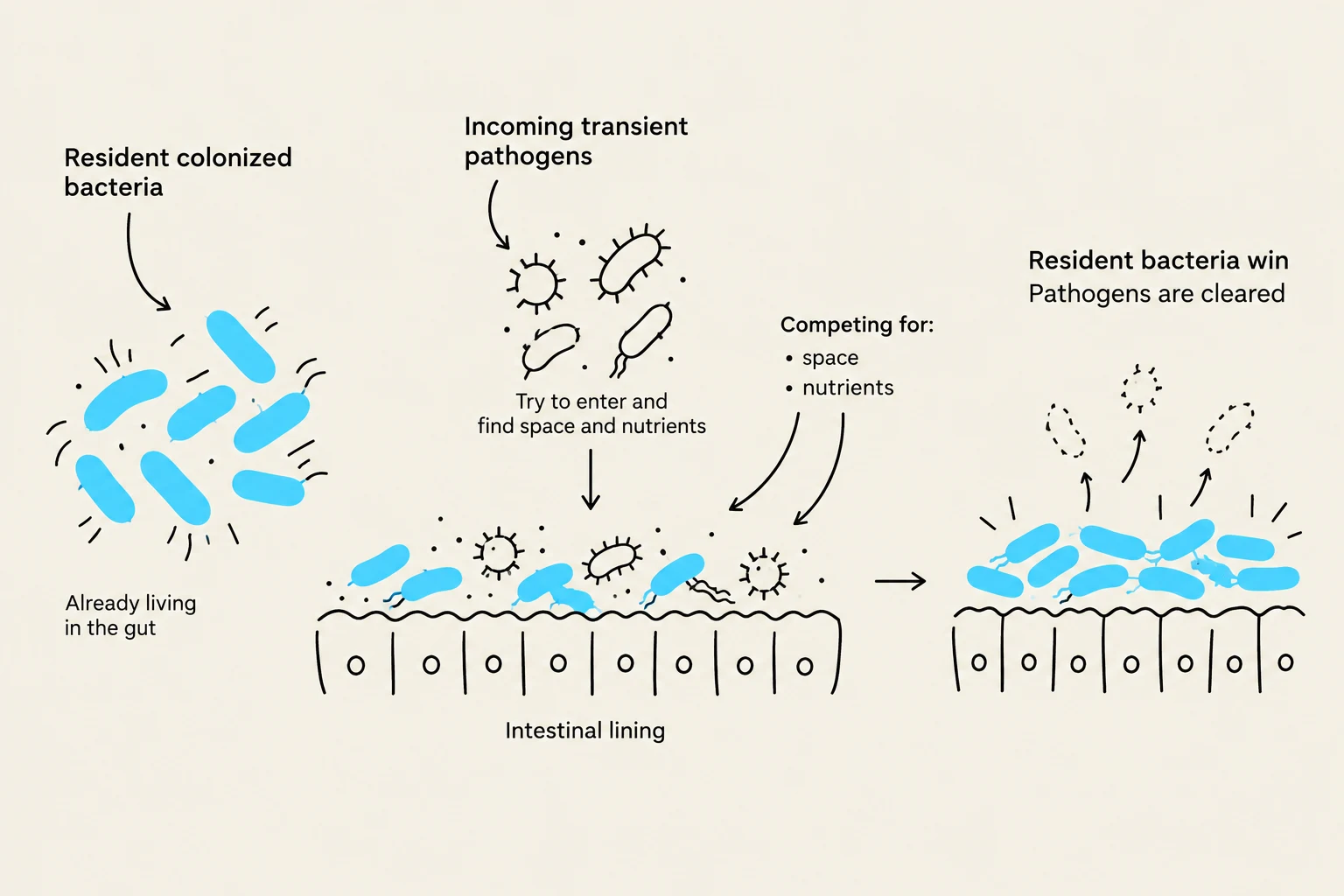
One of the most important roles of the microbiome is microbial antagonism. This is a protective mechanism where our resident, non-pathogenic microbes prevent the growth of dangerous pathogens by competing for space and nutrients or by producing inhibitory substances.
Diagram illustrating how resident gut bacteria compete with and clear incoming transient pathogens.
Exam Tip: Remember that even healthy individuals harbor potentially dangerous pathogens in low numbers. It is the microbial antagonism of the resident microbiome that keeps these pathogens in check.
Defining Pathogens: Pathogenicity, Infectivity, and Virulence
When a microbe moves from being a harmless resident to a cause of disease, it is acting as a pathogen. However, not all pathogens are created equal. Microbiologists use three distinct terms to describe the "strength" of a microbe:
Pathogenicity: The basic ability of a microorganism to cause disease.
Infectivity: How easily an organism can cause disease (often related to how many particles are needed to start an infection).
Virulence: The severity of the disease caused. A highly virulent pathogen may cause death, whereas a low-virulence pathogen might only cause mild discomfort.
To quantify these concepts, we use specific measurements:
Infectious Dose (ID50): The number of particles required to cause infection in 50% of a tested population.
Lethal Dose (LD50): The dose required to cause death in 50% of a tested population.
Some microbes are classified as opportunistic pathogens. These are typically low-virulence organisms that only cause disease when the host's defenses are compromised (e.g., an immunocompromised patient), when the microbiome is significantly altered, or when the organism moves to a part of the body where it doesn't belong.
Disease
Infectivity
Virulence
Chicken pox
High
Low
Tuberculosis
High
High
Smallpox
High
High
The Five Steps of Pathogenesis
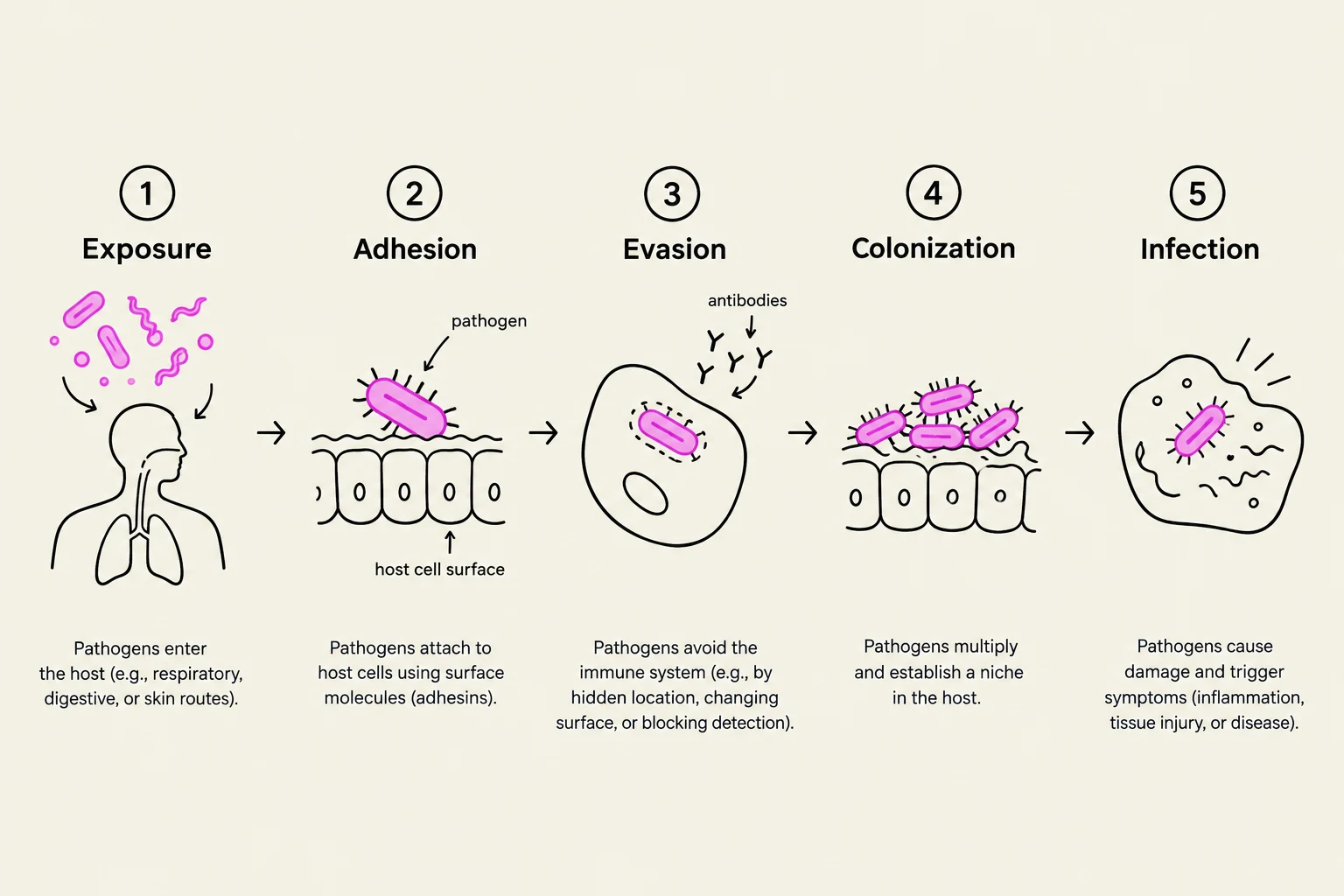
Pathogenesis is the multi-step process by which a microbe invades a host and causes harm. This process can be broken down into five critical stages:
1. Exposure
A microbe must first gain entry into the host. This can occur via exogenous sources (from the external environment) or endogenous sources (from the host's own microbiome). Microbes enter through various portals of entry, such as the skin, respiratory tract, or gastrointestinal tract.
2. Adhesion
Once inside, the microbe must "grab on and stick" to host tissues to avoid being washed away. This process of becoming established in the host is known as adhesion.
3. Surviving Host Defenses
The host's immune system immediately attempts to destroy the invader. Pathogens have evolved sophisticated ways to evade these defenses, such as evasion of phagocytosis. Some microbes can even kill white blood cells or use a "Trojan horse" strategy to hide inside them to move through the body undetected.
This diagram illustrates the five stages of pathogen infection: exposure, adhesion, evasion, colonization, and infection, detailing how pathogens enter a host, attach to cells, evade the immune system, multiply, and cause disease.
4. Causing Disease
If the microbe survives, it begins to invade tissues and cause harm using enzymes and toxins that "poison" or damage host cells. This damage results in two types of clinical observations:
Signs: Measurable and observable changes (e.g., fever, high blood pressure).
Symptoms: Subjective experiences that cannot be measured by an observer (e.g., nausea, headache).
A specific group of signs and symptoms characteristic of a particular disease is called a syndrome. If bacteria enter the bloodstream during this stage, the condition is known as sepsis.
5. Vacating the Host
To continue its life cycle, the pathogen must leave the host through a mechanism that allows it to infect new individuals.
Reservoirs and Transmission
Pathogens do not exist in a vacuum; they require a reservoir, which is their primary habitat.
Living Reservoirs: These include humans, animals, and insects. When a pathogen moves from an animal to a human, it is called a zoonotic infection.
Non-living Reservoirs: These include soil and water.
The movement of a microbe from a reservoir to a new host is called transmission. Transmission can be:
Direct contact: Physical touch between individuals.
Indirect contact: Through air, contaminated surfaces, or food.
Vector: Through an animal or insect (often referred to as biological transmission).
Diseases that can be spread from person to person are communicable, while those that cannot are non-communicable. It is also important to note Healthcare-Associated Infections (HAI), which are infections acquired specifically during a stay in a hospital or healthcare facility.
Disease Progression and the Carrier State
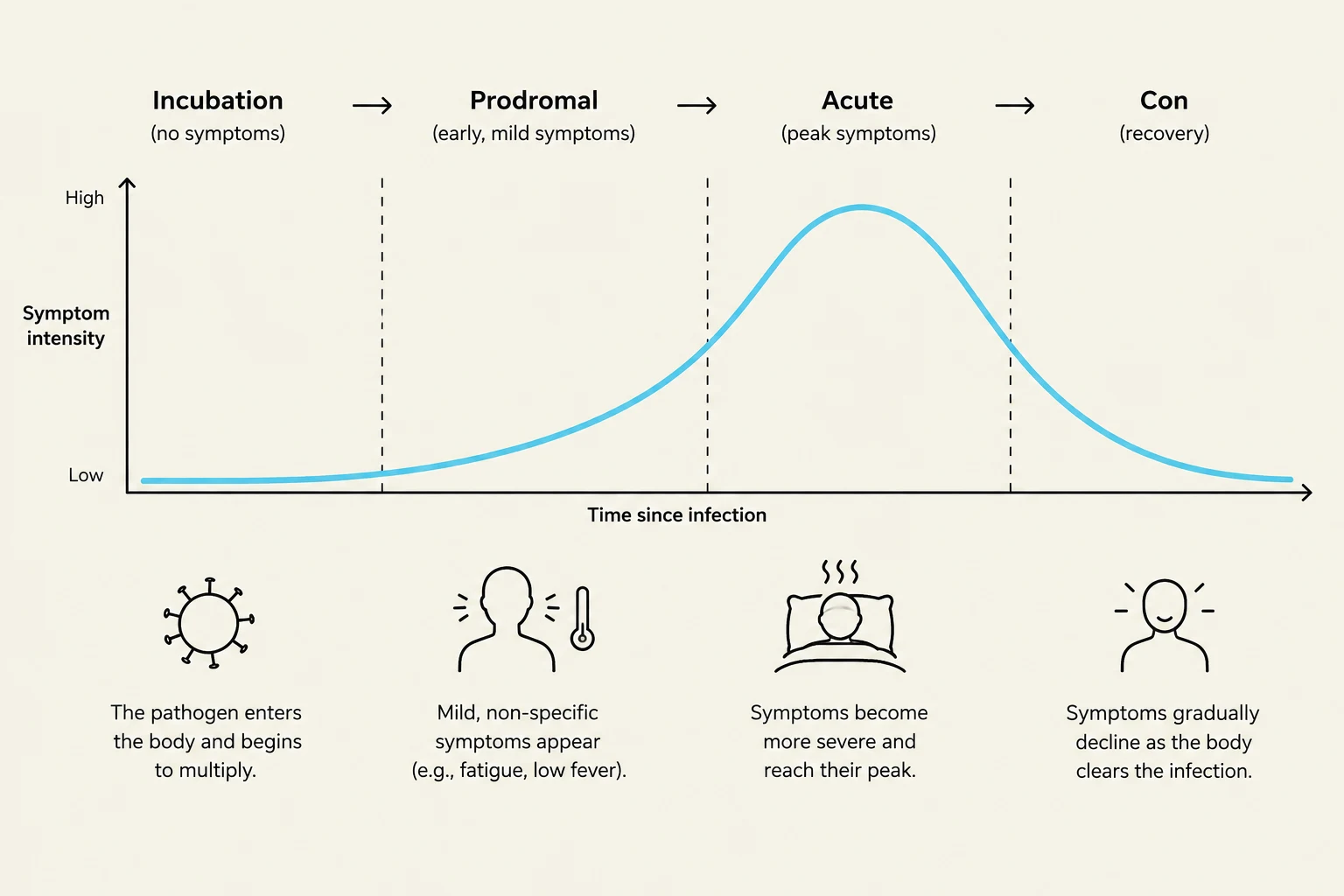
The clinical course of a disease typically follows a predictable pattern of periods:
Incubation period: The time between exposure and the first appearance of symptoms; the microbe is establishing itself, but the patient feels fine.
Prodromal stage: The onset of non-specific symptoms (e.g., general malaise or fatigue).
Acute stage: The height of the infection, where signs and symptoms are most severe and specific to the disease.
Convalescent period: The recovery phase where the immune system clears the infection and signs decrease.
In some instances, an individual may enter a carrier state. A carrier harbors the pathogen within their microbiome without suffering any harm themselves, but they remain infectious and can pass the pathogen to others.
This graph illustrates the typical progression of symptoms during an infection, showing the incubation, prodromal, acute, and convalescent (recovery) phases over time.
Clinical Note: The "Continuation period" is not universal; in some infections, the pathogen may cause permanent damage rather than allowing for a full recovery.
Keep reading for free.
Create an account to finish this reading and make it part of your study routine.