


Imagine you are walking through a garden and accidentally brush against a thorn. Within minutes, the area around the scratch becomes red, warm, and slightly swollen. This is not a random occurrence; it is your body’s sophisticated, rapid-response system in action. While our bodies have many layers of protection, the inflammatory response serves as a critical secondary line of defense designed to contain threats and initiate the healing process.
The First Line of Defense: Physical Barriers
Before inflammation even begins, the body relies on its primary defenses to keep pathogens—such as bacteria and viruses—at bay. These are known as physical barriers.
The most prominent of these is the skin, which acts as a continuous, tough shield covering the entire body. Alongside the skin, we have mucus membranes that line various internal tracts, providing a moist, sticky surface to trap invaders. Furthermore, chemical defenses like enzymes (such as lysozyme found in tears and sweat) work to destroy potential invaders before they can even find a way inside.
However, no barrier is perfect. When a cut or scrape breaches these defenses, pathogens enter the underlying connective tissue, triggering the next phase of immunity: the inflammatory response.
Triggering the Response: Mast Cells and Histamine
The inflammatory response is characterized as non-specific. This means that unlike the adaptive immune system, which targets specific strains of a virus, inflammation attacks any and all foreign invaders indiscriminately.
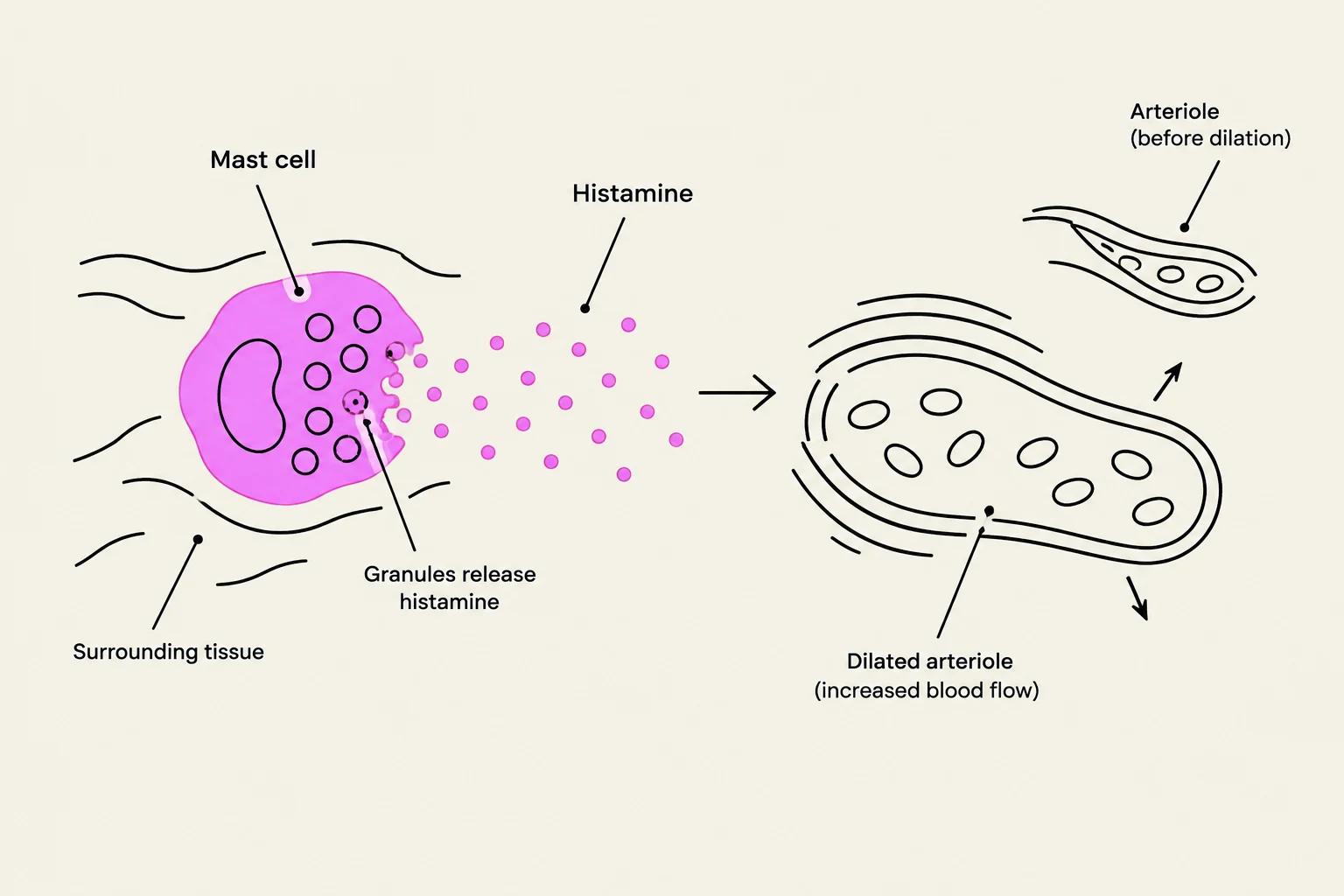
The moment cells are injured by a pathogen, they begin to release distress signals. A key player in this stage is the mast cell, located within the connective tissue. When these cells detect damage or the presence of invaders, they release a chemical mediator called histamine.
Keep reading for free.
Create an account to finish this reading and make it part of your study routine.
Continue reading freeAlready have an account? Log in
Updated