The Hepatobiliary System: Functions and Clinical Correlations
An overview of the hepatobiliary system, including the liver, gallbladder, and pancreas, detailing their roles in digestion, metabolism, detoxification, and blood composition. It also covers clinical manifestations of dysfunction such as jaundice and steatorrhea, and relevant laboratory and imaging assessments.
The hepatobiliary system is a complex network of organs—primarily the liver, gallbladder, and pancreas—that work in concert to facilitate digestion, manage metabolism, and maintain systemic homeostasis. The liver, being the second largest organ in the body (surpassed only by the skin), serves as a central chemical processing plant. Because of its diverse roles in immunity, nutrient storage, and detoxification, any alteration in these organs can lead to significant systemic complications, ranging from digestive issues to neurological impairment.
The Liver: Metabolism and Storage
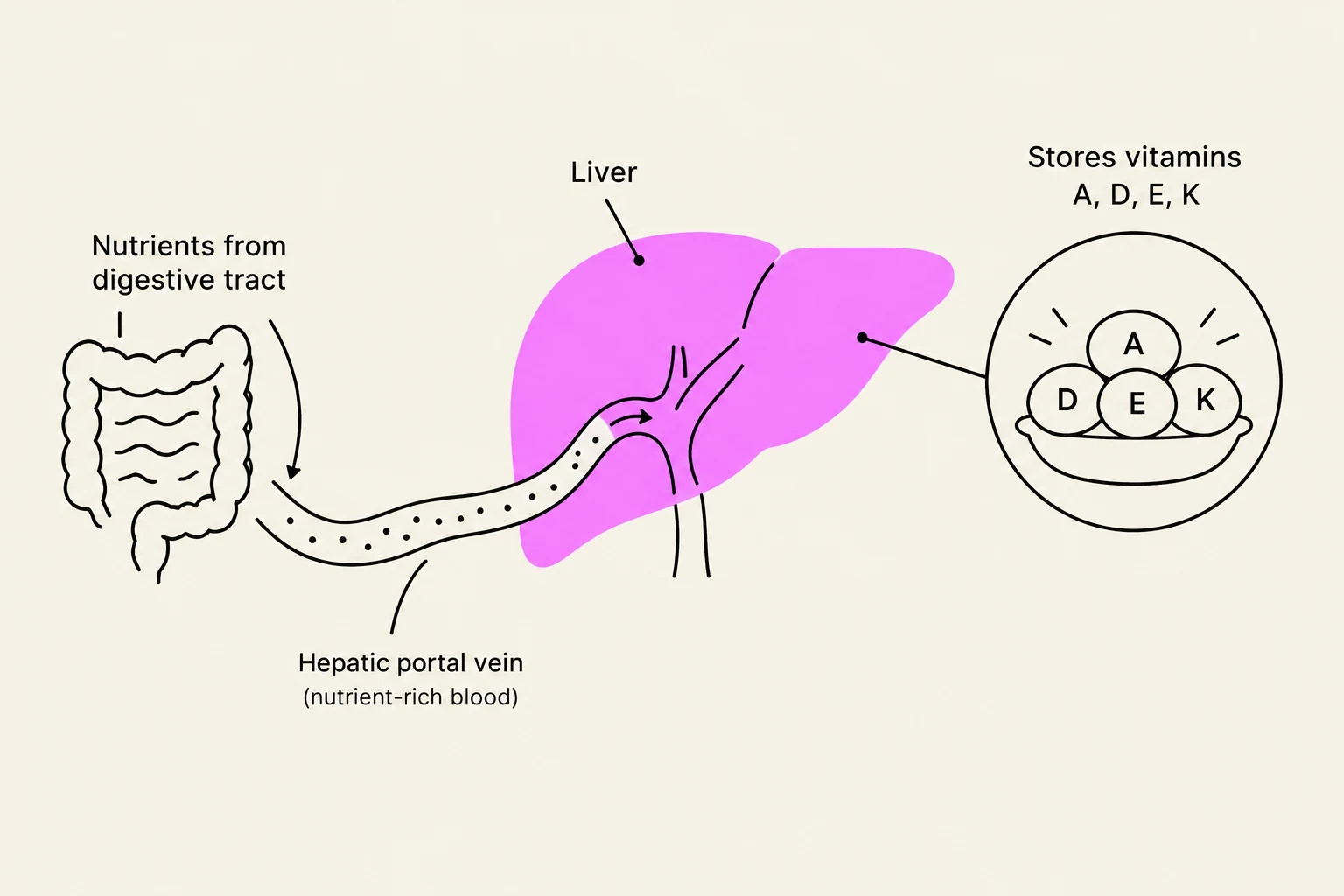
The liver is a vital organ with a remarkable capacity to regenerate damaged or dying tissue. Its primary metabolic role involves processing everything that enters the bloodstream from the digestive tract. This is made possible by the hepatic portal circulation, where all blood leaving the digestive system passes through the hepatic portal vein to be processed by the liver.
Metabolic Processing
The liver is responsible for the metabolism of three major macronutrients:
Carbohydrates: Regulating glucose levels for energy.
Lipids: Processing fats for use or storage.
Proteins: Breaking down amino acids and synthesizing essential proteins.
Nutrient and Vitamin Storage
Beyond immediate metabolism, the liver acts as a reservoir for essential micronutrients. It stores critical vitamins, including:
Fat-soluble vitamins: A, D, E, and K.
Water-soluble vitamins: Specifically Vitamin B12.
A compromised liver cannot effectively store these nutrients, which can lead to various vitamin deficiencies in a patient.
This diagram illustrates how the liver receives nutrient-rich blood from the digestive tract via the hepatic portal vein and stores vitamins A, D, E, and K.
Digestion and the Biliary System
The liver, gallbladder, and pancreas work together to facilitate chemical digestion within the small intestine.
Bile Production and Excretion
The liver produces bile, a digestive fluid essential for breaking down fats. This bile is then stored and concentrated in the gallbladder before being secreted through the common bile duct into the duodenum.
A critical byproduct of red blood cell breakdown is bilirubin. When red blood cells break down, they produce heme and globin; the heme is converted into bilirubin. The liver removes this bilirubin from the blood, adds it to the bile, and excretes it via the stool, which provides the characteristic brown color of feces.
Clinical Correlation: Jaundice and Steatorrhea
Jaundice: If the liver fails to excrete bilirubin or if the bile ducts are obstructed, bilirubin builds up in the bloodstream, causing a yellowing of the skin and eyes known as jaundice.
Steatorrhea: If bile production or secretion is impaired, fats are not properly digested, resulting in fatty, loose stools called steatorrhea.
Pancreatic Exocrine Function
While the liver produces bile, the pancreas provides essential digestive enzymes through its exocrine function. These enzymes are released into the duodenum to break down food:
Amylase: Digests carbohydrates (e.g., starches).
Lipase: Digests fats.
Proteases: Enzymes that digest proteins, which are activated once they reach the duodenum.
Diagram illustrating the roles of the liver, gallbladder, pancreas, and duodenum in digestion, showing the flow of bile and pancreatic enzymes.
Blood Composition and Detoxification
The liver is essential for maintaining the integrity of the blood and the safety of the internal environment through protein synthesis and toxin conversion.
Coagulation and Osmotic Balance
The liver synthesizes vital proteins that circulate in the blood plasma:
Coagulation Factors: The liver produces prothrombin and fibrinogen, which are necessary for blood clotting. It also utilizes Vitamin K to support this process.
Albumin: This is a critical protein that maintains osmotic balance between blood vessels and surrounding tissues.
Nursing Alert: Edema Risk
When liver disease causes a decrease in albumin production, the body loses its ability to regulate the distribution of water and electrolytes. This loss of osmotic pressure often leads to the development of edema (swelling).
Ammonia Conversion and Neurotoxicity
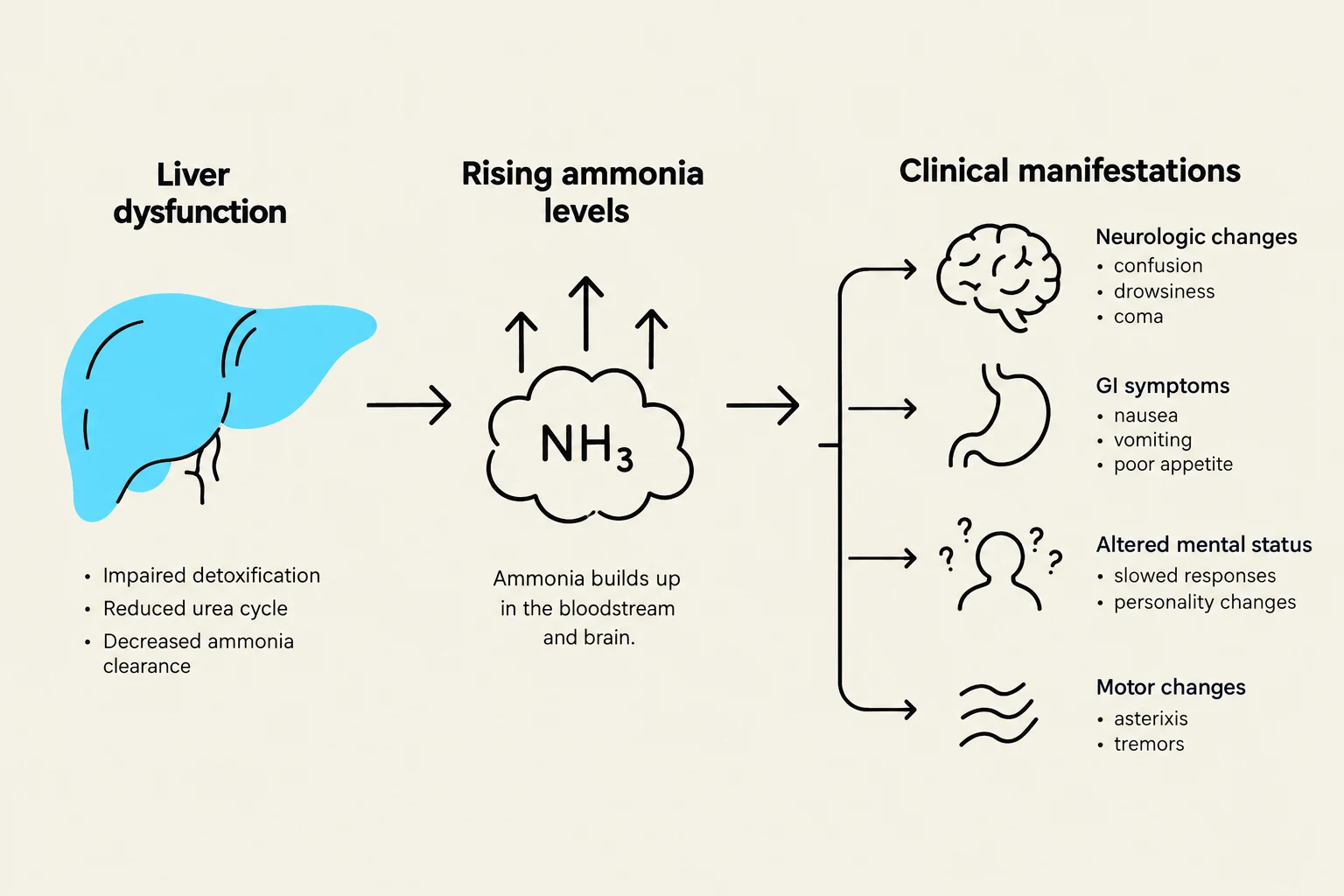
One of the liver's most critical detoxification roles is the conversion of ammonia into urea. Ammonia is a byproduct of protein metabolism and is a potent neurotoxin. Once converted to urea by the liver, it can be safely excreted by the kidneys through urine.
If the liver is unable to perform this conversion, ammonia levels rise in the blood, which can lead to a serious neurological condition known as hepatic encephalopathy.
Clinical Assessment and Laboratory Findings
When evaluating a patient for hepatic or biliary alterations, clinicians rely on specific laboratory markers and imaging.
Liver Enzymes and Markers
ALT (Alanine Aminotransferase): Highly specific to the liver; elevated levels are a strong indicator of hepatocellular injury.
AST (Aspartate Aminotransferase): Found in the liver but also in the heart and other tissues; elevation alone may not definitively indicate liver disease.
Bilirubin: Elevated serum bilirubin suggests impaired excretion or bile duct obstruction.
Albumin: Low levels indicate impaired synthetic function and potential osmotic issues.
Ammonia: Elevated levels indicate a failure in detoxification and a risk for encephalopathy.
Diagnostic Imaging
Beyond blood work, imaging is used to visualize the organs and ducts:
ERCP (Endoscopic Retrograde Cholangiopancreatography): A specialized procedure used to identify stones within the bile duct or to evaluate the pancreas in cases of pancreatitis.
Other Modalities: X-rays and CT scans are commonly used to assess the structural integrity of the biliary system.
This diagram illustrates the physiological process where liver dysfunction leads to rising ammonia levels, which in turn cause various clinical manifestations including neurologic changes, GI symptoms, altered mental status, and motor changes.
Keep reading for free.
Create an account to finish this reading and make it part of your study routine.