The Gut Microbiome: A Balancing Act for Human Health
Explore the complex ecosystem of the gut microbiome, its role in maintaining health, regulating the immune system, and protecting against disease. Learn about the balance between beneficial bacteria and pathogens, the impact of antibiotics, and the importance of diet, fiber, and hygiene.
Inside the human digestive tract lies a vast, complex ecosystem known as the gut microbiome. This community of trillions of microorganisms is not merely a passive passenger in our bodies; it is a dynamic biological engine that plays a critical role in maintaining health, regulating the immune system, and protecting us from disease. To understand human health, one must understand the delicate balance between beneficial bacteria and harmful pathogens.
The Balance of Power: Good Bacteria vs. Pathogens
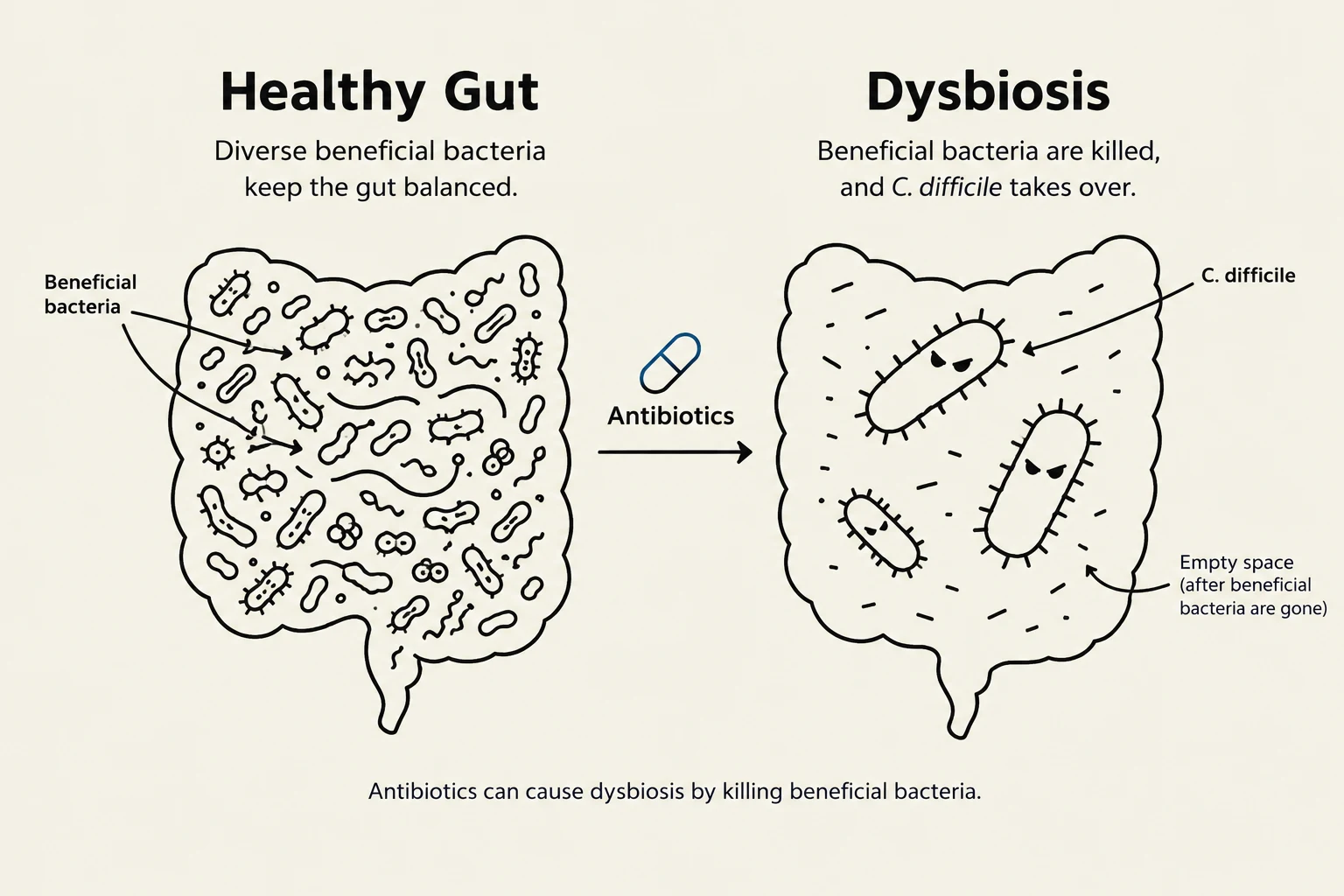
This illustration depicts the difference between a healthy gut with diverse beneficial bacteria and a gut in dysbiosis where beneficial bacteria are killed by antibiotics, allowing C. difficile to take over.
A healthy gut relies on a state of homeostasis, a biological equilibrium where beneficial bacteria dominate the environment. These "good bacteria" act as a living shield, preventing harmful pathogens from colonizing the gut.
Think of the gut like a milk culture: just as beneficial bacteria in a starter culture prevent spoilage by occupying all available space and resources, the microbes in your gut prevent dangerous organisms from taking hold. One significant threat is Clostridioides difficile (C. difficile). In a balanced gut, C. difficile is kept in check. However, when this balance is disrupted, the pathogen can flourish, leading to severe illness.
The Impact of Antibiotics and Dysbiosis
While antibiotics are life-saving tools used to treat infections (such as lung infections), they are often not selective. They can inadvertently kill the beneficial bacteria along with the target pathogens.
When the population of good bacteria is depleted, the body enters a state of dysbiosis—an imbalance in the microbial community. This loss of protection can lead to antibiotic-related diarrhea, often caused by the rapid overgrowth of C. difficile once its natural competitors have been eliminated.
Clinical Intervention: Fecal Microbiota Transplant (FMT)
In severe or recurrent cases of C. difficile infection where antibiotics have failed, doctors may use a fecal transplant. This procedure involves introducing donor feces—which contains a healthy, diverse microbial population—into the patient's gut to restore the necessary balance and "reboot" the microbiome.
Physical and Dietary Support of the Gut
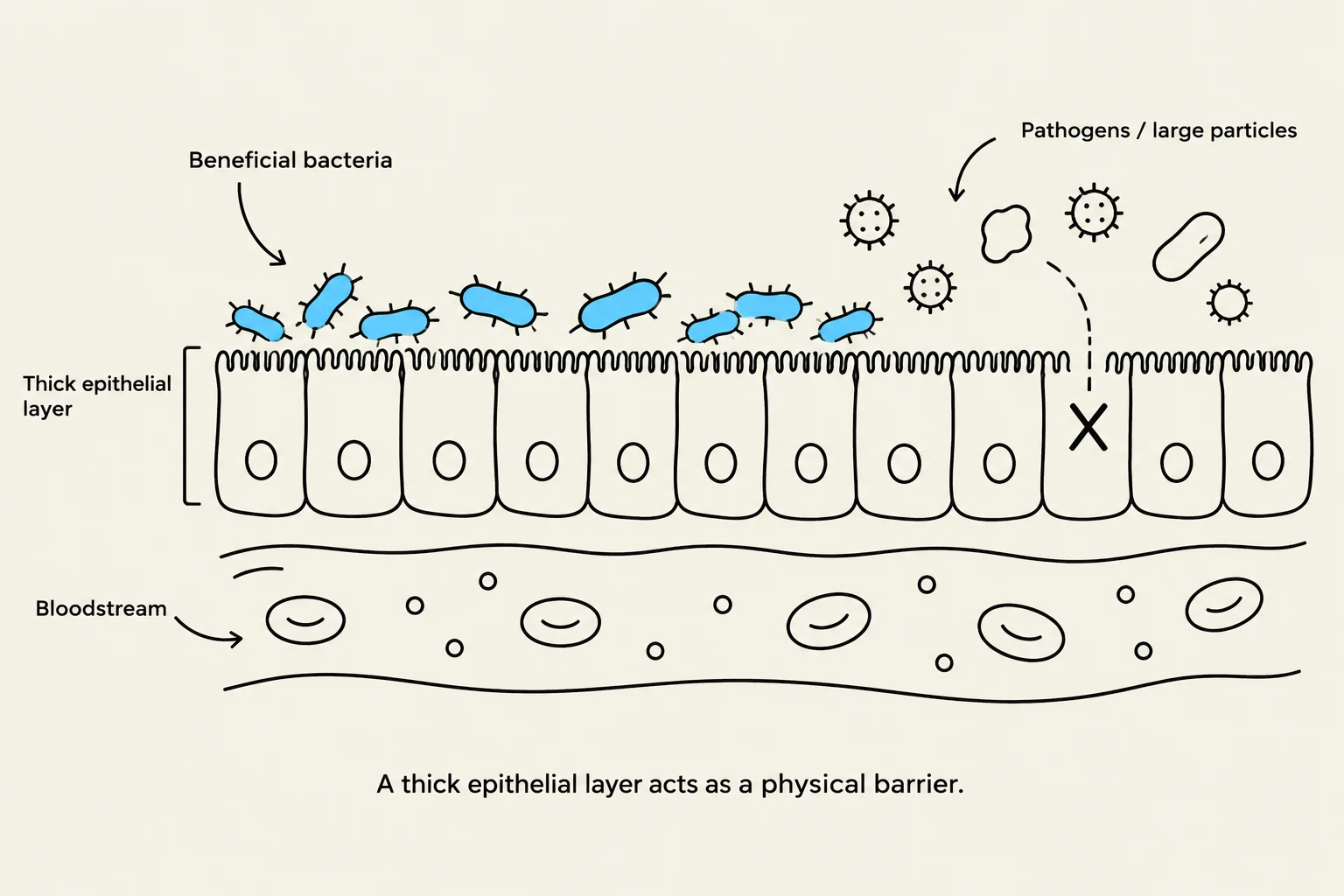
A thick epithelial layer acts as a physical barrier, preventing pathogens and large particles from entering the bloodstream while allowing beneficial bacteria to remain on the surface.
The microbiome does more than just fight off invaders; it actively builds the body's defenses. One way beneficial bacteria support health is by increasing the epithelial cell thickness in the small intestine. A thicker epithelial layer strengthens the physical barrier between the food we ingest and our bloodstream, preventing unwanted substances from leaking through.
The Role of Fiber and Fermentation
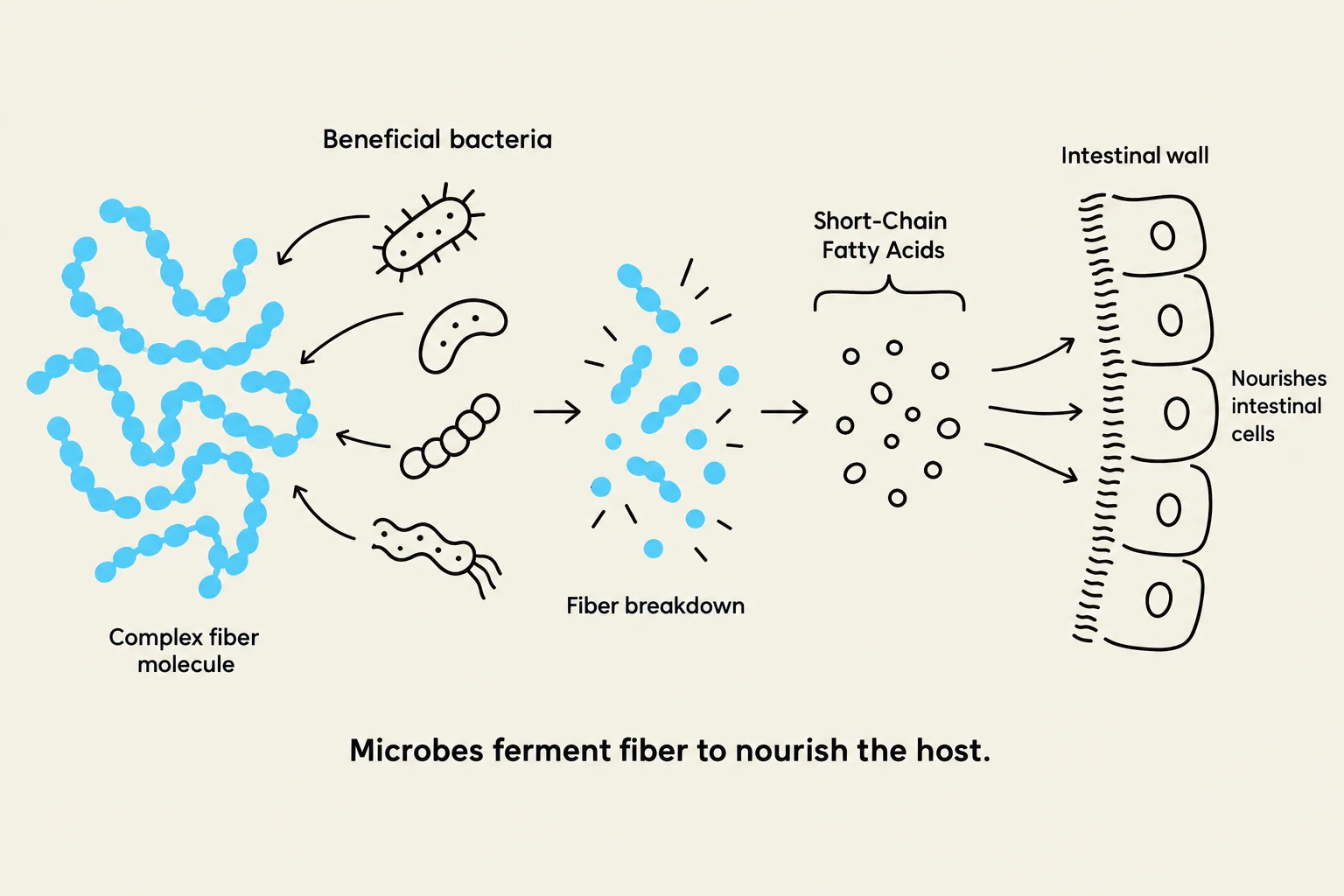
This diagram illustrates how beneficial bacteria in the gut break down complex fiber molecules into short-chain fatty acids, which then nourish intestinal cells.
Our diet is the primary tool we have to shape our microbiome. The most critical component for gut health is the consumption of fibers.
Because humans cannot digest certain complex fibers, we rely on our gut microorganisms to perform fermentation. During this process, microbes break down food waste (fiber) and convert it into beneficial substances that nourish the host.
To maintain a diverse and healthy microbial population, experts recommend a high variety of fiber sources. Rather than relying on a single type, aim for approximately 30 different types of fiber per week, sourced from a wide array of vegetables, fruits, and spices.
Immunity, Allergies, and the "Hygiene Hypothesis"
There is a profound link between microbial exposure and the development of the human immune system. Early life exposure to a diverse range of microbes helps "train" the immune system to distinguish between harmless substances and dangerous pathogens.
Allergies and Atopic Conditions
Research suggests that reduced exposure to diverse microbes may be linked to an increase in allergies and atopic conditions—such as asthma and eczema—later in life.
Historically, medical advice often suggested strict avoidance of potential allergens (like nuts) in children to prevent sensitivity. However, modern epidemiological studies have shifted this perspective. For example, studies in Scandinavian countries suggest that controlled, small-scale exposure to certain allergens in childhood may actually help the body become less sensitive to them. While the exact mechanisms of how the body develops these conditions remain a subject of ongoing study, the trend toward "controlled exposure" is a significant shift in immunological thought.
Food Safety and Pathogen Management
While we want a diverse microbiome, we must be vigilant about preventing the introduction of dangerous pathogens through our food chain. Pathogens like Salmonella can cause severe illness, such as salmonellosis.
Case Study: Salmonellosis
A child was hospitalized for two weeks after consuming undercooked eggs from a village source. In adults, it typically takes the consumption of about 1,000 Salmonella cells to cause illness, but children and immunocompromised individuals are much more vulnerable to even lower levels.
To prevent food poisoning, several layers of protection are necessary:
Thermal Processing: Cooking food to specific temperatures to kill pathogens.
Cross-Contamination Prevention: In professional kitchens, separating raw meats and fish from fresh produce (like salads) is vital to prevent microbes from "jumping" from one to the other.
Hygiene: Proper handwashing is essential, as humans are primary vectors for spreading microorganisms.
In summary, a healthy life is supported by a healthy gut. By consuming a diverse range of fibers, managing antibiotic use, and practicing rigorous food hygiene, we can support the microbial community that serves as our first line of defense.
Keep reading for free.
Create an account to finish this reading and make it part of your study routine.