An explanation of Evidence-Based Practice (EBP), a framework that integrates scientific evidence, clinical expertise, client values, and contextual factors for informed decision-making in professional fields like healthcare and social work.
In many professional fields—particularly healthcare, psychology, and social work—decision-making is rarely as simple as following a single rule or a single study. Instead, practitioners must navigate a complex intersection of data, experience, and human reality. This approach is known as Evidence-Based Practice (EBP). Rather than relying solely on "what works in a lab," EBP provides a structured framework to ensure that decisions are scientifically sound, professionally competent, and deeply respectful of the individual being served.
Understanding the EBP Framework
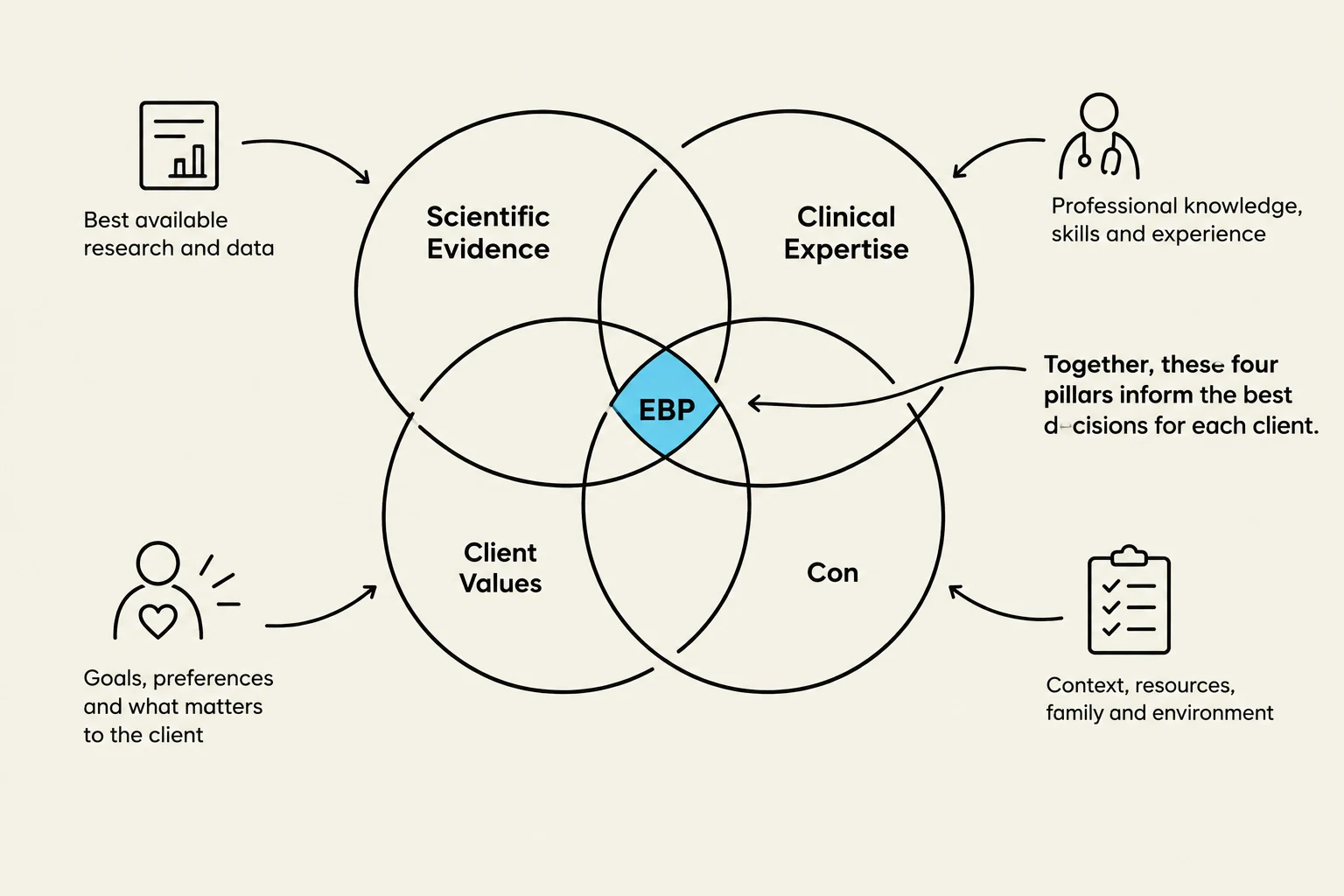
Evidence-Based Practice is not a single action, but a process of integration. It requires the practitioner to synthesize four distinct "pillars" to reach an optimal decision. If any one of these pillars is ignored, the quality of care or intervention can suffer significantly. For instance, applying a scientifically proven treatment that the client refuses to use is ineffective, just as using a treatment the client loves that has no scientific backing is potentially harmful.
The goal is to find the "sweet spot" where these four elements overlap.
This diagram illustrates the four pillars that inform evidence-based practice (EBP): scientific evidence, clinical expertise, client values, and context, resources, family, and environment. These elements collectively guide decision-making for each client.
Pillar 1: Scientific Evidence
The first pillar is the foundation of modern professional practice: the use of the best available research. This involves looking beyond anecdotal evidence (stories or personal observations) and seeking out rigorous, peer-reviewed studies.
When practitioners look for scientific evidence, they often prioritize different levels of research quality. For example, a randomized controlled trial (RCT) or a systematic review is generally considered stronger evidence than a single case study. The focus here is on objectivity, reproducibility, and statistical significance.
Exam Tip: When asked to evaluate the strength of evidence, remember that "scientific evidence" refers to the external data found in literature, not the practitioner's own personal experience.
Pillar 2: Clinical Expertise
While research tells us what works for the average person in a controlled setting, clinical expertise tells us how to apply that knowledge to a specific person in a real-world setting. This pillar represents the accumulated knowledge, skills, and judgment that a professional develops through years of practice.
Clinical expertise allows a practitioner to:
Recognize subtle patterns in a client's behavior.
Determine if a specific scientific intervention is appropriate for a client's unique presentation.
Troubleshoot when a standard treatment is not producing the expected results.
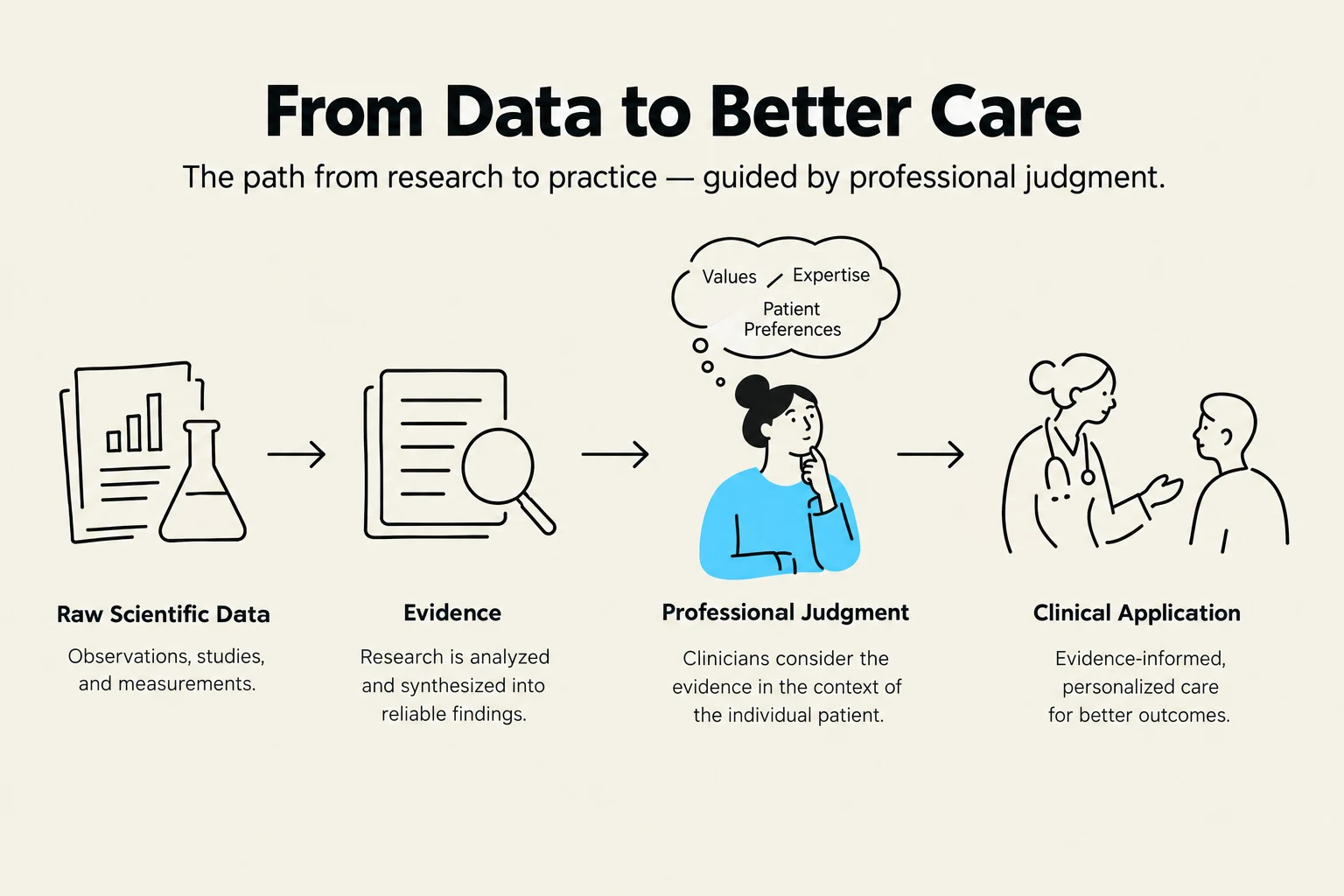
This diagram illustrates the process of transforming raw scientific data into clinical application through evidence and professional judgment, emphasizing patient-centered care.
Pillar 3: Client Values and Preferences
One of the most critical shifts in modern practice is the move away from paternalism—the idea that the professional knows what is best for the client without asking them. The third pillar demands that the client's unique values, cultural background, beliefs, and personal goals are central to the decision-making process.
A client's values might influence:
Acceptability: Will the client actually agree to this intervention?
Feasibility: Does the intervention align with the client's lifestyle or religious beliefs?
Motivation: Is the client's goal to achieve a specific outcome, or are they more concerned with minimizing side effects?
Pillar 4: Contextual Factors
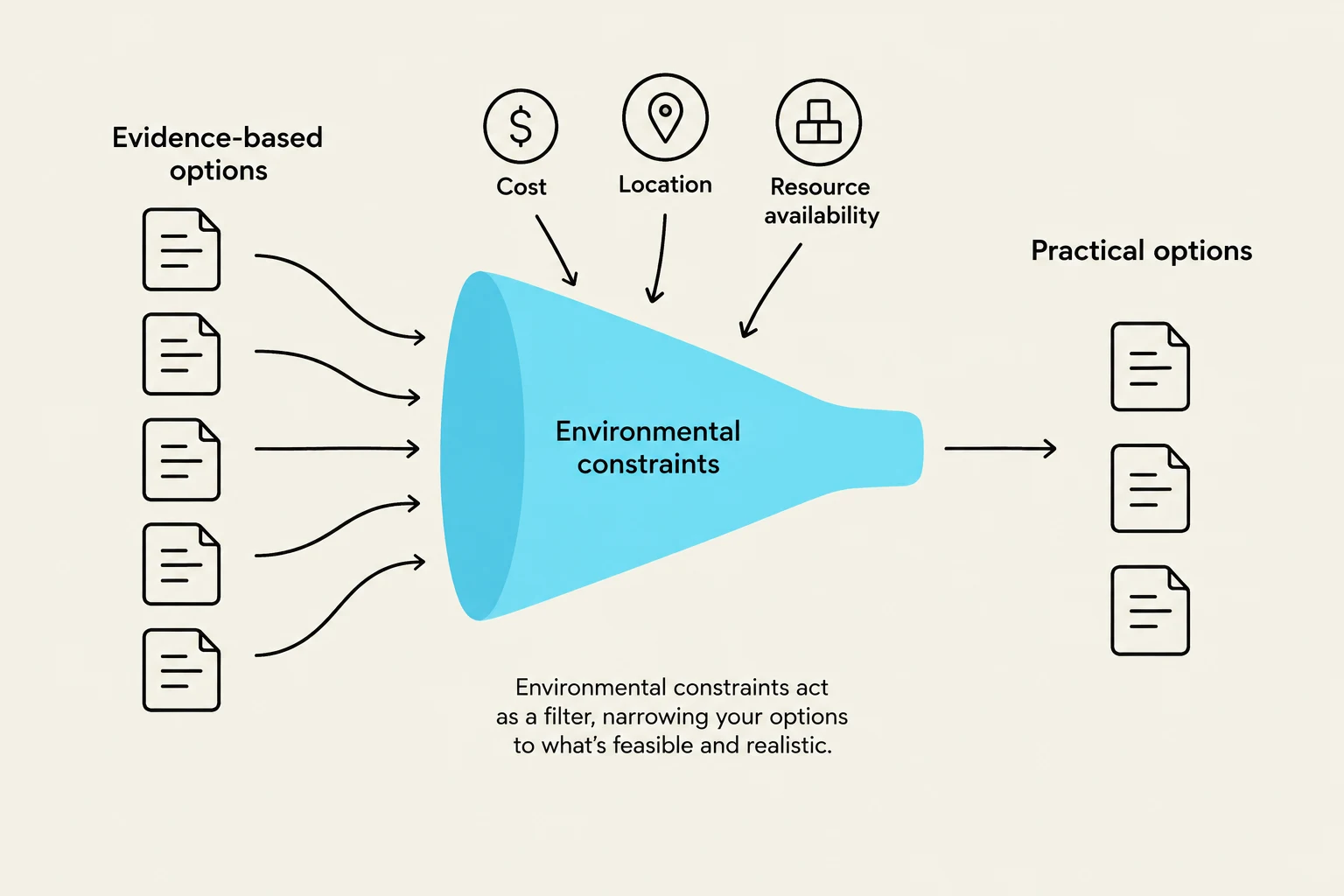
The final pillar involves the environment in which the practice occurs. Even if a treatment is scientifically sound, expert-led, and desired by the client, it may fail if the context is not considered. Contextual factors include the availability of resources, the physical setting, socioeconomic status, and the broader systemic environment.
For example, a highly effective therapeutic intervention that requires daily in-person visits may be impossible for a client living in a rural area with no transportation. In this case, the "context" dictates that a different, perhaps less "ideal" but more accessible, intervention must be chosen.
This diagram illustrates how environmental constraints filter evidence-based options into practical ones, considering cost, location, and resource availability.
Putting It All Together: A Worked Example
To see how these pillars interact, consider a physical therapist working with an athlete recovering from a knee injury.
Scientific Evidence: The therapist reviews recent literature which suggests that specific neuromuscular training exercises are highly effective for preventing re-injury in this type of athlete.
Clinical Expertise: The therapist observes the athlete's movement patterns and realizes that while the literature suggests high-intensity jumping, the athlete's current muscle fatigue levels suggest a more gradual progression is safer.
Client Values: The athlete expresses a strong desire to return to competition quickly, but they are also very concerned about long-term joint health and are hesitant to use certain types of heavy bracing.
Contextual Factors: The therapist notes that the athlete has a very busy travel schedule for competitions, meaning the rehabilitation program must be something that can be performed easily in hotel rooms or on the road, rather than requiring a full gym.
By integrating all four, the therapist creates a customized, evidence-based plan that is scientifically grounded, professionally guided, personally meaningful, and practically possible.
Summary Table for Quick Review
Pillar
Focus
Key Question
Scientific Evidence
Research & Data
What does the literature say works?
Clinical Expertise
Practitioner Skill
How do I apply this based on my experience?
Client Values
Individual Preference
What does the client want and believe?
Contextual Factors
Environment & Resources
Is this possible given the current circumstances?
Keep reading for free.
Create an account to finish this reading and make it part of your study routine.