


Why do some nations flourish while others remain trapped in cycles of poverty? While many factors contribute to economic development, two fundamental pillars often determine a society's long-term trajectory: the rule of law and the protection of property rights. These are not merely legal abstractions; they are the essential mechanisms that dictate whether individuals feel safe enough to invest, innovate, and build for the future.
Understanding the Rule of Law
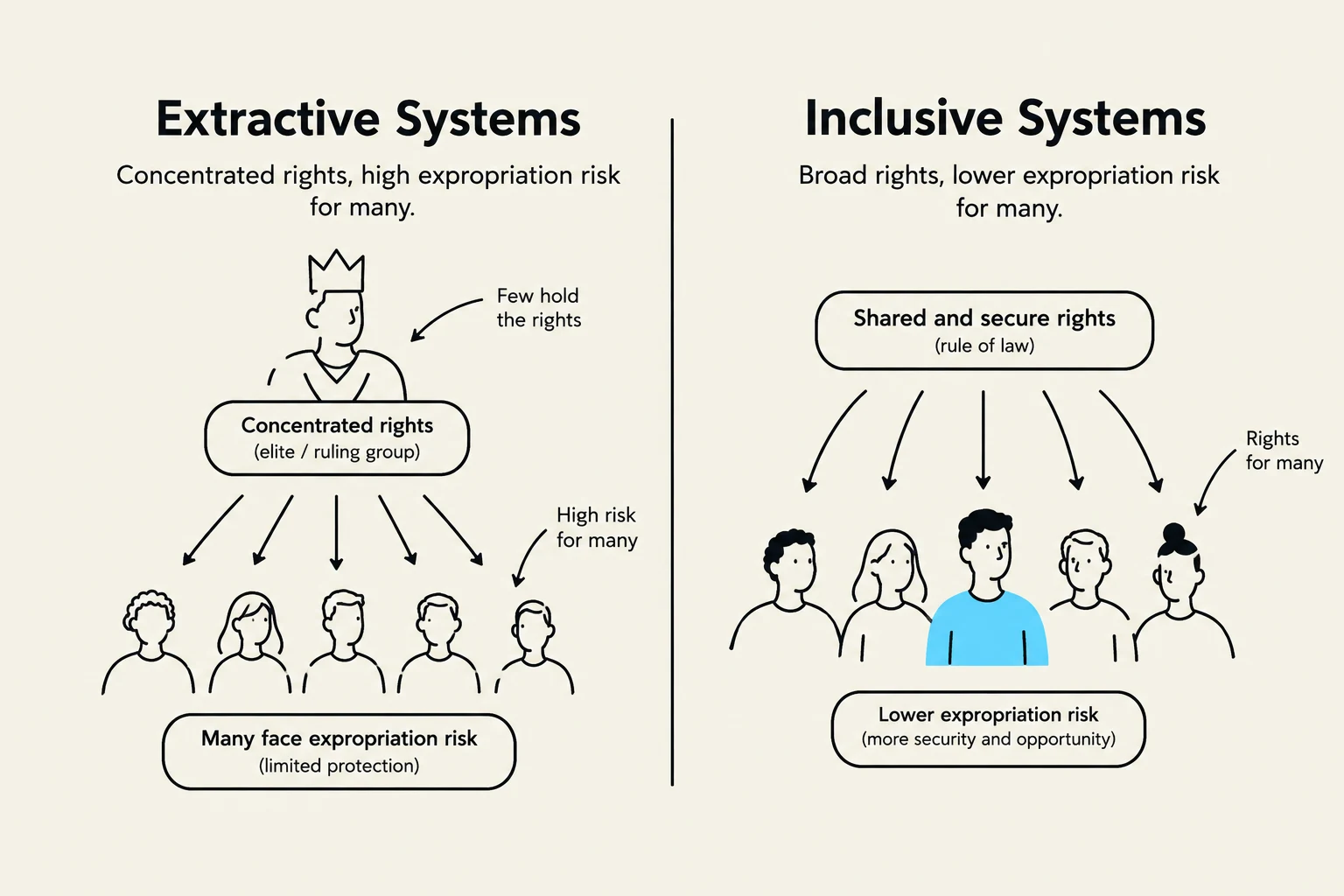
It is a common misconception that the mere existence of a legal code signifies the "rule of law." In reality, a regime can possess a vast library of statutes and still operate under the "rule by law," where legal frameworks are weaponized to persecute political opponents or protect the privileges of a small elite.
True rule of law implies that laws are applied predictably and consistently. Most importantly, the law must constrain the rulers and the elites themselves. When laws are applied arbitrarily based on a person's identity, social connections, or political status, the rule of law has failed.
Exam Tip: When analyzing a political system, do not ask "Are there laws?" Instead, ask "Are the leaders subject to the same laws as the citizens, and are those laws applied without favoritism?"

Property Rights and Economic Incentives
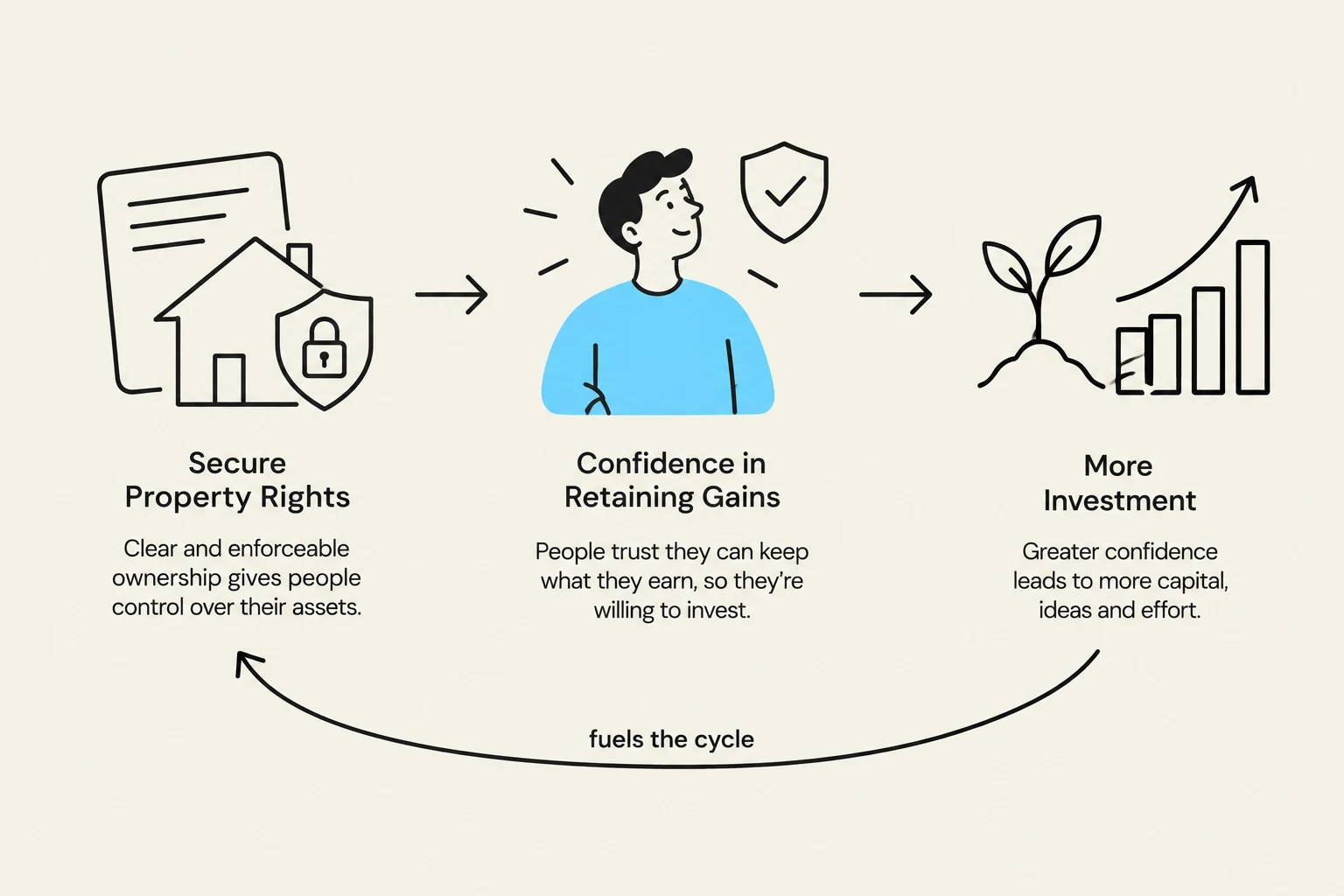
If the rule of law provides the framework, property rights provide the incentive. Property rights—and the subsequent protection of contracts—ensure that individuals can expect to retain the benefits of their labor, savings, and investments.
Keep reading for free.
Create an account to finish this reading and make it part of your study routine.
Continue reading freeAlready have an account? Log in
Updated