


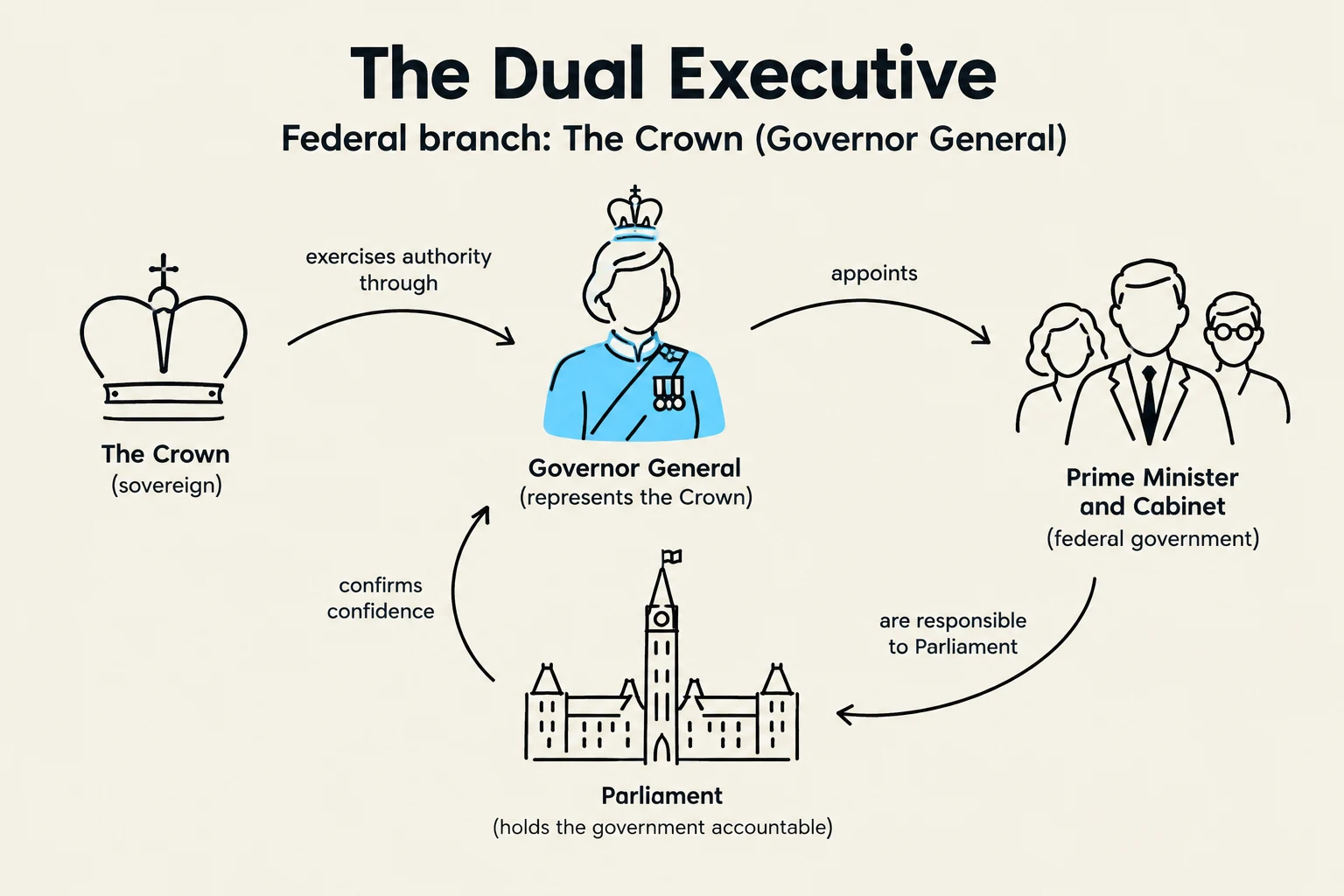
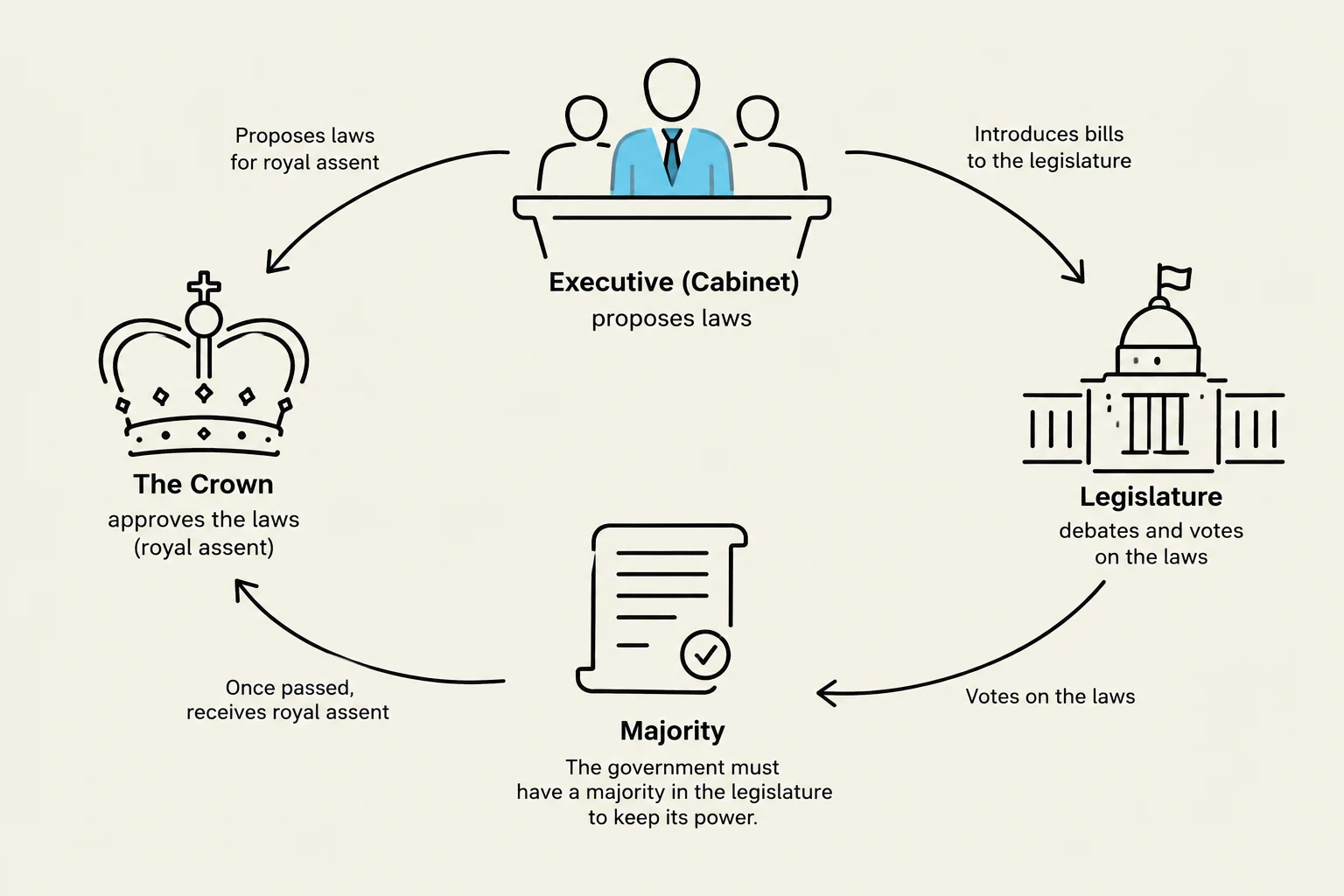
In the Canadian legal and political system, the government is divided into distinct branches to ensure the orderly administration of the state. While the legislative branch makes the laws, the executive branch is responsible for administering and implementing them. Often referred to simply as "the government," the executive branch is the engine of the state, turning statutory rules into active public policy and managing the day-to-day operations of the country and the provinces.
The Foundations of Executive Power
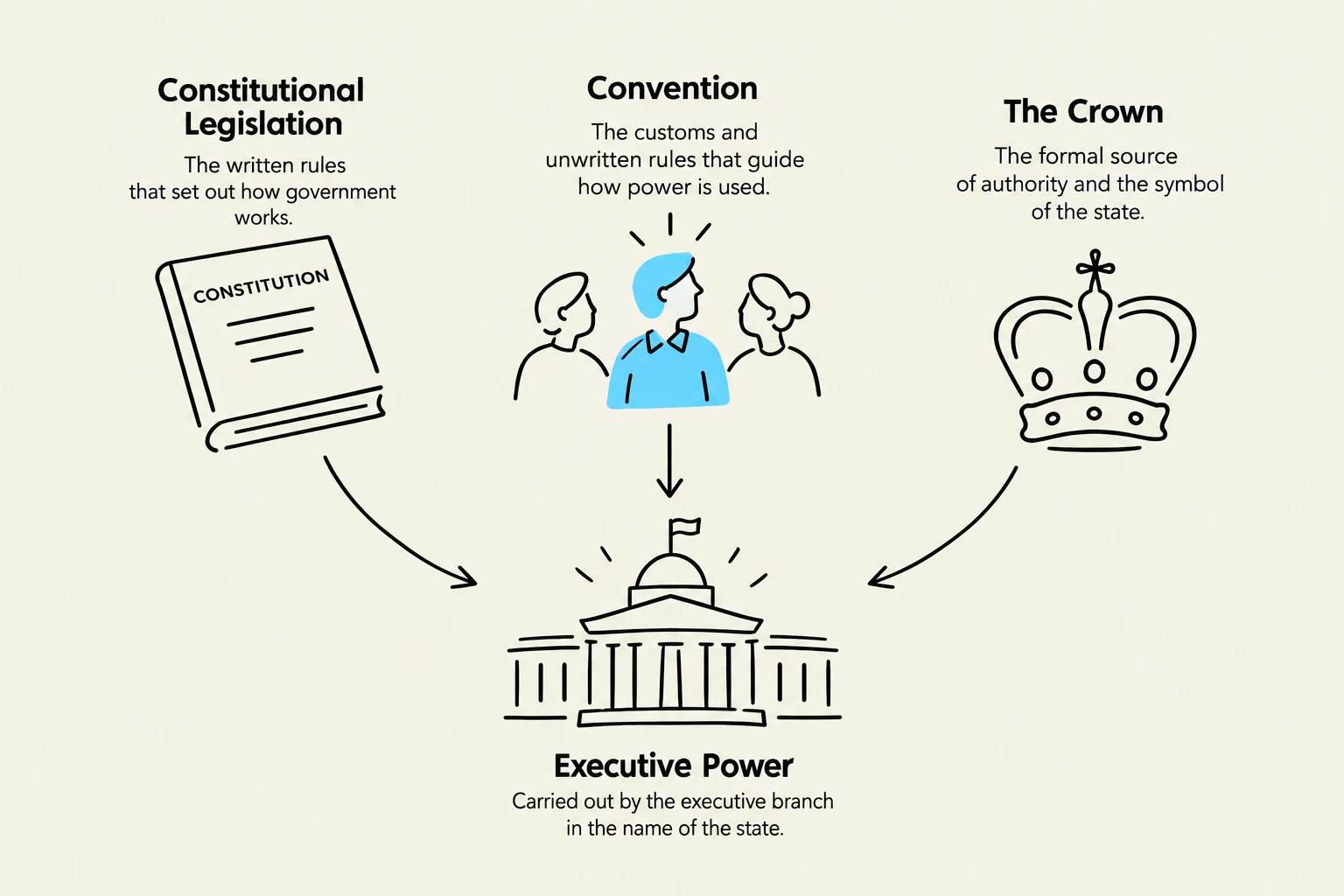
The authority of the executive branch does not stem from a single source; rather, it is a complex blend of written law, historical custom, and judicial principles.
Constitutional Legislation
The primary source of executive power is constitutional legislation, most notably the Constitution Act, 1867. This Act provides the legal framework for how power is distributed:
- Federal Executive Power: Outlined in Part III (sections 9–16) of the Act.
- Provincial Executive Power: Outlined in Part V (sections 58–68) of the Act.
Furthermore, the Constitution Act, 1982 grants Parliament the power to amend the Constitution in relation to the executive government of Canada.
Convention and Common Law
Beyond written statutes, the executive operates through convention—agreed-upon customary practices that are not strictly laws but are followed as if they were. For example, while the Constitution might not explicitly dictate how a Prime Minister is chosen, constitutional convention dictates the process.
Additionally, executive power is shaped by common law and the "royal prerogative"—the historical powers of the Crown that have survived into the modern era. While many of these powers have been replaced by specific statutes (laws passed by Parliament), some remain, such as the power to issue royal proclamations.
Keep reading for free.
Create an account to finish this reading and make it part of your study routine.
Continue reading freeAlready have an account? Log in
Updated