The Endocrine System: Hormones, Signaling, and Regulation
An overview of the human endocrine system, detailing hormones, their chemical classifications, transport mechanisms, and how they regulate bodily functions through signaling pathways and interactions. Covers hydrophilic and hydrophobic hormones, second-messenger systems, direct gene activation, and regulatory dynamics
The human body relies on two primary regulatory systems to maintain homeostasis: the nervous system and the endocrine system. While the nervous system uses electrical impulses for rapid, short-lived responses, the endocrine system utilizes chemical messengers to coordinate longer-lasting physiological changes. By synthesizing and secreting specialized chemicals into the bloodstream, the endocrine system can influence distant parts of the body to regulate metabolism, growth, fluid balance, and reproduction.
Hormones and Signaling Pathways
At the heart of this system are hormones—chemical messengers secreted by endocrine glands. Unlike exocrine glands, which secrete products into ducts that lead to body surfaces or cavities (such as sweat or salivary glands), endocrine glands are ductless; they secrete hormones directly into the interstitial fluid, where they then diffuse into the blood capillaries for transport.
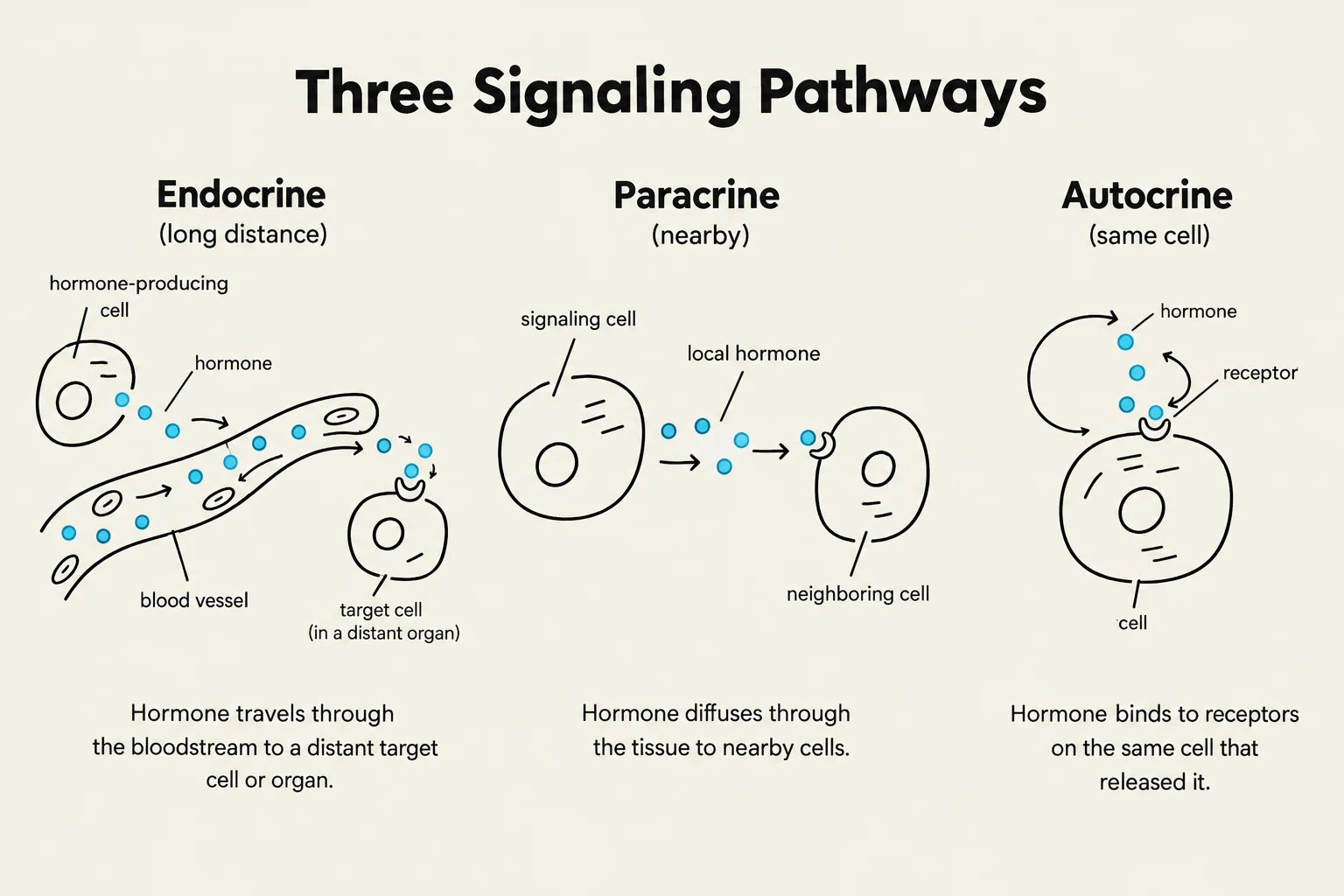
Hormones are classified by how far they travel to reach their destination:
Classic Endocrine Signals: These are secreted into the blood to reach distant targets throughout the body.
Paracrine Signals: These act locally, influencing nearby cells within the extracellular fluid. An example is the hormones produced by the thymus, which assist in T lymphocyte maturation.
Autocrine Signals: These are chemicals secreted by a cell that elicit effects on that same cell.
Diagram illustrating three types of cell signaling pathways: endocrine (long distance), paracrine (nearby), and autocrine (same cell).
Chemical Classification and Transport
The chemical structure of a hormone dictates how it travels through the blood and how it interacts with its target cells. Target cells are specific cells that possess receptors—three-dimensional protein shapes designed to bind to a specific hormone. The tissues containing these target cells are known as target tissues.
Hydrophilic Hormones
Amino acid-based hormones and peptide/protein hormones are generally hydrophilic (water-loving). Because they dissolve easily in water, they travel as free hormones through the water-based plasma of the blood. However, because they cannot pass through the lipid bilayer of cell membranes, they must bind to receptors embedded in the plasma membrane.
Hydrophobic Hormones
Steroid hormones (derived from cholesterol) and certain amino acid-based hormones like thyroid hormone are hydrophobic (lipid-soluble). These hormones often travel as bound hormones, forming complexes with binding proteins in the plasma. This binding serves two purposes: it allows hydrophobic molecules to be transported in the blood and provides a reservoir of hormones that can be released as needed, effectively extending the hormone's half-life. Unlike hydrophilic hormones, hydrophobic hormones can diffuse directly through the cell membrane to find receptors in the cytosol or nucleus.
Mechanisms of Action
Once a hormone reaches its target cell, it must "deliver its message" by triggering a cellular response. The method used depends entirely on the hormone's solubility.
The Second-Messenger System (Hydrophilic)
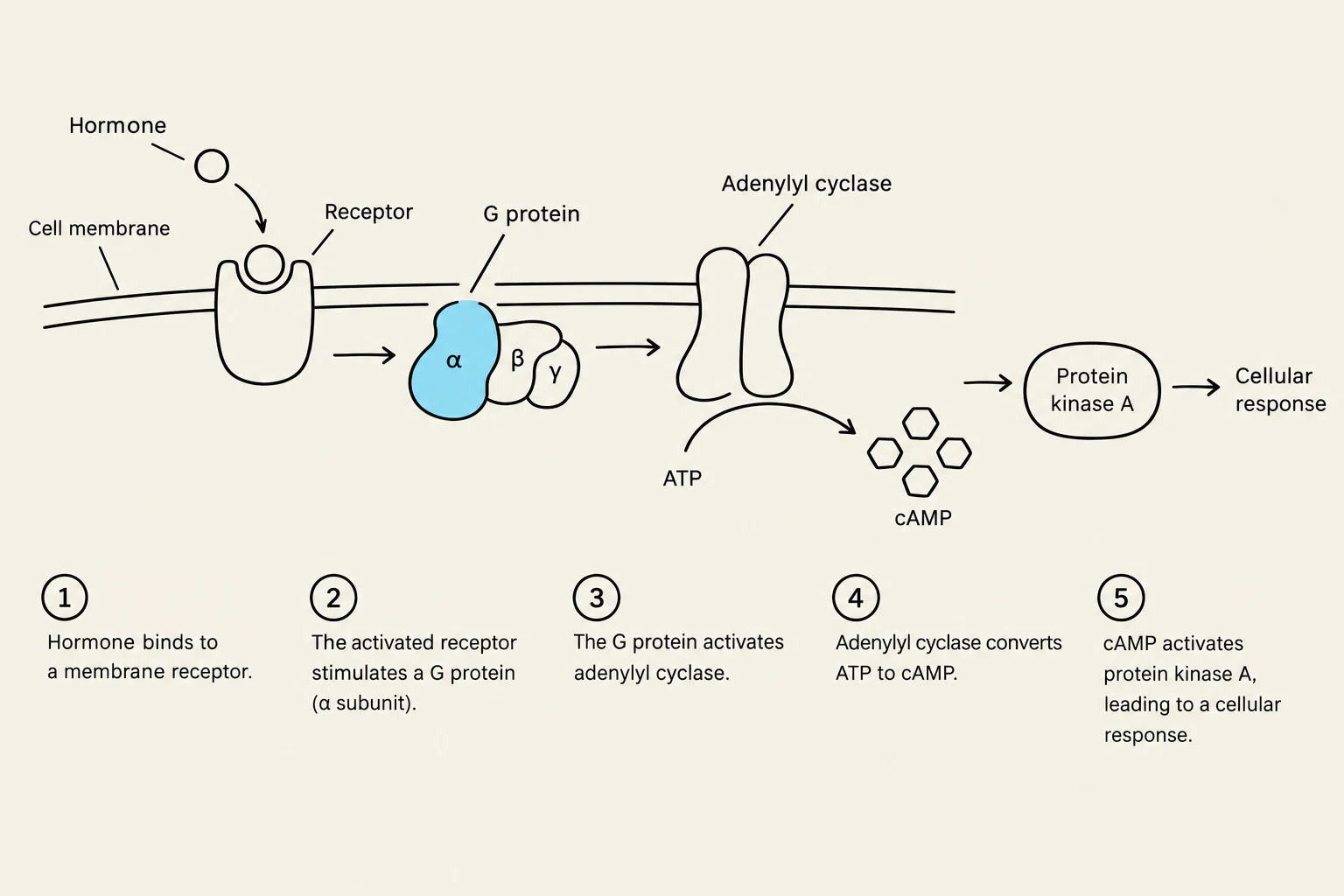
Since hydrophilic hormones cannot enter the cell, they use a second-messenger system to relay the signal. A common pathway is the Adenylate Cyclase–cAMP System:
The hormone (the first messenger) binds to a receptor on the plasma membrane.
This activates a G-protein associated with the receptor.
The G-protein activates the enzyme adenylate cyclase.
Adenylate cyclase converts ATP into cyclic adenosine monophosphate (cAMP), which acts as the second messenger.
cAMP activates protein kinases, which perform phosphorylation (the transfer of a phosphate group from ATP to another substance).
This process leads to signal amplification, where a single hormone molecule can trigger the production of hundreds of second-messenger molecules, creating a massive cellular response.
This diagram illustrates the process of signal transduction initiated by a hormone binding to a cell membrane receptor, leading to a cellular response through a G protein and adenylyl cyclase pathway.
Direct Gene Activation (Hydrophobic)
Hydrophobic hormones follow a path of direct gene activation. They diffuse through the membrane and bind to an intracellular receptor. The resulting hormone-receptor complex moves into the nucleus and binds to specific regions of DNA called Hormone-Response Elements, directly initiating the transcription of genes.
Exam Tip: If a question asks about the difference in speed or location of receptors, remember: Hydrophilic hormones = Membrane receptors + Second messengers. Hydrophobic hormones = Intracellular receptors + Direct DNA interaction.
Regulatory Dynamics and Interactions
Cells do not simply sit passively; they actively manage their sensitivity to hormonal signals through two processes:
Upregulation: When hormone levels in the blood are low, target cells increase the number of receptors to become more sensitive to the signal.
Downregulation: After prolonged exposure to high hormone levels, cells decrease their number of receptors to protect themselves from overstimulation.
Hormones also interact with one another to fine-tune physiological responses:
Synergists: Two hormones act on the same target cell to produce the same effect.
Antagonists: Two hormones act on the same target cell but produce opposite effects (e.g., insulin lowering blood glucose while glucagon raises it).
Complementary Actions: Different hormones affect different target cells to achieve a single, common goal.
The Endocrine Landscape
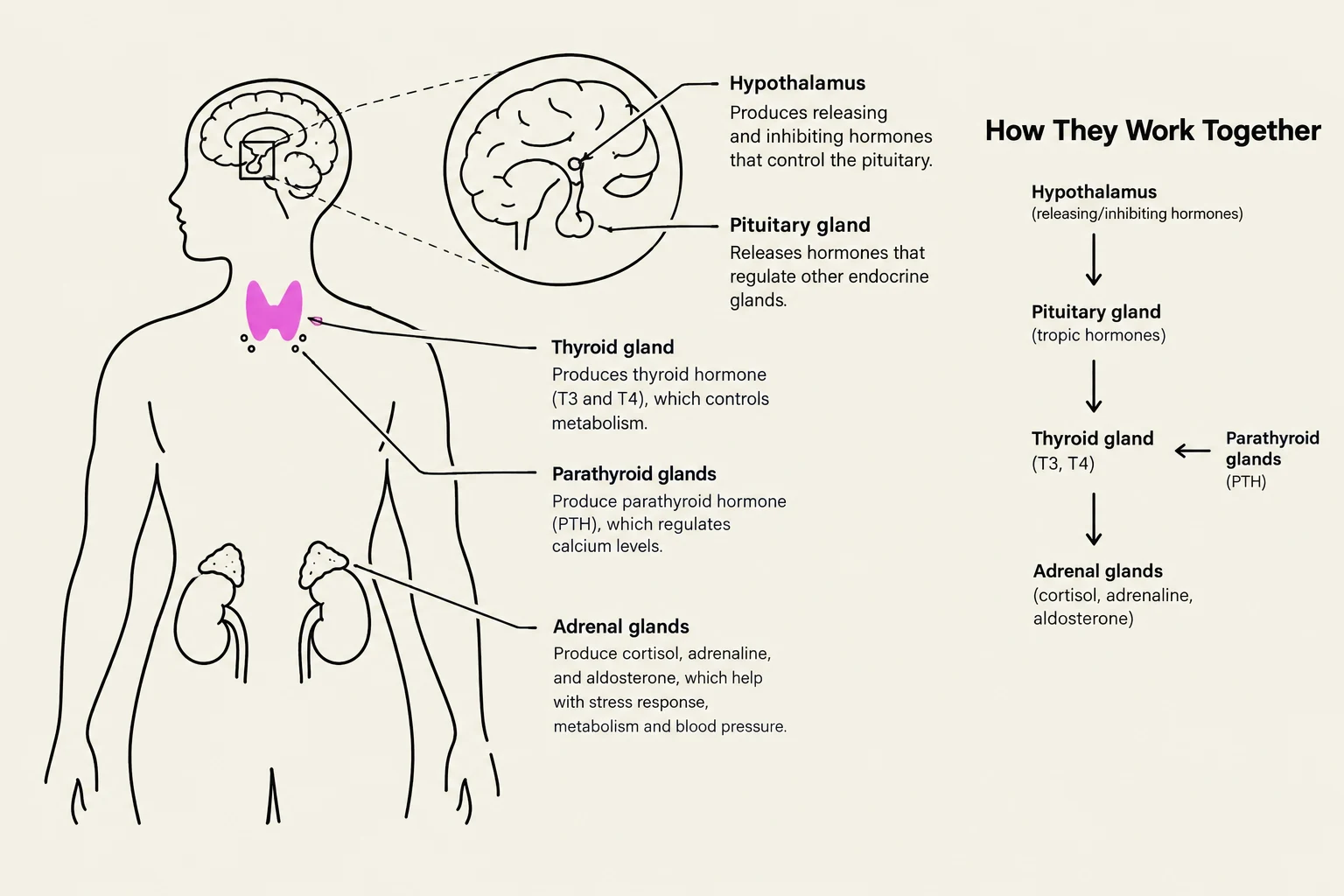
The endocrine system is composed of several types of organs. Primary endocrine glands include the anterior pituitary, thyroid, parathyroid, adrenal cortices, pancreas, thymus, and gonads (ovaries/testes). However, many other organs act as secondary endocrine glands by producing hormones despite belonging to other systems, such as the heart, kidneys, and adipose tissue. Additionally, neuroendocrine organs like the hypothalamus and pineal gland consist of nervous tissue but secrete chemicals known as neurohormones.
A clinical note of importance is Paraneoplastic Syndrome. This occurs when cancer cells (often in the lungs or GI tract) begin to secrete hormones inappropriately. Because these hormones can disrupt fluid, calcium, or sodium homeostasis, the symptoms of paraneoplastic syndrome may actually appear before the physical symptoms of the cancer itself, providing a vital clue for early diagnosis.
This diagram illustrates the human endocrine system, detailing the locations and functions of the hypothalamus, pituitary gland, thyroid gland, parathyroid glands, and adrenal glands, along with a flowchart showing their interconnectedness and hormonal regulation.
Keep reading for free.
Create an account to finish this reading and make it part of your study routine.