An overview of the endocrine system, its key glands and hormones, and the regulation of vital bodily processes such as metabolism, growth, and reproduction. It also details common endocrine disorders like diabetes mellitus, Addison's disease, and Cushing's syndrome, along with their clinical manifestations and manageme
The endocrine system is a sophisticated regulatory network that maintains the body's internal stability, or homeostasis. Unlike the nervous system, which uses electrical impulses, the endocrine system communicates through the secretion of hormones—biochemical substances released from specialized endocrine system glands. These hormones travel through the bloodstream to bind with specific target receptors on cells, where they direct vital processes including cellular metabolism, growth, development, stress responses, and reproduction.
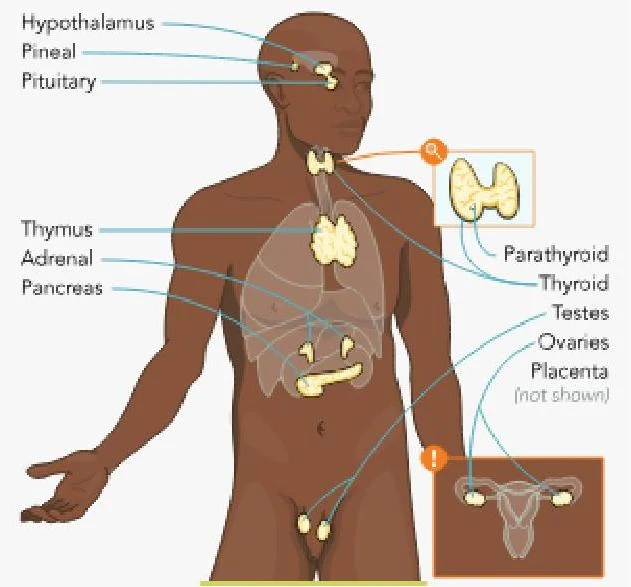
Diagram of the human endocrine system, illustrating the locations of various glands including the hypothalamus, pituitary, pineal, thyroid, parathyroid, thymus, adrenal glands, pancreas, testes, and ovaries.
The Command Center: Hypothalamus and Pituitary Gland
The coordination of the endocrine system begins in the brain. The hypothalamus, located deep within the brain, serves as the primary coordinator. It acts as a bridge, linking the endocrine system to the nervous system to maintain homeostasis.
The hypothalamus regulates the pituitary gland through a complex feedback relationship known as the hypothalamic-pituitary axis. The pituitary gland, a pea-sized structure connected to the hypothalamus by the pituitary stalk, is often referred to as the "master regulator" because it secretes hormones that stimulate other endocrine glands. Key hormones released by the pituitary include:
Thyroid-stimulating hormone (TSH): Stimulates the thyroid gland.
Adrenocorticotropic hormone (ACTH): Regulates the adrenal glands.
Follicle-stimulating hormone (FSH) and Luteinizing hormone (LH): Regulate reproductive health.
Growth hormone, Prolactin, and Antidiuretic hormone (vasopressin): Regulate growth and fluid balance.
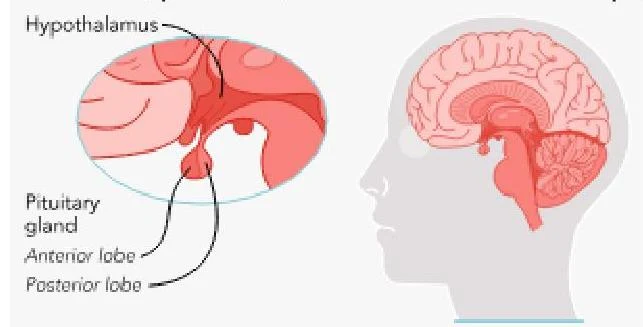
Diagram showing the hypothalamus and pituitary gland within the human brain, with labels for the anterior and posterior lobes of the pituitary gland.
Adrenal Glands and Steroid Regulation
Located atop each kidney are the adrenal glands. These glands are critical for survival, as they secrete two essential hormones: cortisol and aldosterone. Cortisol is vital for managing metabolism and the body's response to stress, while aldosterone helps regulate blood pressure and electrolyte balance.
When hormone production is disrupted, serious clinical conditions can arise:
Addison’s disease: A form of primary adrenal insufficiency where the glands fail to produce adequate amounts of cortisol and aldosterone. This impairs the body's ability to regulate blood pressure, electrolytes, and glucose.
Cushing’s syndrome: Characterized by the excessive production of cortisol. This can lead to hypertension, diabetes mellitus, and an increased susceptibility to infection.
The Pancreas and Glucose Homeostasis
The pancreas is a unique organ that serves both exocrine functions (secreting digestive enzymes) and endocrine functions. In its endocrine capacity, it is responsible for regulating blood glucose levels via the islets of Langerhans.
Two primary hormones manage the body's fuel supply:
Insulin: Produced by beta cells, insulin acts as a "key" that unlocks cells, allowing glucose to move from the bloodstream into the cells to be used for energy.
Glucagon: Released in response to low blood glucose, glucagon signals the liver to release stored glucose to prevent hypoglycemia.
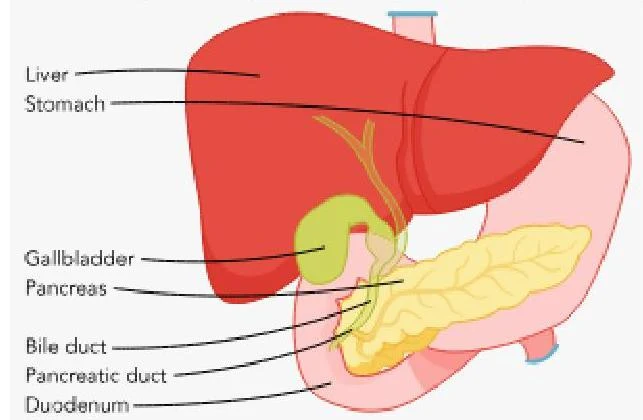
Diagram of the human liver, stomach, gallbladder, pancreas, bile duct, pancreatic duct, and duodenum.
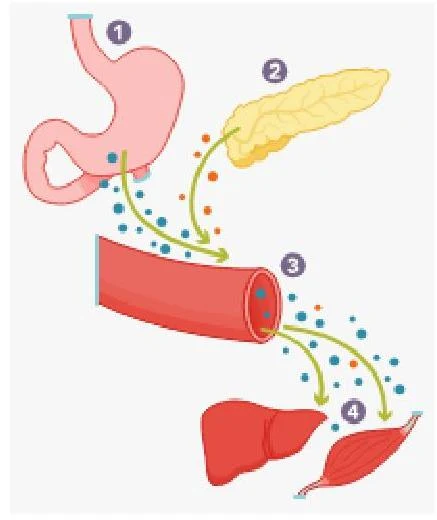
Diagram illustrating the role of the pancreas in regulating blood glucose levels. After digestion in the stomach (1), glucose enters the bloodstream (3). The pancreas (2) releases insulin, which signals the liver and muscles (4) to absorb glucose from the blood.
Understanding Diabetes Mellitus
Disruptions in the insulin-glucagon pathway lead to the most common endocrine disorders: diabetes mellitus.
Type 1 Diabetes Mellitus (T1DM)
T1DM is an autoimmune disease where the body's immune system destroys the insulin-producing beta cells in the pancreas. Because there is little to no insulin produced, patients must rely on exogenous insulin for survival.
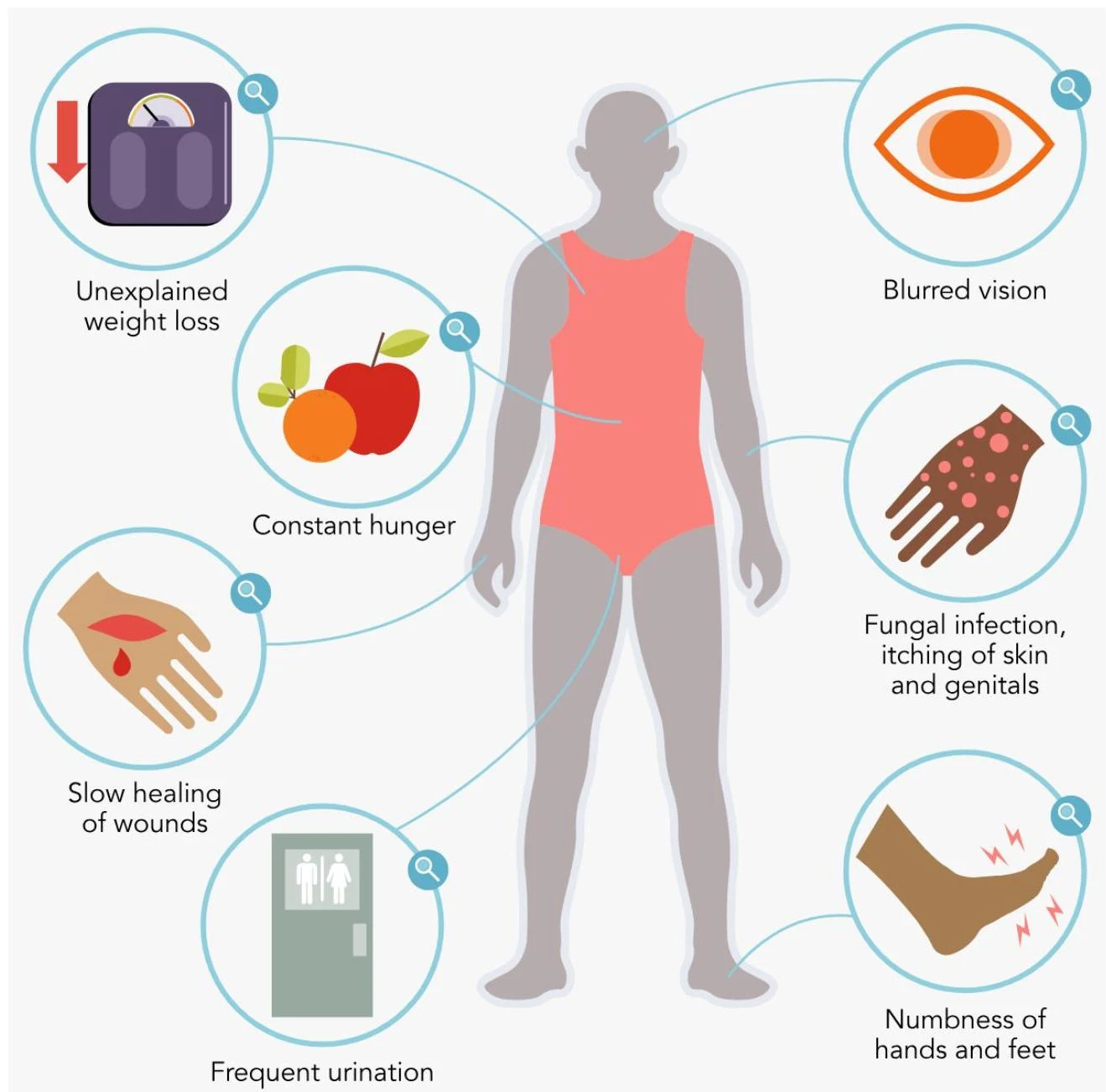
This illustration depicts common symptoms associated with diabetes, including unexplained weight loss, constant hunger, blurred vision, fungal infections, slow wound healing, frequent urination, and numbness in extremities.
Type 2 Diabetes Mellitus (T2DM)
T2DM is characterized by a combination of insulin resistance (where cells fail to respond effectively to insulin) and a progressive decrease in insulin secretion. Unlike T1DM, T2DM is often associated with lifestyle factors such as obesity and physical inactivity, and in some cases, it can be managed or partially reversed through significant weight loss and dietary changes.
Clinical Manifestations: Hyperglycemia vs. Hypoglycemia
The balance of glucose in the blood is a delicate equilibrium. When this balance fails, patients experience life-threatening extremes.
Hyperglycemia (High Blood Sugar)
Hyperglycemia occurs when blood glucose levels exceed the expected range (e.g., fasting blood glucose >110 mg/dL or casual glucose >200 mg/dL).
Causes: Missing insulin doses, excessive carbohydrate intake, or physiological stress.
Complications: If untreated, it can lead to Diabetic Ketoacidosis (DKA) or Hyperglycemic Hyperosmolar State (HHS).
Hypoglycemia (Low Blood Sugar)
Hypoglycemia is a failure of glucose homeostasis where blood glucose falls too low (typically fasting glucose ≤70 mg/dL).
Causes: Too much insulin, skipping meals, or excessive exercise.
Symptoms: Shakiness, sweating (diaphoresis), confusion, dizziness, and tachycardia.
Treatment: For conscious patients, the 15-15 Rule is used: consume 15g of fast-acting carbohydrates, wait 15 minutes, and recheck blood glucose.
Exam Tip: The 15-15 Rule
When treating a conscious patient with hypoglycemia, always use fast-acting carbohydrates (like juice or glucose tablets) rather than foods high in fat or protein, as fat and protein can delay the absorption of sugar.
Summary Table: Endocrine Imbalances
Condition
Hormone Imbalance
Primary Clinical Feature
Addison's Disease
↓ Cortisol & Aldosterone
Low blood pressure, electrolyte imbalance
Cushing's Syndrome
↑ Cortisol
Hypertension, diabetes, weight gain
Type 1 Diabetes
↓ Insulin (Absolute)
Autoimmune destruction of beta cells
Type 2 Diabetes
↓ Insulin effectiveness (Resistance)
Progressive beta-cell dysfunction
Keep reading for free.
Create an account to finish this reading and make it part of your study routine.