The Developmental Origins of Health and Disease (DOHaD)
Explore the Developmental Origins of Health and Disease (DOHaD) framework, which explains how early-life exposures and environmental factors influence lifelong health, susceptibility to chronic conditions, and the roles of developmental plasticity, programming, and epigenetics.
How much of our adult health is determined by the choices we make as adults, and how much is written in the chapters of our earliest development? The Developmental Origins of Health and Disease (DOHaD) framework suggests that the answer lies in the environment experienced during critical windows of growth. By exploring how early-life exposures influence the structure and function of the body, we can understand why certain individuals are more susceptible to chronic conditions like obesity, diabetes, and hypertension later in life.
Plasticity and Programming: The Mechanisms of Change
To understand DOHaD, we must first distinguish between two fundamental biological concepts: developmental plasticity and developmental programming.
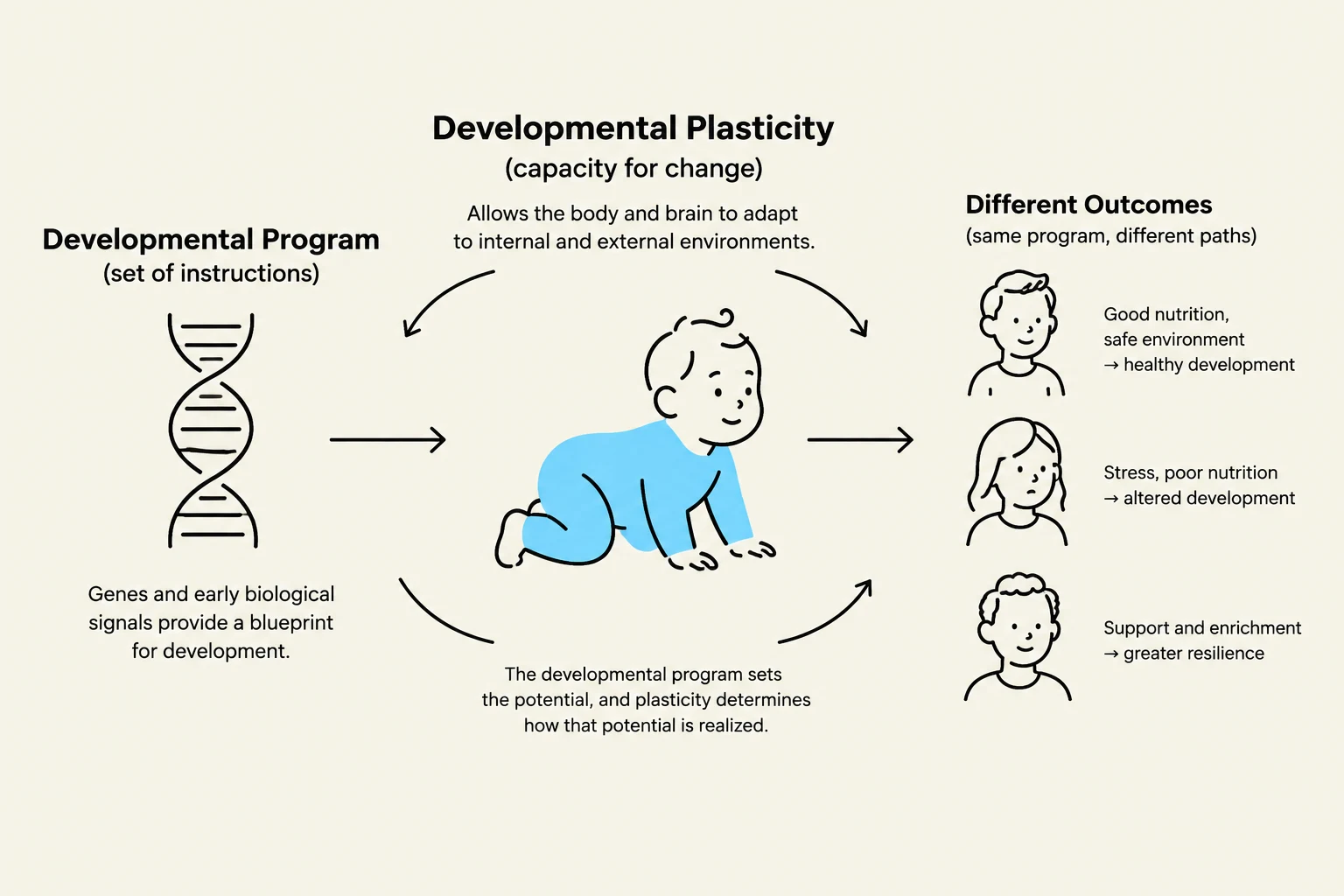
Developmental plasticity is an inherent aspect of normal development. It refers to the ability of a single genotype to produce more than one alternative form of structure, physiological state, or behavior in response to environmental conditions. Essentially, it is the biological "flexibility" that allows an organism to adapt its phenotype to its surroundings.
Developmental programming occurs when a specific stimulus or "insult"—such as nutritional deficiency, maternal illness, or placental dysfunction—is applied during a "sensitive" or "critical" period of development. This stimulus triggers lasting changes in the body's structure or function, often increasing susceptibility to disease in adulthood.
Exam Tip: Remember that plasticity is the potential for change (the capacity), while programming is the actual process where an environmental stimulus results in a permanent physiological shift.
This diagram illustrates developmental plasticity, showing how a developmental program (genes and biological signals) interacts with environmental factors to influence different developmental outcomes, such as healthy development, altered development, or greater resilience.
When programming occurs, it often results in significant structural alterations in vital organs:
Pancreas: Reduced β cell number and impaired insulin secretion.
Kidneys: Decreased nephron number, which increases the risk of hypertension (HTN).
Heart/Vasculature: Reduced myocyte number and decreased microvascular density, increasing ischemia risk.
Why would an organism undergo such drastic structural changes? Biologists propose two primary models to explain these adaptations.
The Developmental Constraints Model
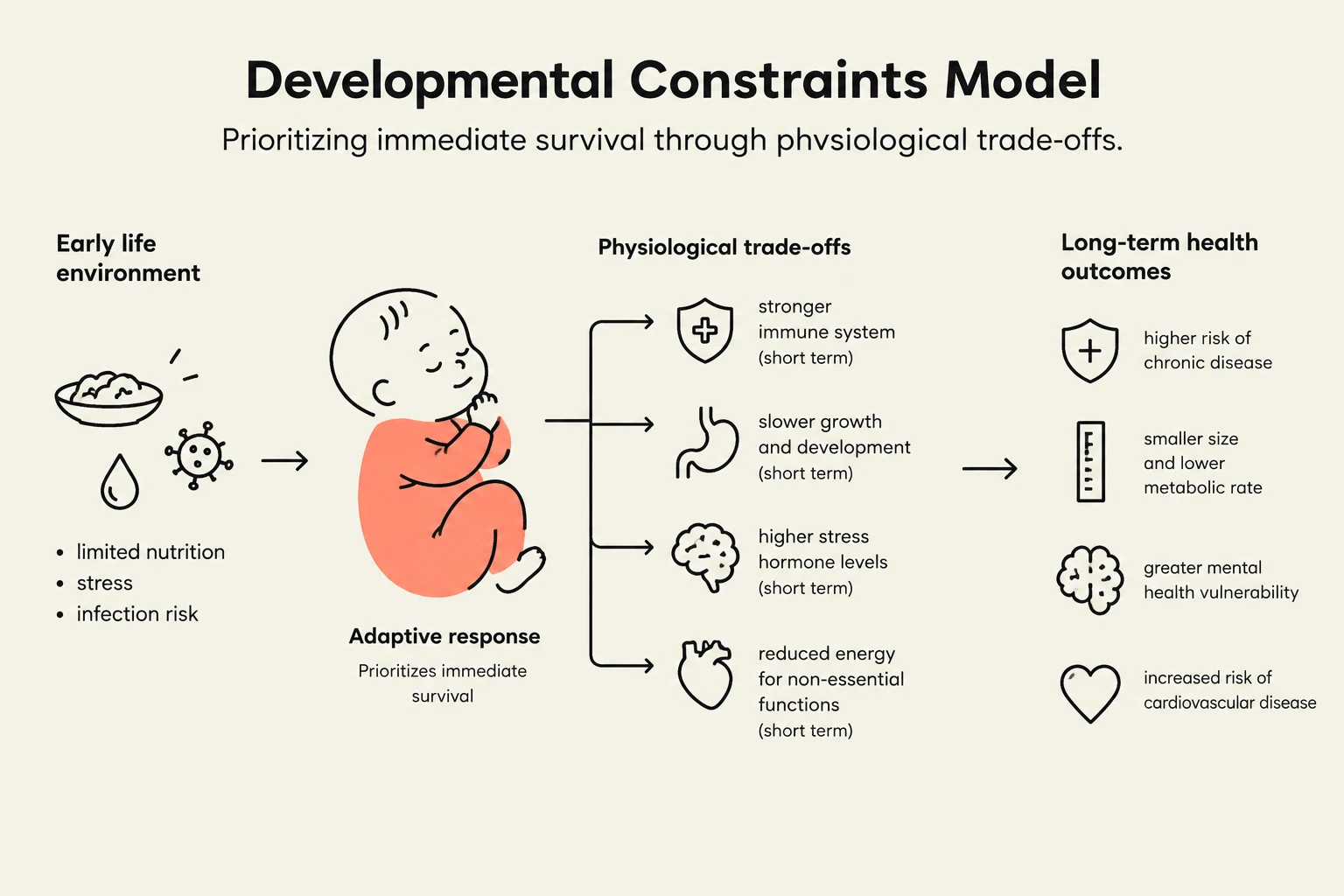
This model views adaptation as an immediate adaptive response. In this scenario, an organism adjusts its phenotype during development to prioritize immediate survival or avoid death, often at the expense of future health. This is a physiological "trade-off," such as "brain-sparing," where resources are diverted to vital neural development at the cost of other organ systems.
The Predictive Adaptive Response (PAR) Model
The PAR model suggests that the fetus uses environmental cues received in utero to "predict" the environment it will encounter after birth. The organism adjusts its phenotype to optimize performance for that predicted future environment. If the predicted environment matches the actual postnatal environment, the individual gains a fitness advantage. However, if the environments do not match, the adaptation becomes a disadvantage.
The Developmental Constraints Model illustrates how prioritizing immediate survival through physiological trade-offs in early life, influenced by factors like nutrition, stress, and infection risk, can lead to specific long-term health outcomes such as increased risk of chronic disease, smaller size, lower metabolic rate, greater mental health vulnerability, and increased risk of cardiovascular disease.
The Thrifty Phenotype and Developmental Mismatch
A cornerstone of DOHaD is the Thrifty Phenotype Hypothesis, which is closely linked to nutritional programming. This hypothesis posits that undernutrition during critical developmental windows programs the body to be highly efficient at energy conservation.
While a "thrifty" phenotype is beneficial in an environment of scarcity, it leads to developmental mismatch when the postnatal environment provides abundance. This mismatch—where the predicted environment (scarcity) differs from the actual environment (abundance)—results in maladaptation. This is a primary driver for the rising global rates of obesity, Type 2 diabetes, and metabolic syndrome.
Case Study: The Dutch Hunger Winter
The human impact of these concepts is vividly illustrated by the Dutch Hunger Winter. Studies of individuals exposed to famine during different stages of gestation showed that the timing of exposure was critical:
Early exposure: Associated with a 3x increase in coronary heart disease and an atherogenic lipid profile.
Mid exposure: Linked to being lighter and shorter at birth, with increased risk of obstructive airway disease in adulthood.
Late exposure: Linked to being lighter and shorter throughout life, and an increased risk of impaired glucose tolerance.
Notably, these phenotypes can be induced even in individuals who had a normal birth weight.
The Pathogenesis of Disease: The Multiple Hits Model
The development of chronic disease is rarely the result of a single event. Instead, it is often explained by the Multiple Hits model.
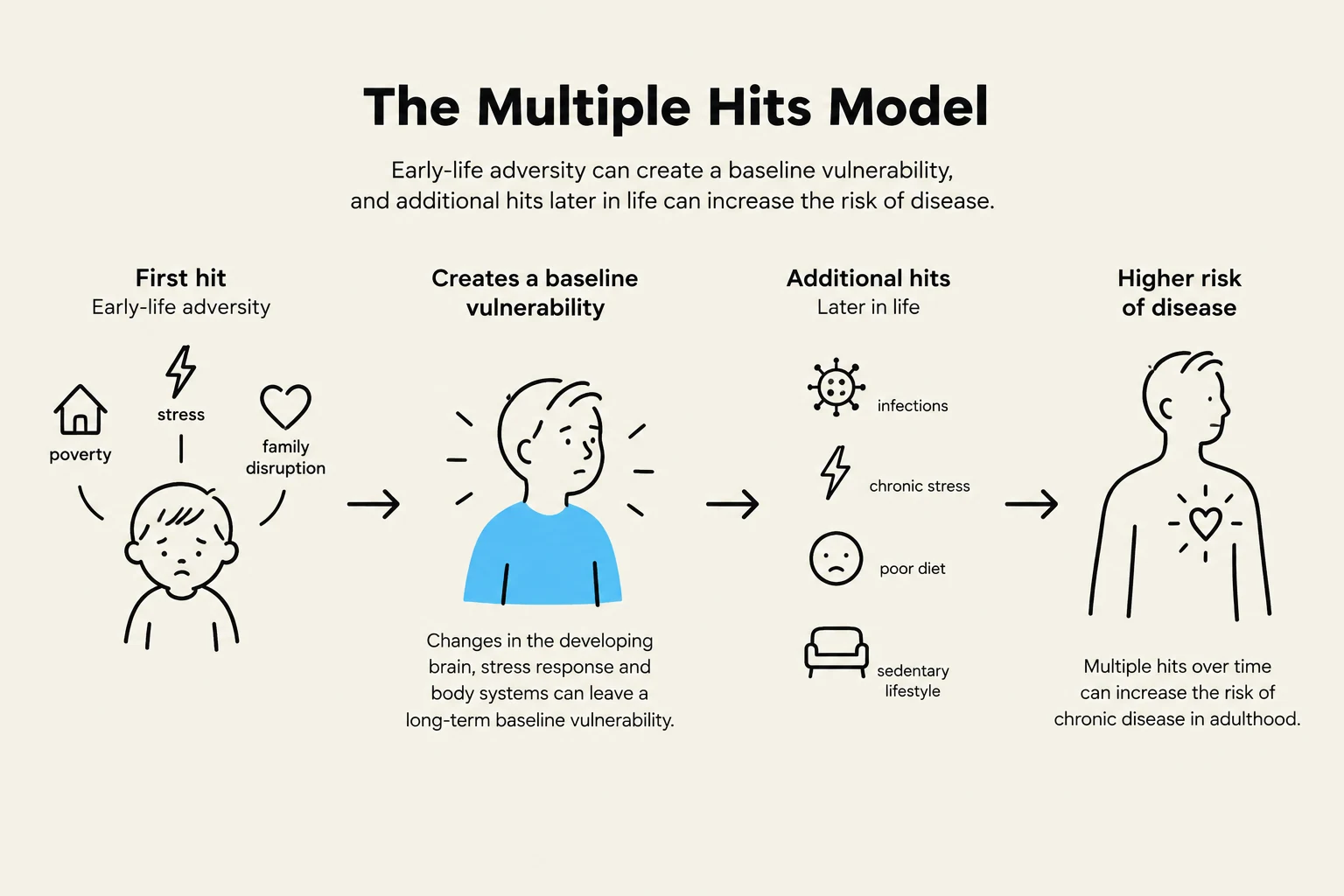
The First Hit: Early-life adversity (e.g., maternal malnutrition, placental disease, or toxins) establishes an underlying physiological vulnerability.
The Second (or subsequent) Hits: Postnatal stressors—such as poor diet, infection, or psychological stress—act upon that established vulnerability to trigger the actual onset of clinical disease in adulthood.
The Multiple Hits Model illustrates how early-life adversity can create a baseline vulnerability, and how subsequent stressors like infections, chronic stress, poor diet, or a sedentary lifestyle can increase the risk of chronic disease in adulthood.
The Role of Epigenetics
How do these environmental cues "stick" to the DNA without changing the genetic sequence itself? The answer lies in epigenetics. Epigenetic modifications regulate gene transcription by altering how accessible DNA is to the cellular machinery.
Key epigenetic mechanisms include:
DNA Methylation: The addition of methyl groups to DNA (often at CpG islands). High levels of methylation in promoter regions typically "turn off" or repress gene expression.
Histone Modification:
Acetylation: Adding acetyl groups to histones (via HAT enzymes) neutralizes their positive charge, weakening the bond with DNA and "opening" the chromatin to increase gene expression.
Methylation: Adding methyl groups to histones (via HMT enzymes) can either activate or repress genes depending on the specific location.
These marks can be intergenerational (affecting the direct offspring/F1) or even transgenerational (if the effect persists into the F2 or F3 generations in the absence of further exposure). In diseases like Type 2 diabetes, altered DNA methylation has been observed in pancreatic islets, adipose tissue, and skeletal muscle, suggesting that epigenetic marks could eventually serve as biomarkers for disease risk.
Keep reading for free.
Create an account to finish this reading and make it part of your study routine.