


The human brain is an incredibly complex organ, but much of its high-level processing—the thoughts, decisions, and perceptions that define our "mental life"—occurs in a specific outer layer known as the cerebral cortex. This layer is responsible for the sophisticated functions that separate humans from many other species, including complex planning, language, and self-control. By understanding how the cortex is organized into hemispheres, lobes, and specialized functional areas, we can begin to map the biological foundations of the mind.
Organization: Hemispheres and Convolutions
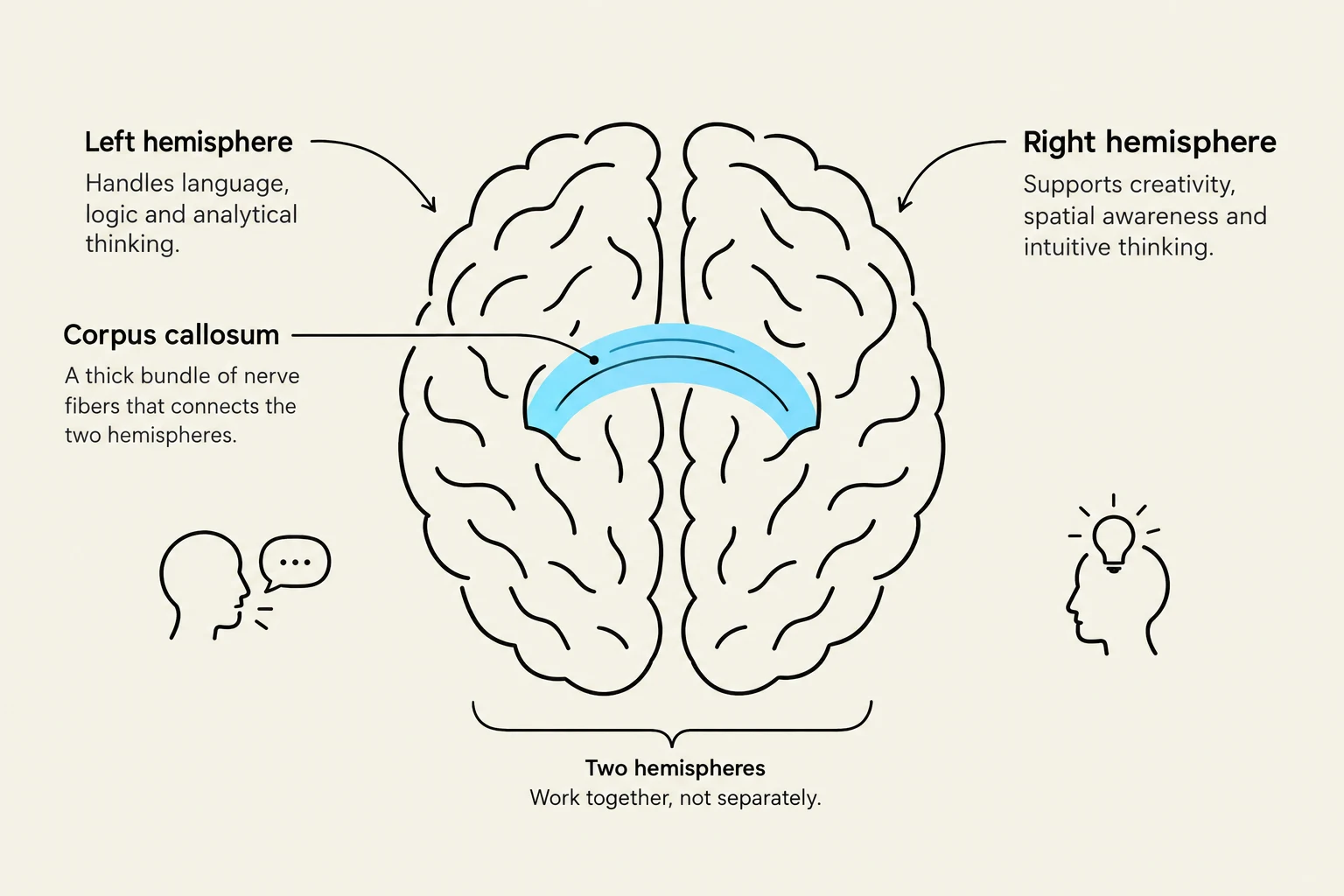
The cerebral cortex is not a smooth surface; instead, it is characterized by numerous folds and ridges known as convolutions. These wrinkles serve a vital purpose: they allow a much larger surface area of cortical tissue to be packed into the limited space of the skull. A higher number of convolutions generally indicates a more densely packed cerebral cortex.
The cortex is divided into two symmetrical halves called hemispheres. While each hemisphere has its own specialized functions, they are not isolated. They are connected by a thick bridge of fibers called the corpus callosum, which allows for rapid communication between the two sides, ensuring that each half of the brain knows what the other is doing.
Exam Tip: Contralateral Organization Remember that the brain operates with "contralateral" organization. This means that one hemisphere of the brain is connected to and controls the opposite side of the body. For example, damage to the left side of the head often results in paralysis or numbness on the right side of the body.
Keep reading for free.
Create an account to finish this reading and make it part of your study routine.
Continue reading freeAlready have an account? Log in
Updated