


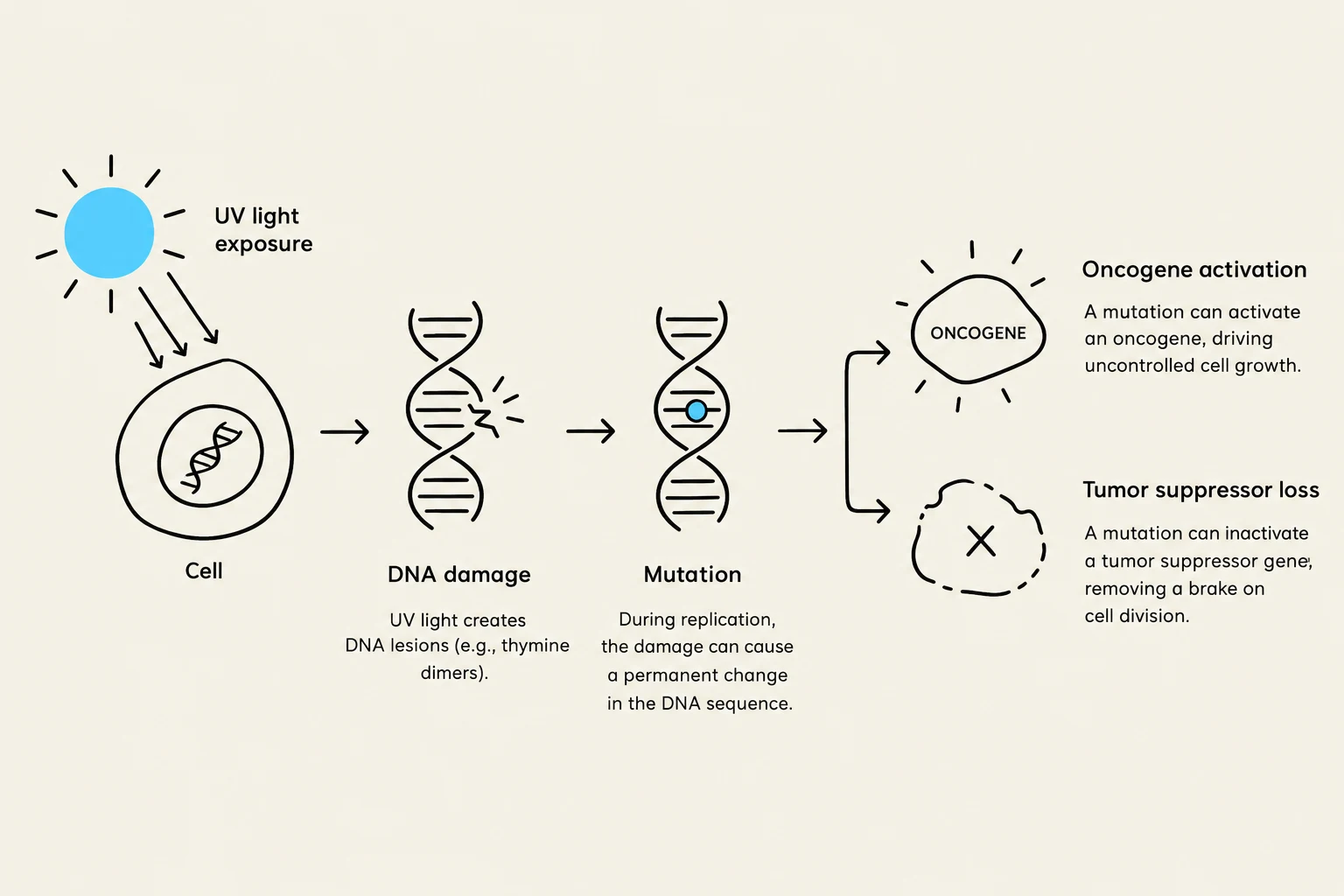
Every living organism relies on a fundamental process: the ability of cells to replicate themselves accurately. This process, known as the cell cycle, is a highly regulated series of events that ensures a cell duplicates its genetic material and divides into two identical daughter cells. When this cycle functions correctly, life flourishes; however, when the regulatory mechanisms fail due to genetic errors or environmental damage, the results can lead to serious health conditions, including cancer.
The Stages of the Cell Cycle
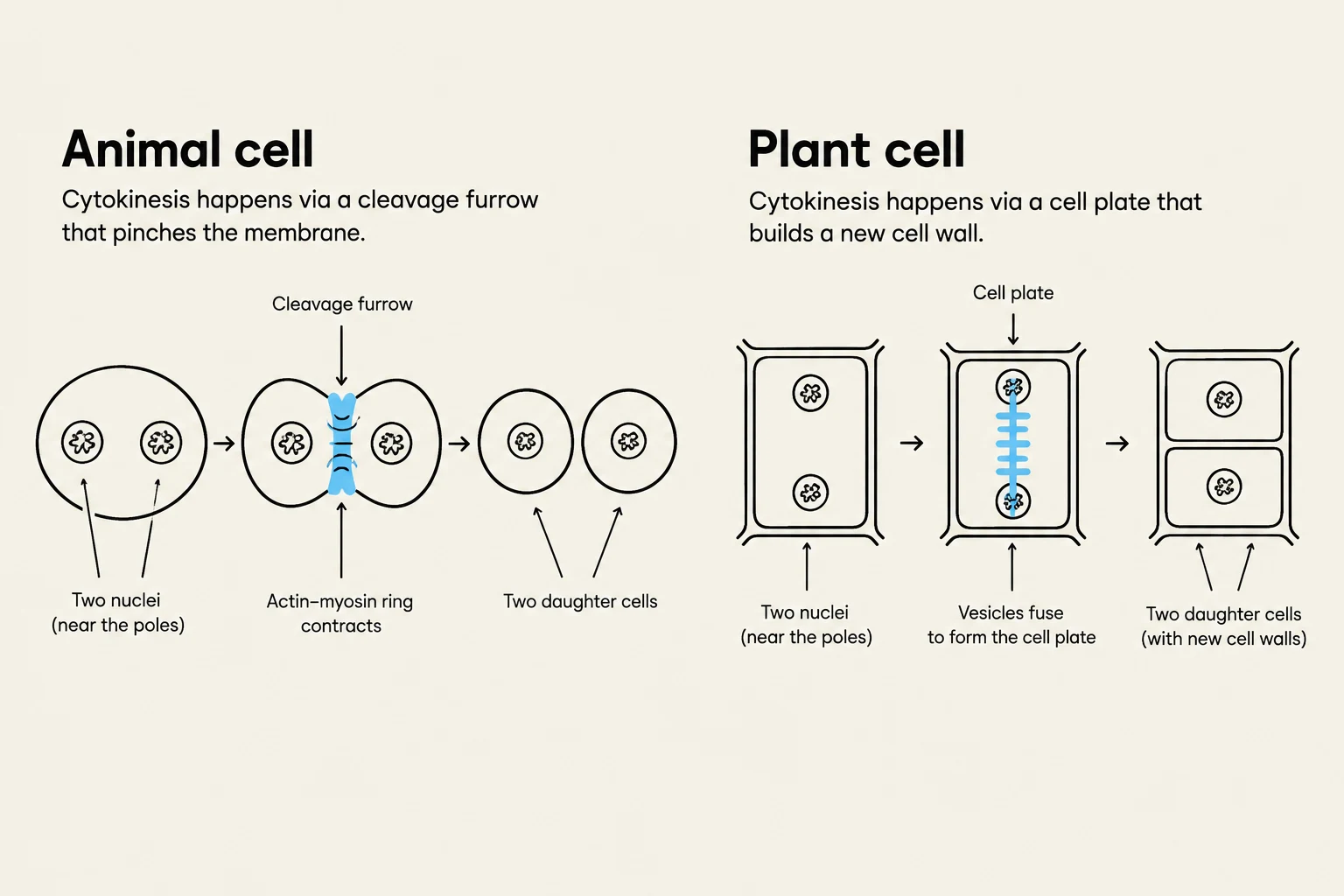
The cell cycle is not a single event but a continuous loop divided into two primary stages: interphase and the division phase (which includes mitosis and cytokinesis).
Interphase: Preparation and Replication
Before a cell can divide, it must prepare. This occurs during interphase, the non-dividing stage of the cycle. The most critical task during this stage is DNA replication, where the cell creates an exact copy of its entire genome to ensure that both future daughter cells receive a complete set of instructions.
Mitosis: Dividing the Nucleus
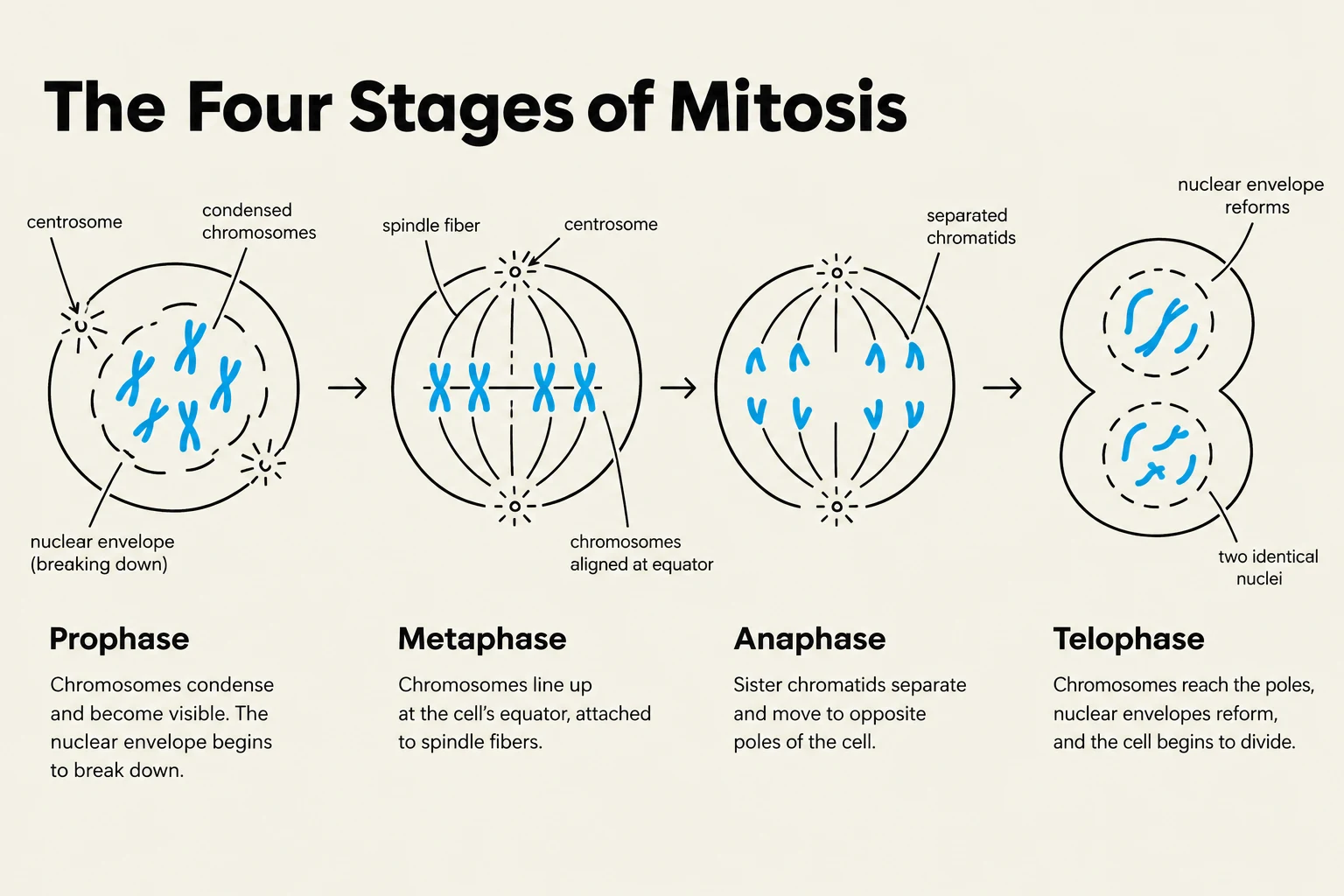
Once the DNA is replicated, the cell enters mitosis. This is the specific process where the cell divides its chromosomes to produce two identical nuclei. Mitosis is categorized into four distinct, sequential phases:
- Prophase: The nuclear membrane begins to disassemble, the chromosomes become visible under a microscope, and centrioles migrate to opposite poles of the cell.
- Metaphase: The spindle apparatus is fully formed, and spindle fibers attach to the chromosomes. These chromosomes then line up neatly at the cell's equator.
- Anaphase: The centromere (the connection point) divides, allowing the sister chromatids to separate and move toward opposite poles.
- Telophase: The chromosomes reach the poles and begin to uncoil. Simultaneously, the nuclear envelope begins to reform around each set of chromosomes.
Keep reading for free.
Create an account to finish this reading and make it part of your study routine.
Continue reading freeAlready have an account? Log in
Updated