


To study astronomy is to engage in more than just the scientific analysis of celestial objects, space, and the universe. While modern science defines astronomy as the investigation of the properties and laws governing the cosmos, many scholars suggest a more profound definition: the investigation of the human condition.
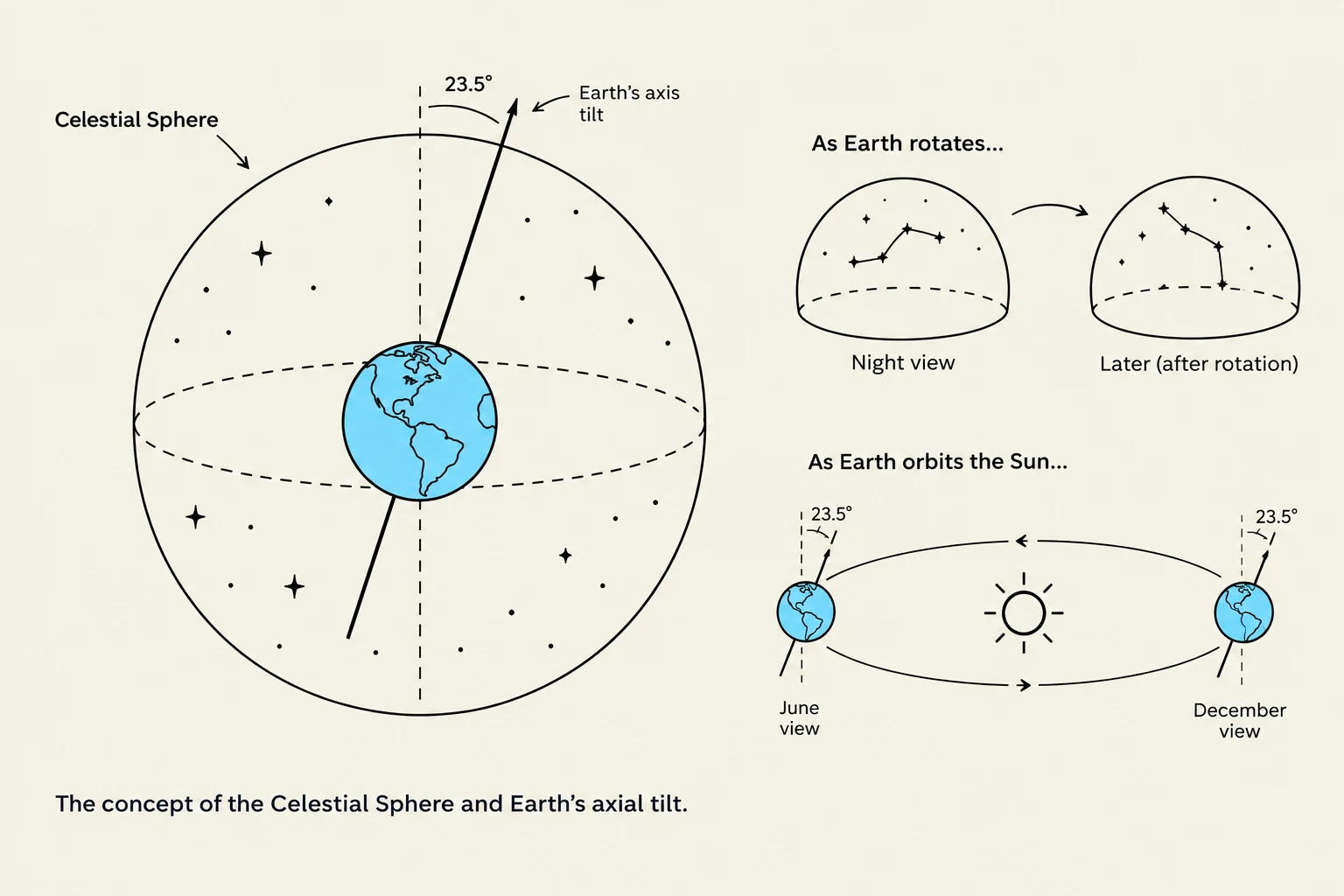
When we look up at the night sky, we are looking at the "Celestial Sphere"—a view of the sky that shifts with the time of day and the season. Because the Earth rotates and its axis is tilted at approximately relative to the Sun, our perspective of the stars is constantly in motion. This constant movement has, for millennia, provided a canvas upon which humanity has projected its myths, its fears, its navigational needs, and its spiritual identities.
The Sky as a Storybook: Mythology and Constellations
For many ancient civilizations, the stars were not merely distant balls of gas, but characters in an eternal drama. The way we divide the sky today owes much to the Ancient Greeks, who used their rich tapestry of mythology to establish a framework of 88 constellations to categorize the heavens.
This practice of "sky storytelling" was not unique to the Mediterranean. The indigenous people of North America also integrated celestial bodies into their oral traditions, using the stars to preserve history and cultural values. Beyond large constellations, specific star clusters often served as central pillars for these narratives. A prime example is the Pleiades, an open star cluster that has served as a focal point for storytelling across various global cultures.

Keep reading for free.
Create an account to finish this reading and make it part of your study routine.
Continue reading freeAlready have an account? Log in
Updated