


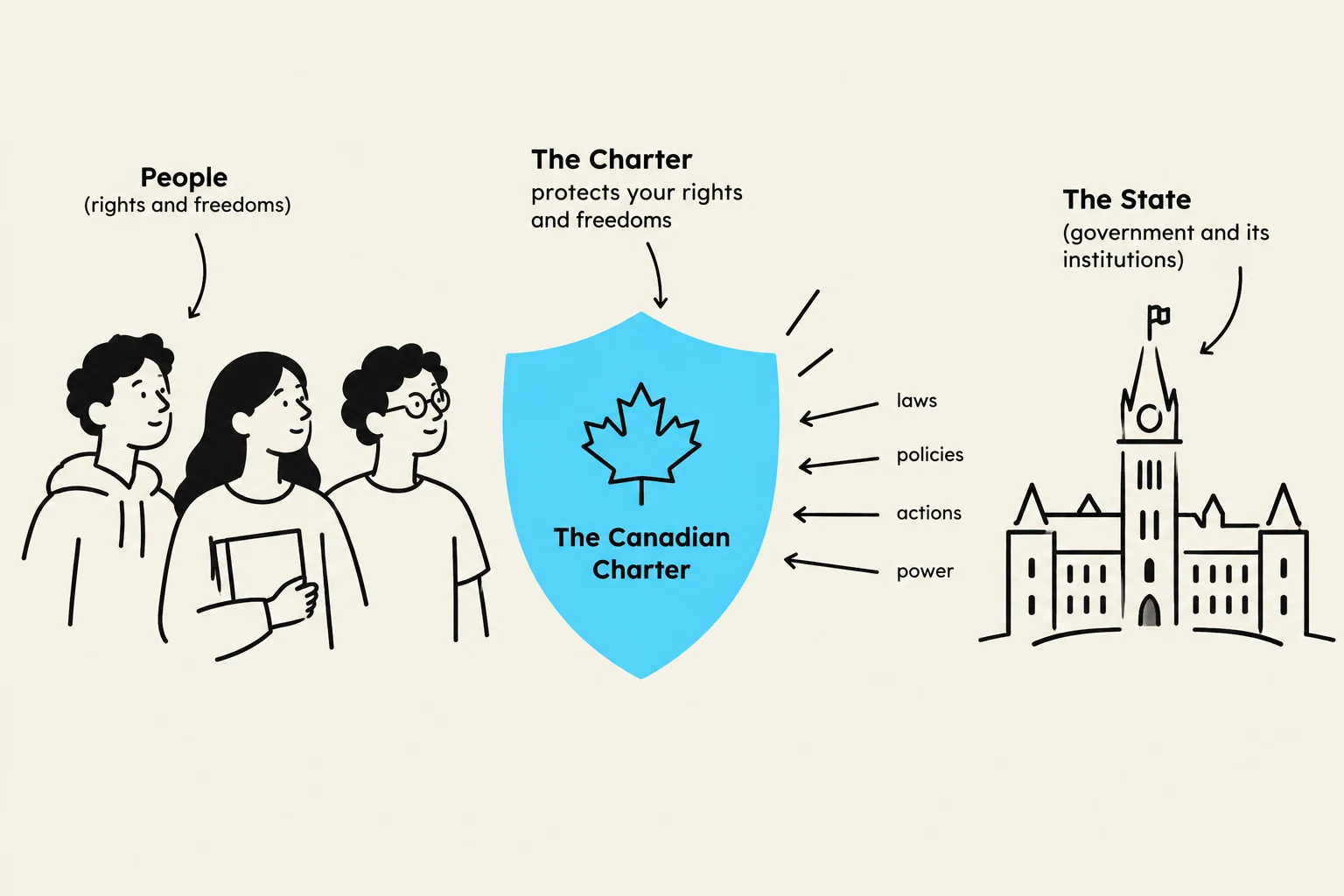
The Canadian Charter of Rights and Freedoms, enacted in 1982, represents one of the most significant shifts in Canada's constitutional history. While earlier frameworks focused on the division of powers between federal and provincial governments, the Charter introduced a mechanism to protect individual rights against state interference. Within this framework, Sections 7 through 14 constitute the "Legal Rights" cluster, specifically designed to protect individuals when they interact with the criminal justice system and the coercive power of the state.
The Foundation: Life, Liberty, and Security of the Person (Section 7)
Section 7 is often considered the "heart" of the legal rights provisions. It states that "everyone has the right to life, liberty and security of the person and the right not to be deprived thereof except in accordance with the principles of fundamental justice".
To understand Section 7, one must break it down into its three core components:
- Life: Protection against the state taking a person's life (e.g., through the death penalty, which is not permitted in Canada).
- Liberty: Protection against the state restricting a person's freedom of movement or autonomy in making fundamental personal choices.
- Security of the Person: Protection against state actions that cause serious physical or psychological harm, or that interfere with bodily integrity.
However, these rights are not absolute. The crucial qualifier is the phrase "principles of fundamental justice." This means the government can deprive you of your liberty (for example, by putting you in prison), but only if they follow fair, predictable, and non-arbitrary legal processes.
Exam Tip: When analyzing a Section 7 claim, always use a two-step test:
- Has the individual been deprived of life, liberty, or security?
- If yes, was that deprivation contrary to the principles of fundamental justice (e.g., was the law arbitrary, overbroad, or grossly disproportionate)?


Keep reading for free.
Create an account to finish this reading and make it part of your study routine.
Continue reading freeAlready have an account? Log in
Updated