


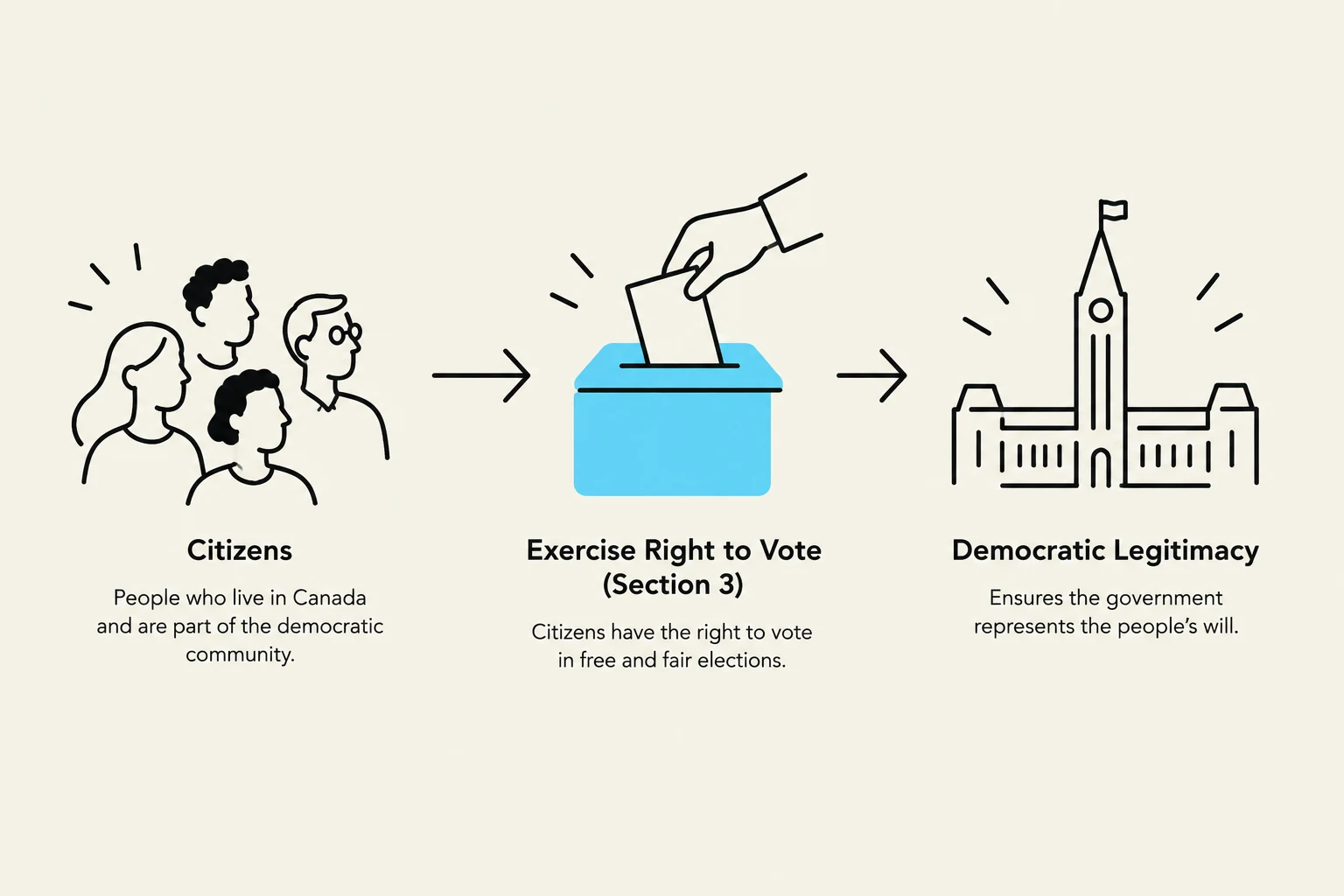
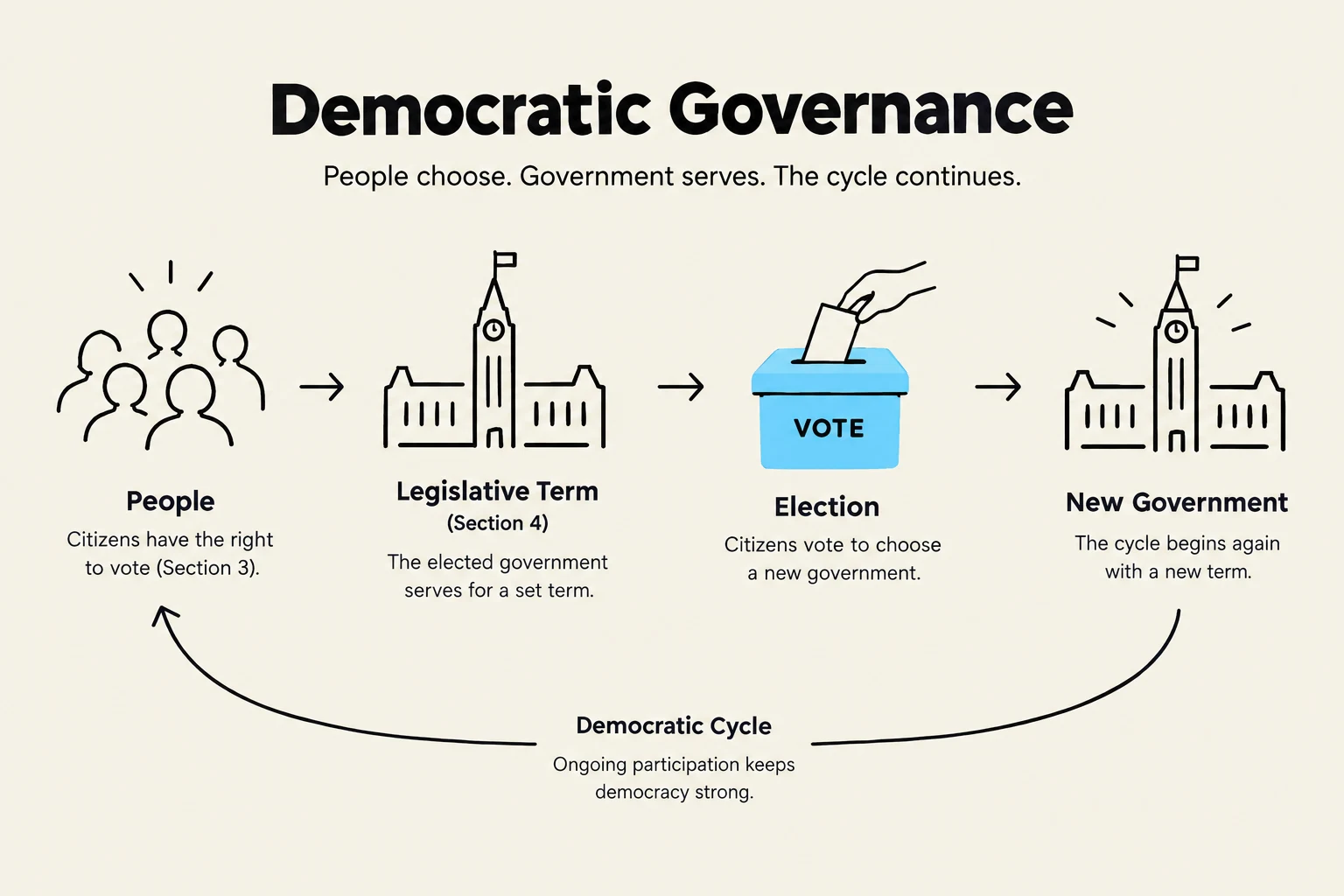
The Canadian Charter of Rights and Freedoms, entrenched within the Constitution Act, 1982, serves as the cornerstone of Canadian democracy. It does not merely list privileges; it establishes a legal framework that limits the power of the state and protects the individual. While many parts of the Charter deal with legal protections during criminal proceedings, Sections 2 through 5 focus on the bedrock of a free society: the fundamental freedoms of the person and the democratic mechanisms that allow citizens to participate in governance.
Section 2: The Fundamental Freedoms
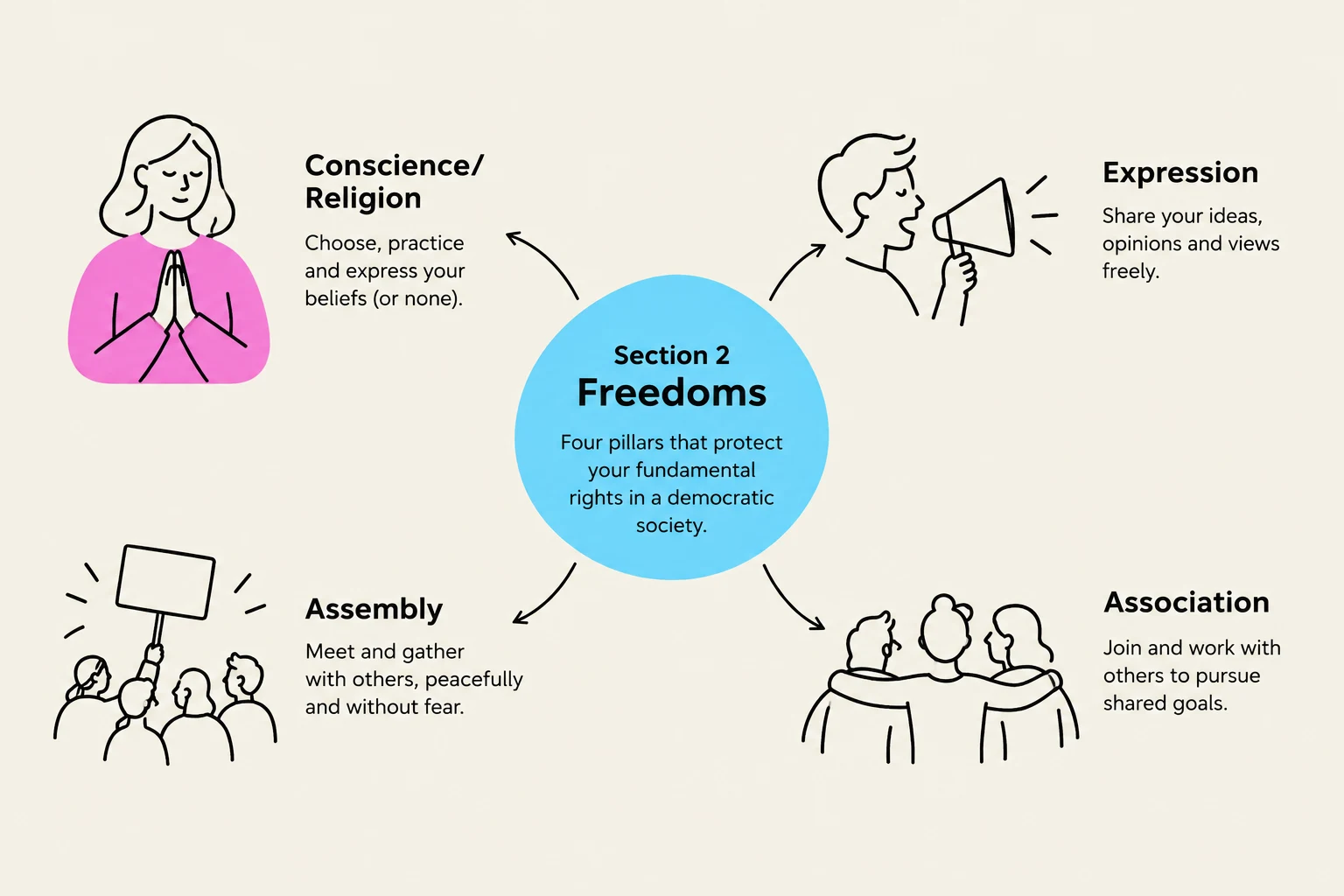
Section 2 of the Charter is often regarded as the "heart" of individual liberty. It guarantees several core freedoms that allow for a pluralistic and diverse society to function without fear of state suppression. These freedoms include:
- Conscience and Religion: The right to hold any belief or none at all, and to manifest those beliefs through worship and practice.
- Thought, Belief, Opinion, and Expression: The right to hold ideas and to communicate them through speech, writing, art, or other media.
- Peaceful Assembly: The right for groups of people to gather for a common purpose.
- Association: The right to form or join groups, such as political parties, unions, or clubs.
These rights are not absolute. Under Section 1 of the Charter, the government may place "reasonable limits" on these freedoms if they can be demonstrably justified in a free and democratic society. For example, while you have freedom of expression, you do not have the right to incite immediate violence.
Exam Tip: When analyzing a case involving Section 2, always check if the government's limitation on the freedom is "proportionate." A law that bans all protests is likely unconstitutional, whereas a law requiring a permit for a massive parade might be considered a reasonable limit.
Keep reading for free.
Create an account to finish this reading and make it part of your study routine.
Continue reading freeAlready have an account? Log in
Updated