


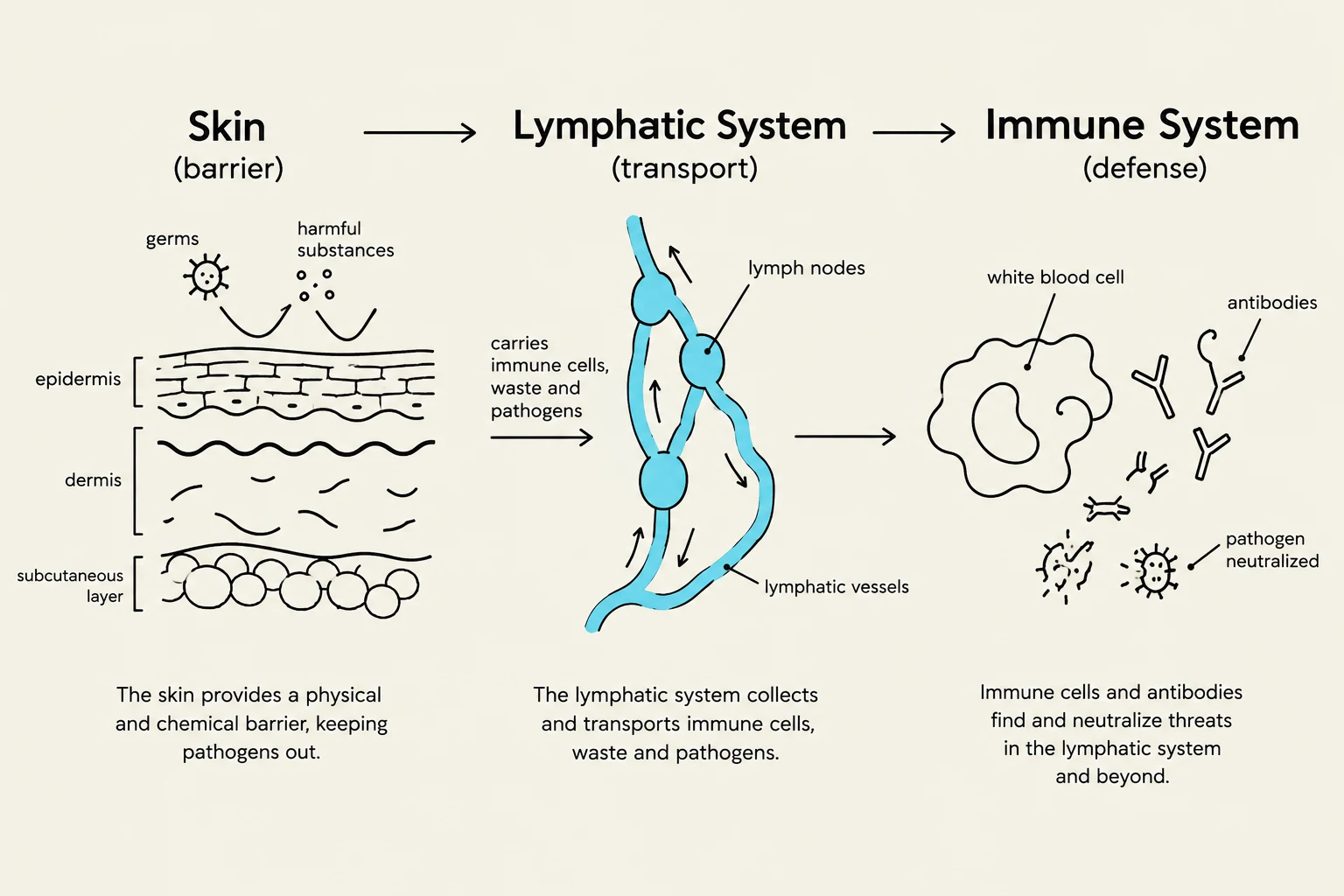
The human body is constantly under siege from external environmental threats, including bacteria, viruses, and physical trauma. To survive, it relies on a sophisticated, integrated network of defense mechanisms. This network is composed of three primary pillars: the integumentary system, which acts as the first line of physical defense; the lymphatic system, which manages fluid balance and transports immune cells; and the immune system, which provides the internal biological warfare necessary to neutralize pathogens.
The Integumentary System: Our Protective Covering
The term "integumentary" is derived from the Latin word integumentum, meaning "a covering". This system is centered around the skin, which is the largest organ in the human body. To put its scale into perspective, the skin accounts for approximately 16% of total body weight and covers an area of roughly 1.5 to 2 square meters.
The system is organized into two major components:
- Cutaneous Membrane: This is the superficial component we commonly call the skin, which includes various epithelial layers.
- Accessory Structures: These are specialized components that work in conjunction with the skin to provide additional protection and regulation, such as hair, nails, and various glands.

Layers of the Skin
The structural organization of the skin is categorized by distinct layers that serve different physiological roles:
- Epidermis: The outermost epithelial layer of the cutaneous membrane. It is avascular, meaning it contains no blood vessels. Because it lacks its own blood supply, cells in the epidermis rely on diffusion—the movement of nutrients and oxygen from high to low concentration—from the underlying dermal layer.
- Dermis: Located directly below the epidermis, the dermal layer is highly vascularized, containing the blood vessels, nerves, and lymph vessels that support the skin. It is composed primarily of connective tissue, specifically collagen fibers that provide strength and elasticity.
- Hypodermis (Subcutaneous Layer): Located beneath the dermis, this layer consists largely of fat cells (adipose tissue). While not technically considered part of the skin itself, it is critical for anchoring the skin to underlying structures and providing cushioning and impact resistance.
Keep reading for free.
Create an account to finish this reading and make it part of your study routine.
Continue reading freeAlready have an account? Log in
Updated