


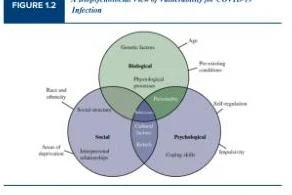
Understanding health requires more than just looking at a microscope or a blood test. For much of modern history, medical science focused almost exclusively on the physical mechanics of the body, treating illness as a mechanical failure to be fixed. However, as our understanding of human behavior and social structures has evolved, a more comprehensive framework has emerged: the biopsychosocial model. This model suggests that health and illness are not merely biological events, but are the results of a complex, continuous interplay between biological, psychological, and social factors.
From Dualism to Integration: A Historical Shift
To understand why the biopsychosocial model is so revolutionary, we must first look at what it replaced. For centuries, Western thought was heavily influenced by mind-body dualism. This is the philosophical doctrine that the mind and the body are two entirely separate entities.
During the Renaissance and into the following centuries, this dualism became the foundation of Western medicine. Physicians became the "guardians of the body," focusing strictly on organic and cellular changes, while philosophers and theologians were left to care for the mind. This separation led to the dominance of the biomedical model.
The Biomedical Model
The biomedical model maintains that all illness can be explained by aberrant somatic (bodily) processes, such as biochemical imbalances or neurophysiological abnormalities. While this model has been incredibly successful in treating many acute diseases, it has significant limitations:
- It is a reductionistic model: It reduces complex illnesses to low-level processes, such as disordered cells or chemical imbalances, often ignoring the broader context of the person.
- It is a single-factor model: It tends to explain illness through a single biological malfunction rather than recognizing multiple contributing causes.
- It emphasizes illness over health: The focus is primarily on treating pathology (what is wrong) rather than promoting wellness (what keeps a person well).
Keep reading for free.
Create an account to finish this reading and make it part of your study routine.
Continue reading freeAlready have an account? Log in
Updated