The Biological Importance and Architecture of Sleep
Explore the critical biological functions of sleep, including its role in immune system maintenance, metabolic and cardiovascular health, and cognitive processes like memory consolidation. Learn about the distinct stages of sleep (NREM and REM) and the internal mechanisms regulating sleep, such as circadian rhythms and
Sleep is often viewed as a passive state of rest, but biologically, it is an incredibly active and essential process required for human survival. Much like food and water, sleep is a fundamental physiological necessity that maintains our physical, cognitive, and emotional health. Despite its importance, many people—particularly students—struggle to achieve adequate sleep due to modern distractions like social media, academic stress, or irregular work schedules. Understanding the complex biological mechanisms that occur while we sleep can provide the motivation needed to prioritize rest as a pillar of health.
The Physiological Foundations of Sleep
Sleep serves several critical roles in maintaining the body's internal equilibrium. One of the most vital functions is immune system maintenance. During sleep, the body produces and releases cytokines, which are specialized proteins that target infection and inflammation. When you are sick or under significant stress, your body requires even more of these immune cells to fight off harmful germs. Consequently, sleep deprivation makes you more susceptible to common illnesses like the cold or the flu.
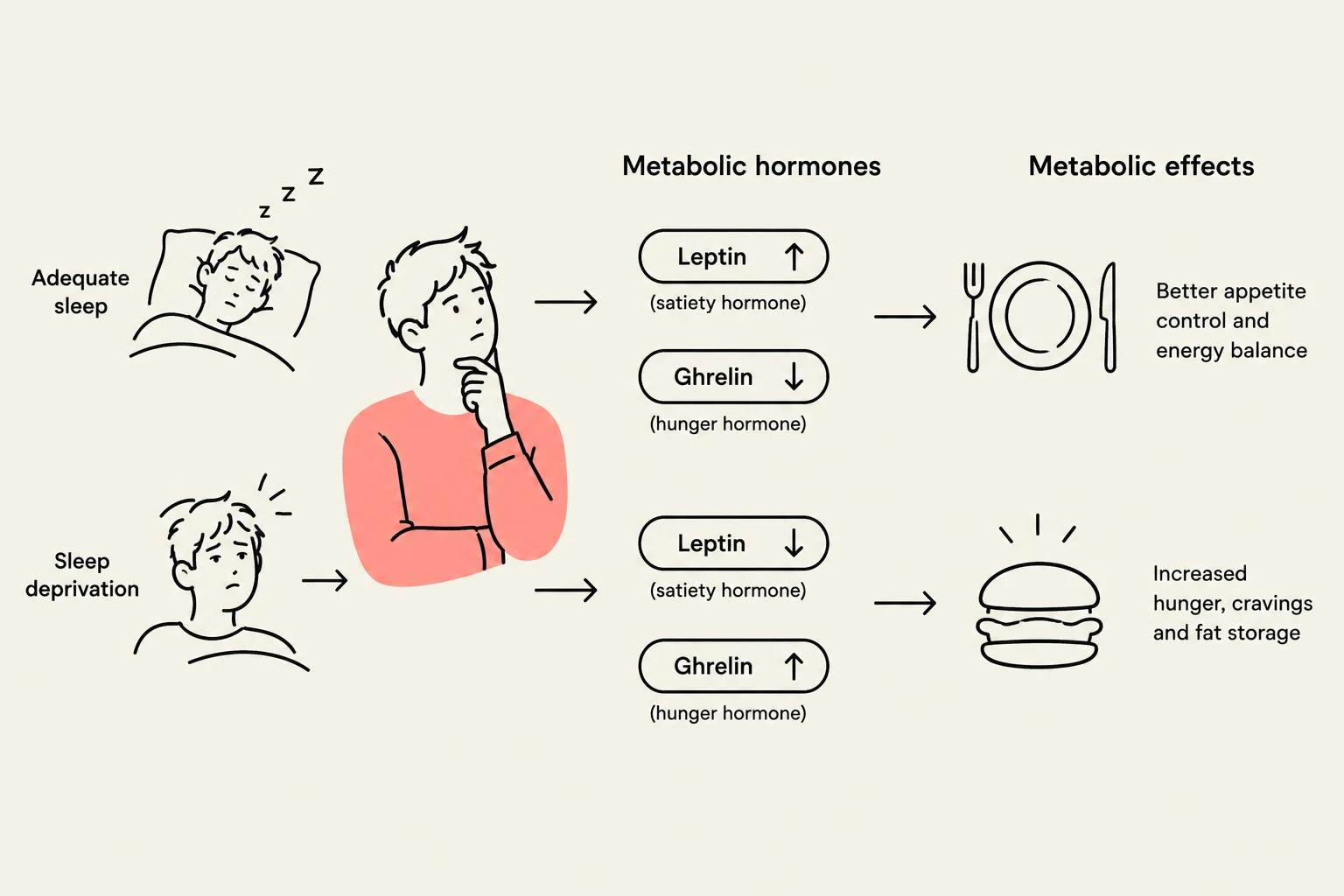
Beyond immunity, sleep is a master regulator of metabolic health. It manages the balance of hunger hormones: ghrelin (which increases appetite) and leptin (which signals fullness). A lack of sleep causes ghrelin to rise and leptin to fall, often leading to increased calorie consumption and weight gain. Furthermore, sleep is crucial for insulin and cortisol regulation. Chronic sleep loss leads to decreased insulin release and increased cortisol (a stress hormone), which causes more glucose to remain in the bloodstream. This hormonal imbalance significantly increases the risk of developing type 2 diabetes.
Cardiovascular health is also deeply tied to sleep patterns. Research indicates a "Goldilocks" effect regarding duration: sleeping fewer than 7 hours a night increases the risk of high blood pressure, while sleeping consistently more than 8 hours is associated with an increased risk of heart disease.
This diagram illustrates the impact of sleep on metabolic hormones and their effects. Adequate sleep leads to balanced leptin and ghrelin levels, promoting better appetite control and energy balance. Conversely, sleep deprivation disrupts these hormones, increasing hunger, cravings, and fat storage.
Cognitive Function and Neurological Importance
For students and professionals alike, the neurological functioning provided by sleep is perhaps the most significant benefit. Sleep acts as a biological "cleaning service" for the brain; it allows the central nervous system to clear out toxic byproducts and metabolic waste that accumulate during waking hours. Without this clearance, the brain cannot function optimally the following day.
Sleep is also the primary period for memory consolidation. This is the process where the brain synthesizes new learning and converts short-term memories into stable, long-term memories. This is why "pulling an all-nighter" to study is often counterproductive; students who sacrifice sleep for study time frequently end up with lower GPAs because their brains haven't had the chance to integrate the information.
Finally, sleep is essential for mental health and motor coordination. Sleep allows parts of the brain to rest, which is vital for stress management. On a physical level, a single night without sleep can impair your motor skills and reaction time to a degree comparable to being intoxicated by alcohol.
Exam Tip: If you are asked about the relationship between sleep and learning, remember that sleep is not just "rest"—it is an active period of memory consolidation and waste clearance in the central nervous system.
The Architecture of Sleep: Stages and Cycles
Sleep is not a uniform state; it is composed of distinct stages that repeat in approximately 90-minute cycles, typically occurring five to six times per night. These stages are divided into Non-REM (NREM) sleep and REM sleep.
Non-REM Sleep (N1, N2, and N3)
NREM sleep is characterized by a lack of rapid eye movement and is focused on physical restoration.
N1 (Light Sleep): This is the transition from wakefulness to sleep. During this brief stage (1–5 minutes), muscles begin to relax, and heart rate and breathing slow down.
N2 (Deeper Sleep): As you move into N2, your body temperature drops, eye movements cease, and vital signs continue to slow.
N3 (Deep/Restorative Sleep): This is the most critical stage for physical repair. During N3, the brain produces delta brain waves to process memories and experiences. The body also releases growth hormones to repair tissues and strengthen the immune system.
REM Sleep (N4)
The final major stage is N4, also known as REM (Rapid Eye Movement) sleep. During this stage, the brain is highly active—almost as active as when you are awake—and your breathing and heart rate increase. This is the stage where dreaming occurs. To prevent you from physically acting out your dreams, your body experiences a temporary paralysis of the arms and legs. REM sleep is vital for creativity, insightful thinking, and complex memory processing.
Managing Sleep Health
Understanding sleep requires recognizing two internal mechanisms: the circadian rhythm (your 24-hour biological clock regulated by light and hormones like melatonin) and sleep-wake homeostasis (the "sleep drive" that builds up the longer you stay awake).
When these systems are disrupted—by shift work, jet lag, or sleep disorders like insomnia, sleep apnea, or narcolepsy—health can decline rapidly. To maintain high-quality sleep, experts recommend:
Consistency: Go to bed and wake up at the same time every day.
Environment: Keep your bedroom dark, quiet, and cool.
Routine: Avoid screens and "triggering" topics before bed; instead, try reading or deep breathing.
Moderation: Limit caffeine, nicotine, and alcohol, especially in the hours leading up to sleep.
Student Note: If you find yourself unable to fall asleep after 20 minutes of tossing and turning, get out of bed and do something relaxing (like reading a physical book) in dim light until you feel sleepy. This helps your brain associate the bed with sleep rather than frustration.
Keep reading for free.
Create an account to finish this reading and make it part of your study routine.