


To understand the history of the modern museum, one must look beyond the aesthetic beauty of the objects on display and examine the power structures that brought them there. Colonial museums—European institutions located in the West that collected and exhibited objects from overseas colonies—served as more than just repositories for art. They were tools of empire, designed to categorize, display, and often justify the colonial presence through specific architectural choices, exhibition organizations, and the acquisition of "captured" cultural heritage.
The Dual Models of the Museum
Before diving into the colonial context, it is helpful to distinguish between the two primary historical models of the museum, which influenced how colonial objects were eventually presented:
- The Temple of Art: These institutions (such as the Louvre or the Metropolitan Museum of Art) act as a "refuge from the world," intended to enlighten and ennoble the citizen through the display of high art.
- The Arts and Industry Model: These are social and educational institutions (such as the Victoria and Albert Museum) designed to teach artists and craftsmen through the display of objects.
Colonial museums often blurred these lines, using the "scientific" or "educational" veneer of the Arts and Industry model to justify the display of non-Western objects as specimens of human development rather than works of art.
Study Tip: When analyzing a museum, always ask: Who is the intended audience, and what is the mission? The answer will tell you whether the museum is acting as a "Temple" or an "Educational" tool.
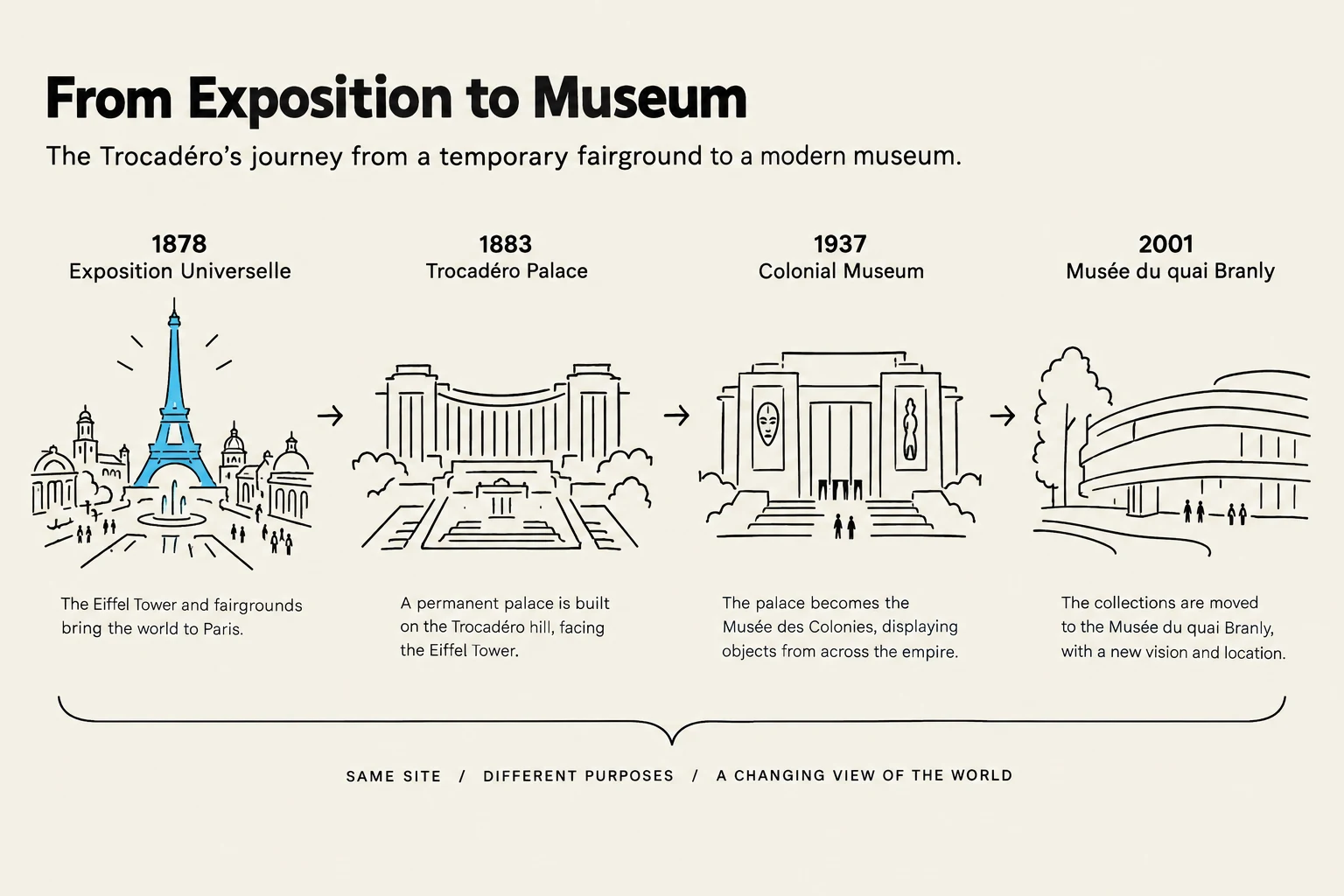
The Ethnographic Museum of the Trocadéro
One of the most significant examples of a colonial-era institution in France was the Ethnographic Museum of the Trocadéro. The Palais du Trocadéro was originally built for the 1878 Exposition Universelle in Paris. As the museum evolved, it became a central site for displaying the "exotic" cultures of the world to a French public.

Keep reading for free.
Create an account to finish this reading and make it part of your study routine.
Continue reading freeAlready have an account? Log in
Updated