


Imagine a life without the ability to remember. Without memory, we could not interpret objects, hold a train of thought, or interact meaningfully with the world. Most profoundly, memory provides the "feeling of self" as a continuous entity moving through space and time. This continuity is driven by complex cognitive processes that allow us to transform raw environmental stimuli into lasting knowledge.
The Core Processes of Cognition
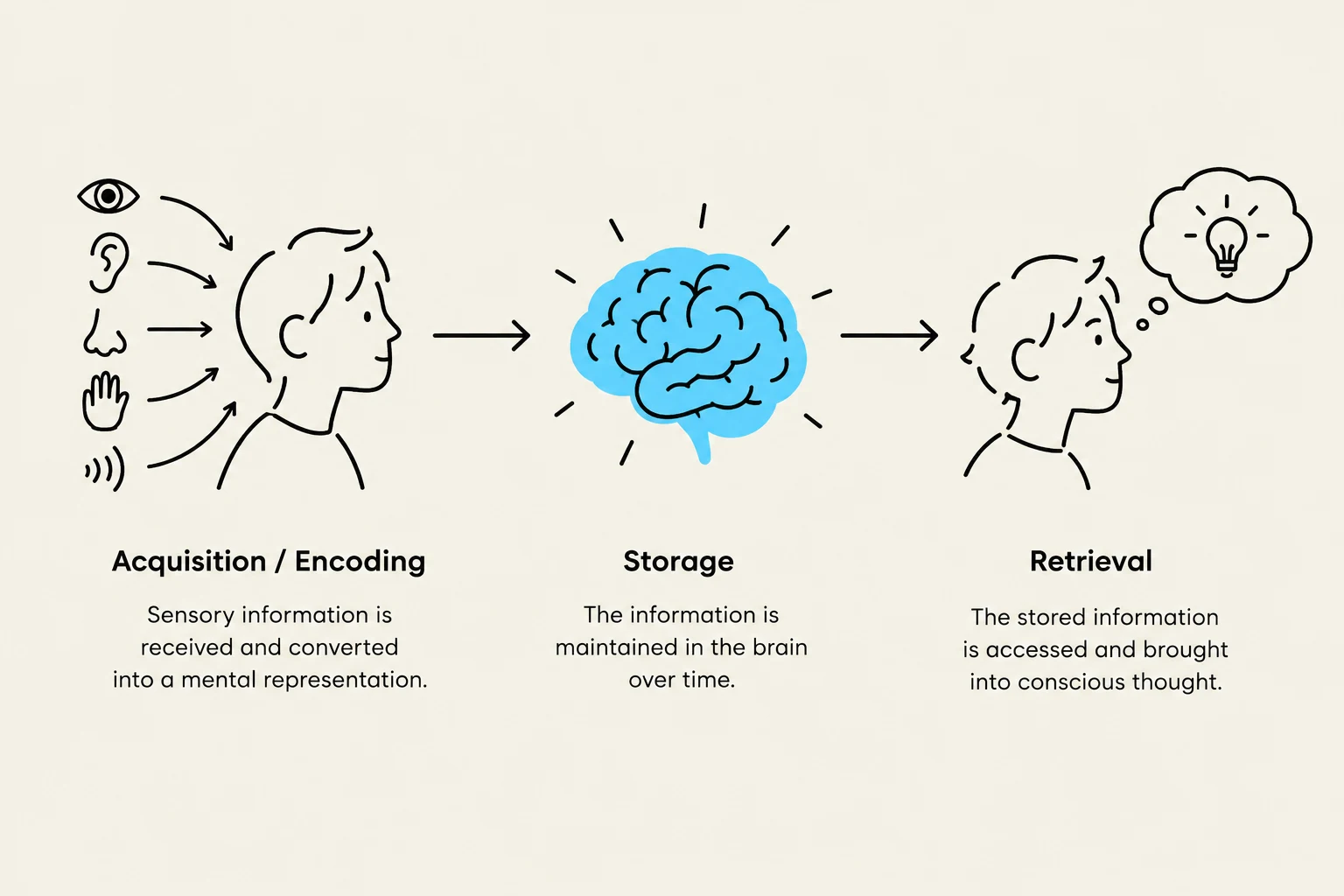
Memory is not a single event but a continuous cycle of processing information. To understand how we learn, we must distinguish between the functional stages of memory: acquisition, storage, and retrieval.
- Acquisition and Encoding: This is the initial stage where we take in information and use processes to make meaning of it, creating a mental representation.
- Storage: Once information is encoded, it must be maintained over time through various storage systems.
- Retrieval: This is the process of accessing stored information and bringing it back into conscious awareness.
Exam Tip: Think of encoding as "writing" a file, storage as "saving" it to a hard drive, and retrieval as "opening" the file later.
The Hierarchy of Memory Systems
Cognitive psychologists categorize memory into different "stores" based on their duration and capacity. These systems work together to move information from the immediate environment into long-term knowledge.
Sensory Memory (SM)
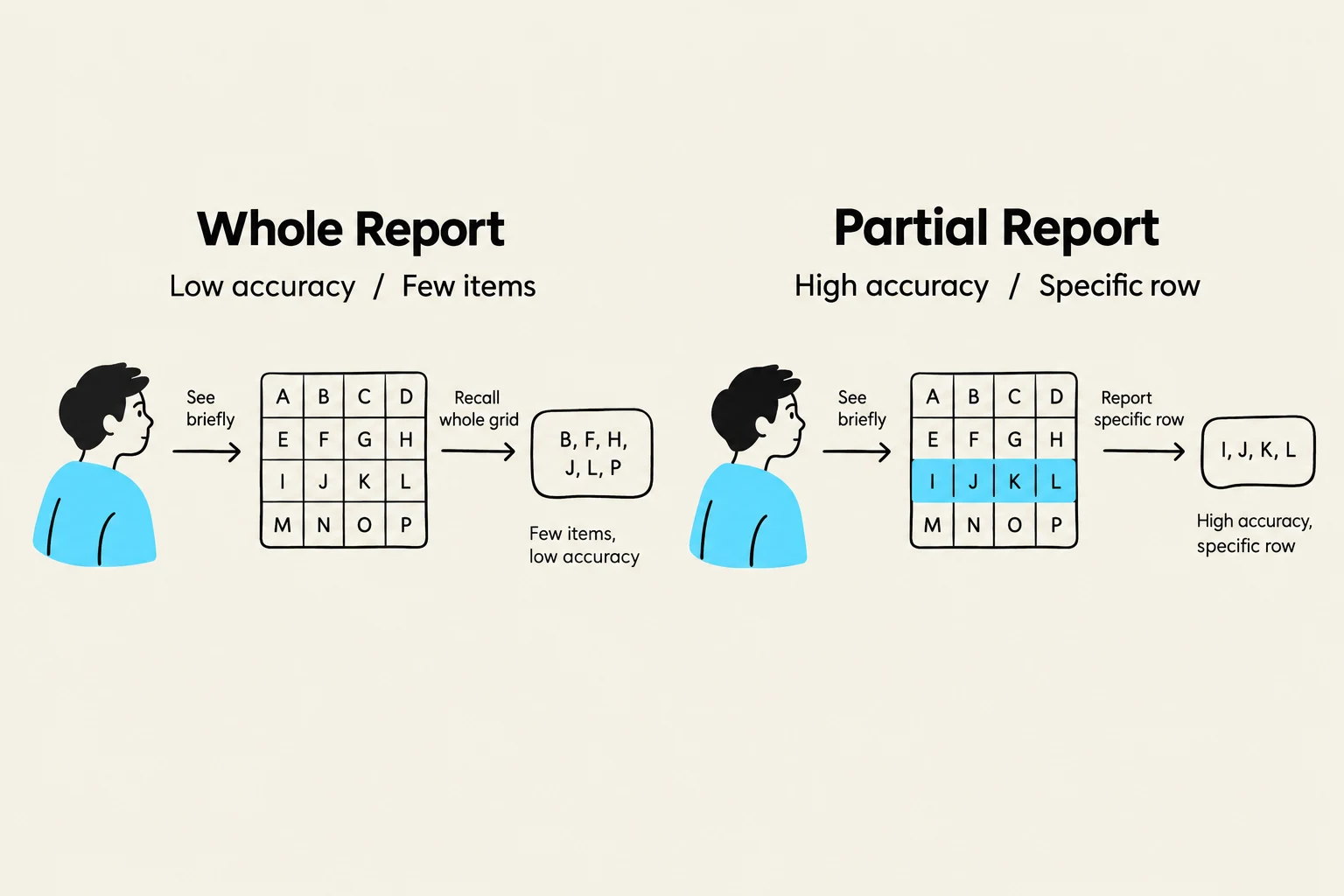
Sensory memory is the most immediate stage of processing. It acts as a buffer for incoming stimuli from our senses. It has a very short duration—often lasting only a few hundred milliseconds—but a relatively large capacity.
Keep reading for free.
Create an account to finish this reading and make it part of your study routine.
Continue reading freeAlready have an account? Log in
Updated