


In the study of biology, researchers often encounter questions that cannot be easily answered through simple observation or even controlled experiments. While experiments are powerful tools for isolating variables, some biological phenomena occur at scales—such as global climate shifts or historical evolutionary changes—that make physical manipulation impossible. In these instances, scientists turn to a theoretical approach: mathematical modeling. By using equations to represent biological processes, researchers can test hypotheses, explore complex dynamics, and bridge the gap between abstract theory and empirical data.
The Theoretical Approach to Biological Inquiry
A theoretical approach does not simply describe what is happening; it seeks to understand the underlying mechanisms of a relationship. Instead of just observing that "A happens when B increases," a theorist asks why it happens and uses logic and existing knowledge to create a mathematical representation of the system.
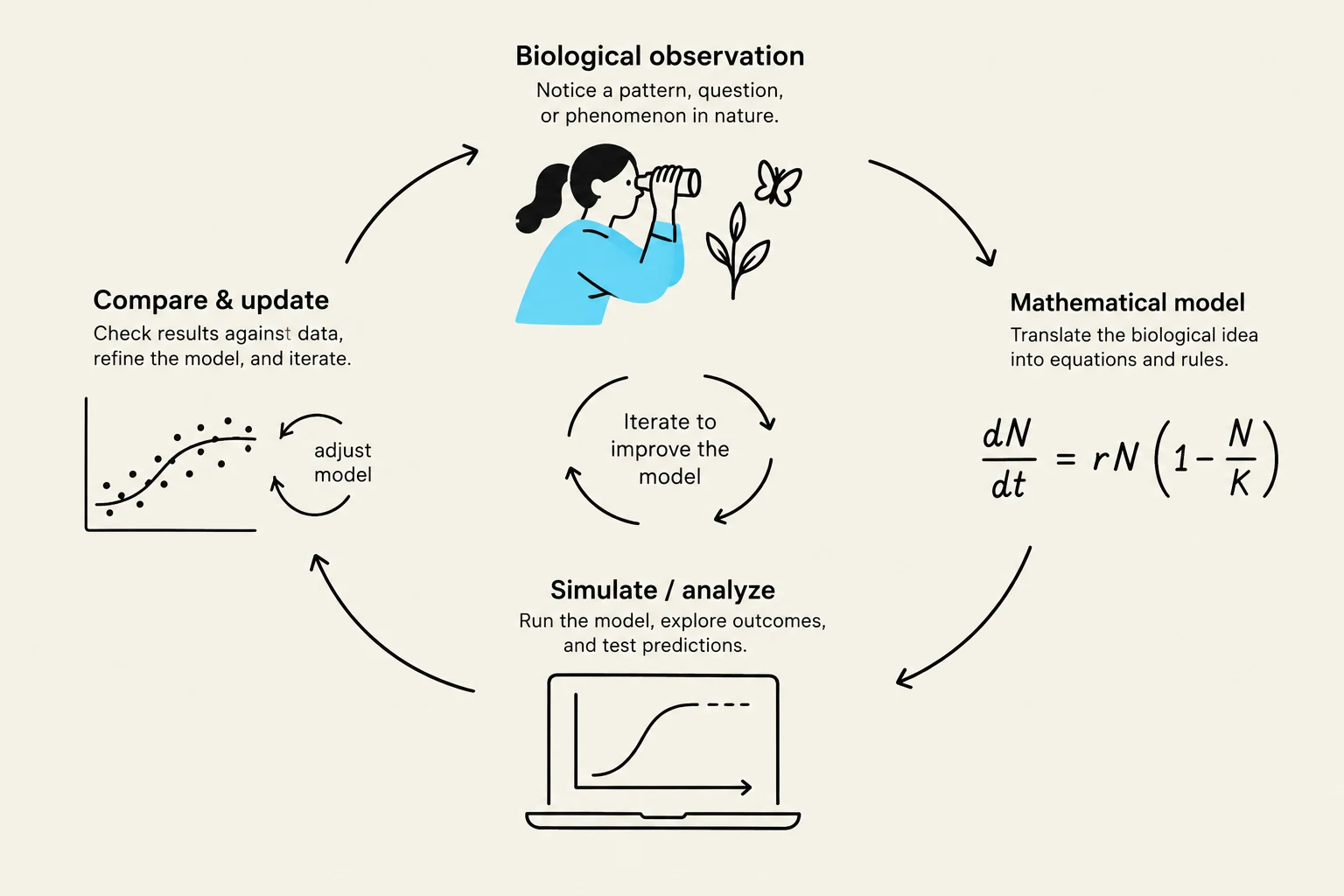
To build a robust model, a researcher typically follows a structured process:
- Define the objective: Decide exactly what phenomenon you are trying to explain.
- Identify variables: Determine which factors are variables (changing) and which are constants (fixed).
- Establish assumptions: Carefully consider the constraints and simplifications of the system.
- Generate a mathematical representation: Translate these relationships into equations.
- Parameterization and exploration: Find realistic values for the parameters and explore the resulting model dynamics.
Exam Tip: When asked to propose a model (e.g., for cellular glucose uptake), always include your assumptions, your primary equations, and a steady-state solution to demonstrate a complete understanding of the system.
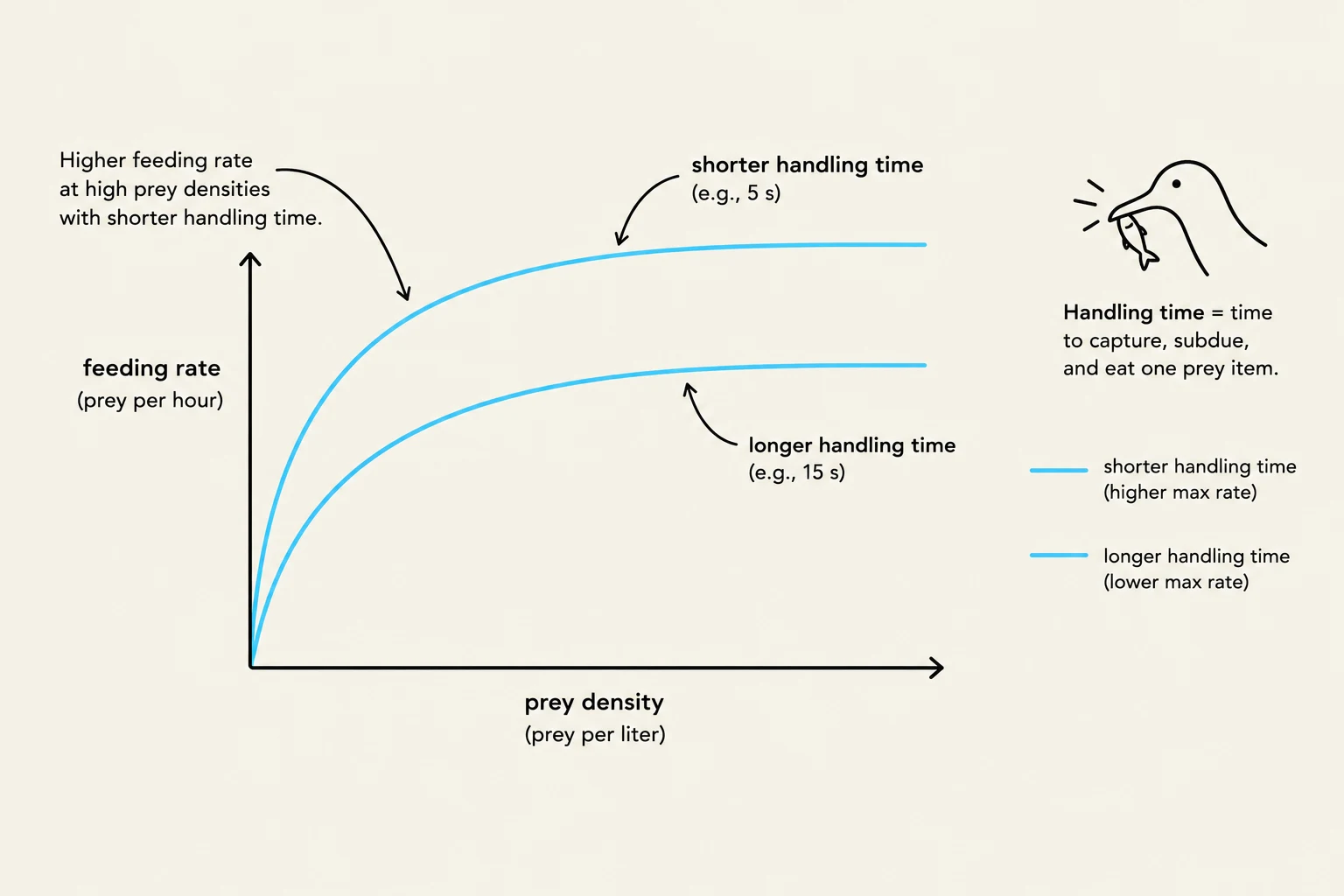
Case Study: The Handling Time Hypothesis
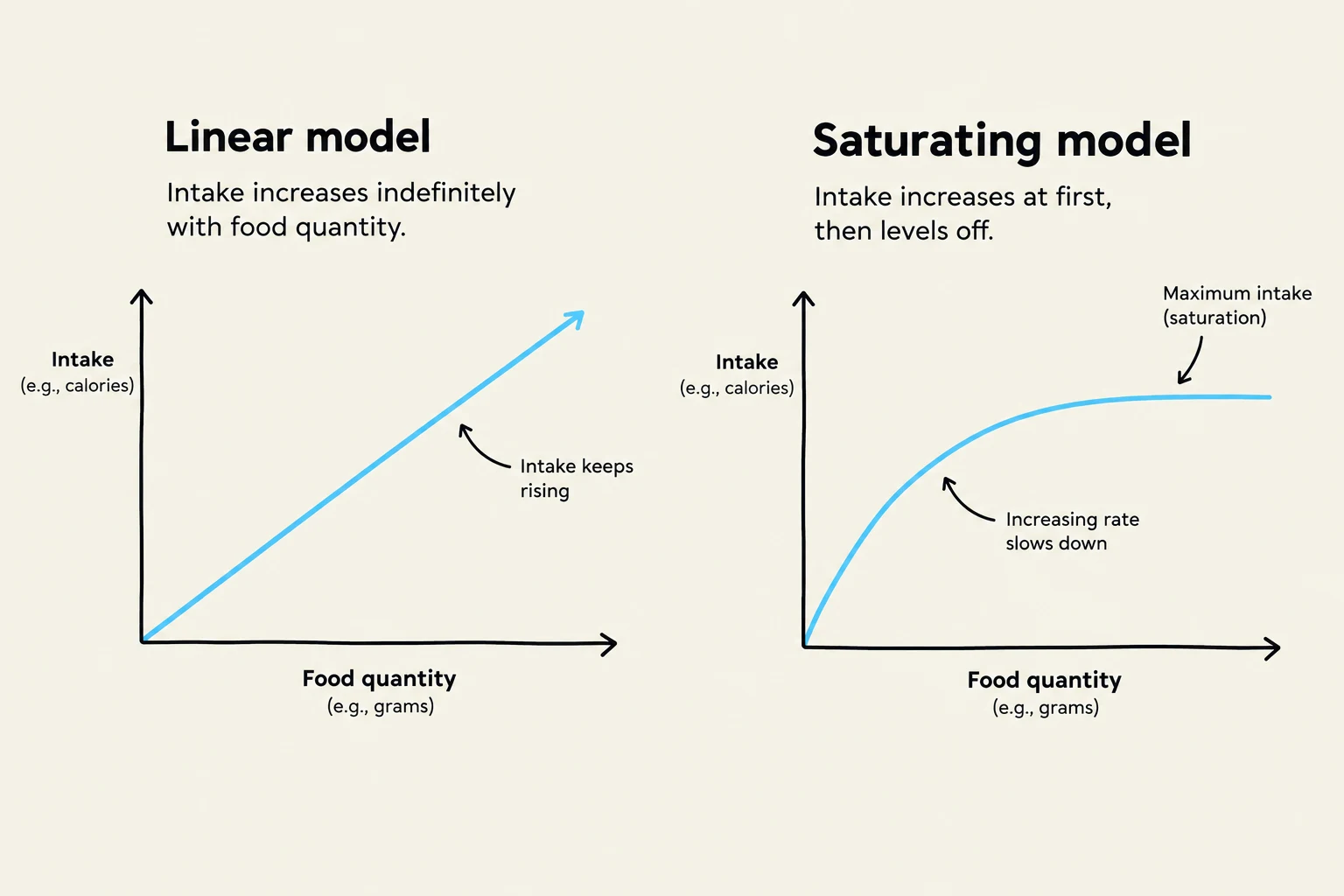
To understand how models function, consider the biological observation that animal feeding rates do not increase infinitely as food becomes more abundant; instead, they eventually level off, or "saturate".
Keep reading for free.
Create an account to finish this reading and make it part of your study routine.
Continue reading freeAlready have an account? Log in
Updated