


To effectively manage pests in agricultural, residential, or industrial settings, one must first understand what they are and how they grow. This requires two fundamental biological lenses: Taxonomy, which allows us to identify and categorize organisms, and Metamorphosis, which describes the physical transformations they undergo during their life cycles. By mastering these concepts, a technician can move from reactive spraying to proactive, strategic control.
The Role of Taxonomy in Identification
Taxonomy is the science of naming, describing, and classifying organisms into hierarchical groups based on shared characteristics. In pest management, precise identification is critical because a control method that works for one species may be completely ineffective against a closely related one.
The taxonomic hierarchy moves from broad categories to very specific ones. While the full list includes Domain, Kingdom, Phylum, Class, Order, Family, Genus, and Species, pest managers often focus on the lower levels to differentiate between similar-looking insects. For example, knowing that a pest belongs to the Order Coleoptera (beetles) versus Diptera (flies) immediately dictates which biological or chemical tools are appropriate.
Exam Tip: When identifying a pest, always work from the most general characteristic to the most specific. If you misidentify the Order, your entire management strategy (such as choosing a specific growth regulator) may fail.
Understanding Metamorphosis
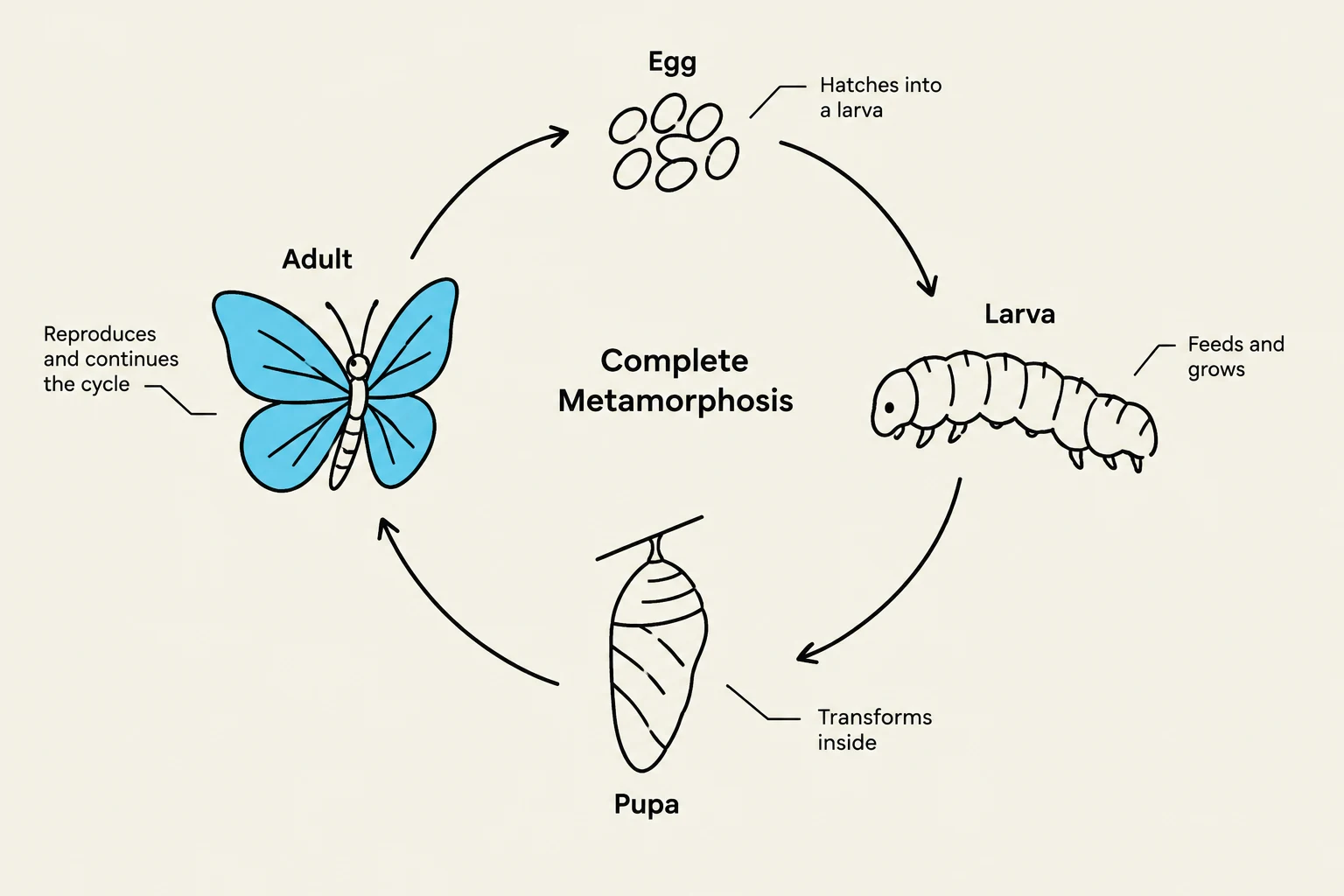
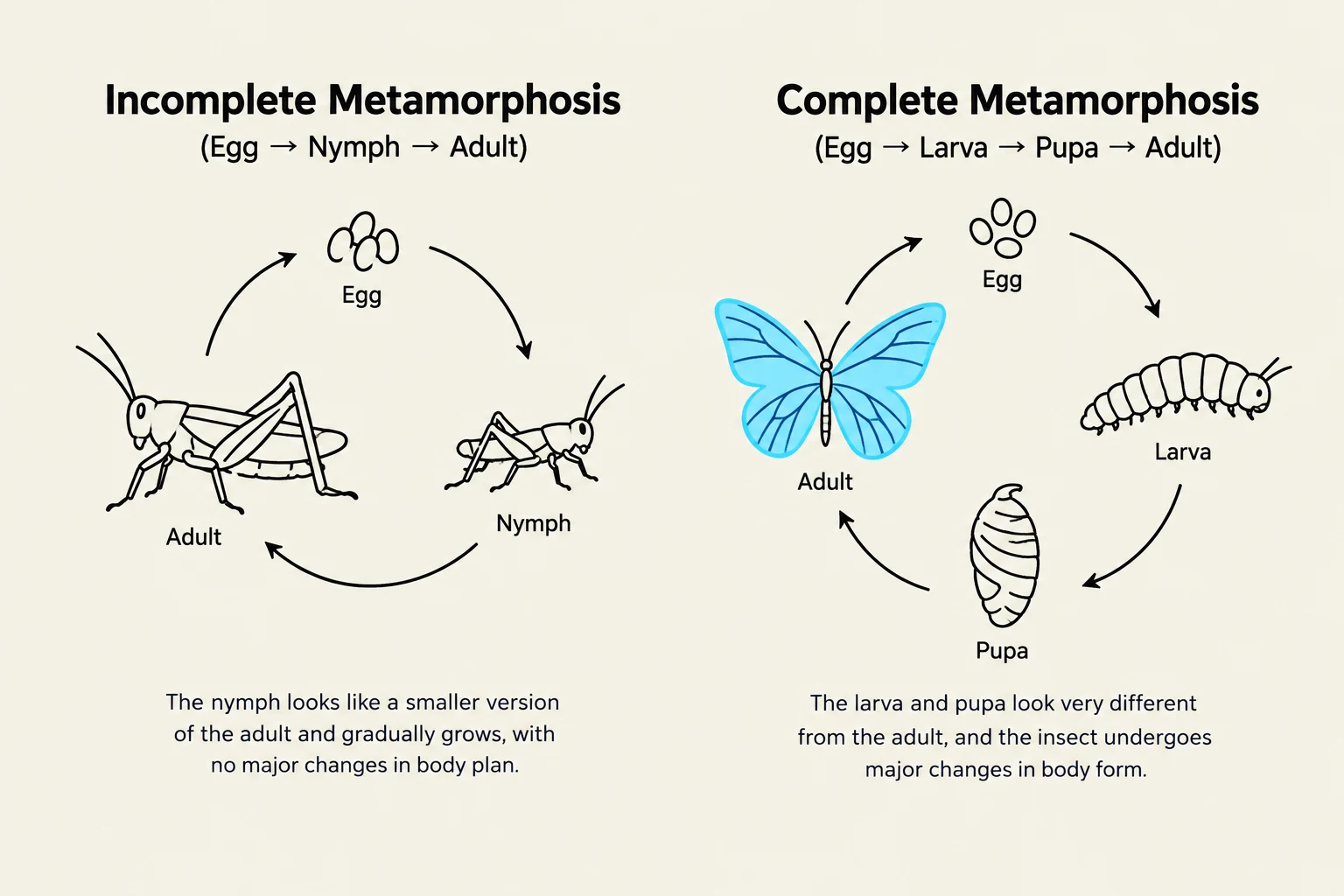
Once an organism is identified, the next step is understanding its life cycle. Many insects undergo metamorphosis, a biological process involving a conspicuous and relatively abrupt change in the animal's body structure through cell growth and differentiation.
Metamorphosis is generally divided into two primary categories: Complete Metamorphosis and Incomplete Metamorphosis. The distinction between these two is perhaps the most important factor in determining when and how to apply control measures.
Keep reading for free.
Create an account to finish this reading and make it part of your study routine.
Continue reading freeAlready have an account? Log in
Updated