


Substance use and addiction assessment is a multifaceted clinical process that requires balancing immediate life-saving interventions with long-term psychological and social support. Clinicians must be able to distinguish between acute medical emergencies, such as overdoses and severe withdrawal, and the chronic patterns of substance use disorders that require long-term management. Effective assessment involves identifying the severity of use, recognizing the risk of physiological complications, and determining the patient's readiness to change.
The Acute Assessment Process
When a patient presents with suspected substance use issues, the clinician's first priority is an acute assessment to identify life-threatening conditions. This process focuses on immediate physiological stability and safety.
Key indicators that necessitate urgent medical intervention include:
- Overdose: Acute toxicity from drugs (such as opioids) or alcohol.
- Suicidal Ideation: Any signs of self-destructive behavior or thoughts of self-harm.
- Physical Complications: Direct physiological damage resulting from substance abuse.
- Severe Withdrawal Syndromes: These are characterized by high-risk symptoms such as increased anxiety, elevated respiratory rate (RR), tremors, profuse sweating, and a significantly increased risk for seizures.
In cases of alcohol poisoning, clinicians must watch for signs of coma or death, including unconsciousness, cold/clammy/pale/bluish skin, and irregular breathing (less than eight breaths per minute).
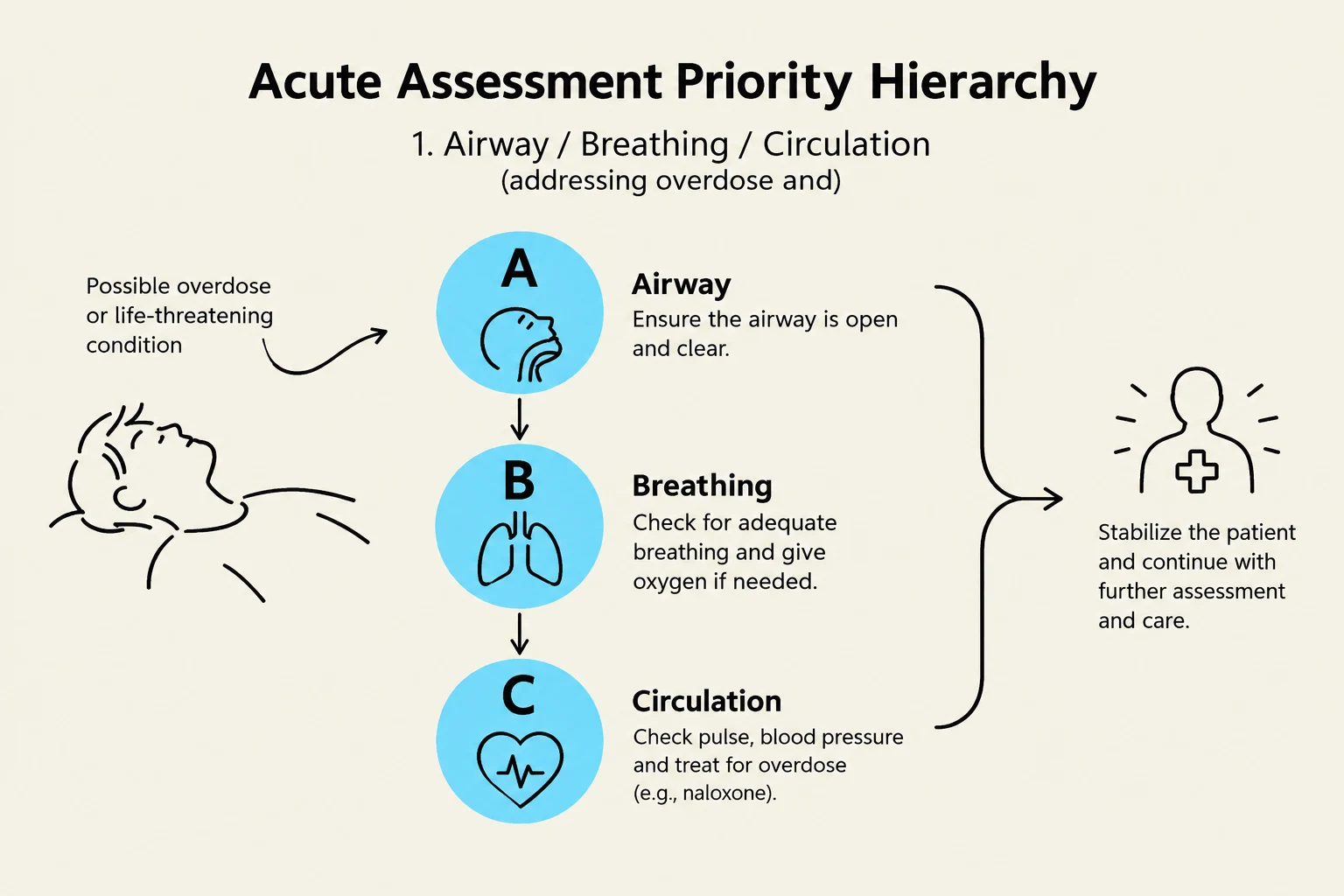
Clinical Alert: Naloxone (Narcan) If an opioid overdose is suspected, Naloxone should be administered. It is an opioid antagonist that blocks opioid receptors to temporarily reverse the effects of an overdose. Note that Naloxone will not reverse overdoses caused by non-opioid substances like alcohol or cocaine.
Keep reading for free.
Create an account to finish this reading and make it part of your study routine.
Continue reading freeAlready have an account? Log in
Updated