This guide details the subjective data collection process for assessing the neurological system, focusing on patient history and symptoms related to headaches, dizziness, seizures, motor and sensory changes, and communication difficulties. It also covers risk factors and special considerations for aging adults.
When assessing the neurological system, the clinician's most powerful tool is often the patient's own history. While physical examinations (objective data) reveal current deficits, the subjective assessment—the gathering of symptoms and history through patient interview—provides the context necessary to understand the onset, progression, and potential causes of neurological dysfunction. A comprehensive subjective assessment focuses on sensory, motor, and cognitive functions, aiming to identify how symptoms impact a patient's daily life and safety.
Headache and Head Injury History
A thorough investigation of head-related symptoms is a cornerstone of neurological assessment. When a patient reports a headache, the clinician must move beyond the simple presence of pain to explore its specific characteristics. Key questions include:
Onset and Frequency: Did the pain start suddenly or gradually? How often does it occur?
Severity and Quality: How intense is the pain, and how would the patient describe it (e.g., throbbing, sharp, dull)?
Location and Associated Factors: Where exactly is the pain located, and are there other symptoms like nausea or light sensitivity accompanying it?
In the case of a head injury, the focus shifts to the event history. It is vital to determine the nature and description of the injury, whether there was any loss of consciousness, and the patient's ability to recall the event.
Dizziness and Vertigo
Differentiating between objective and subjective vertigo.
Dizziness is a common complaint that requires careful differentiation to determine its origin. The clinician must establish the onset, duration, and frequency of the sensation.
A critical distinction in this assessment is whether the symptoms are associated with positional changes (such as standing up quickly). Furthermore, the clinician must distinguish between:
Objective vertigo: The sensation that the environment or objects around the patient are moving.
Subjective vertigo: The sensation that the patient themselves is spinning or unsteady.
Seizure Characteristics
Assessing a patient with a history of seizures requires a detailed reconstruction of the event to help guide medical management. The clinician should inquire about:
The Course and Duration: How long did the seizure last?
Motor Activity: What specific movements occurred in the body during the event?
Clinical Presentation: Were there other signs, such as staring spells or loss of bladder control?
The Postictal Phase: How did the patient feel immediately after the seizure (e.g., confused, exhausted)?
Precipitating Factors and Management: What triggered the seizure, what medications are being used, and what coping strategies does the patient employ?
Motor and Sensory Changes
Changes in motor and sensory perception can indicate localized or systemic neurological issues.
Tremors and Weakness
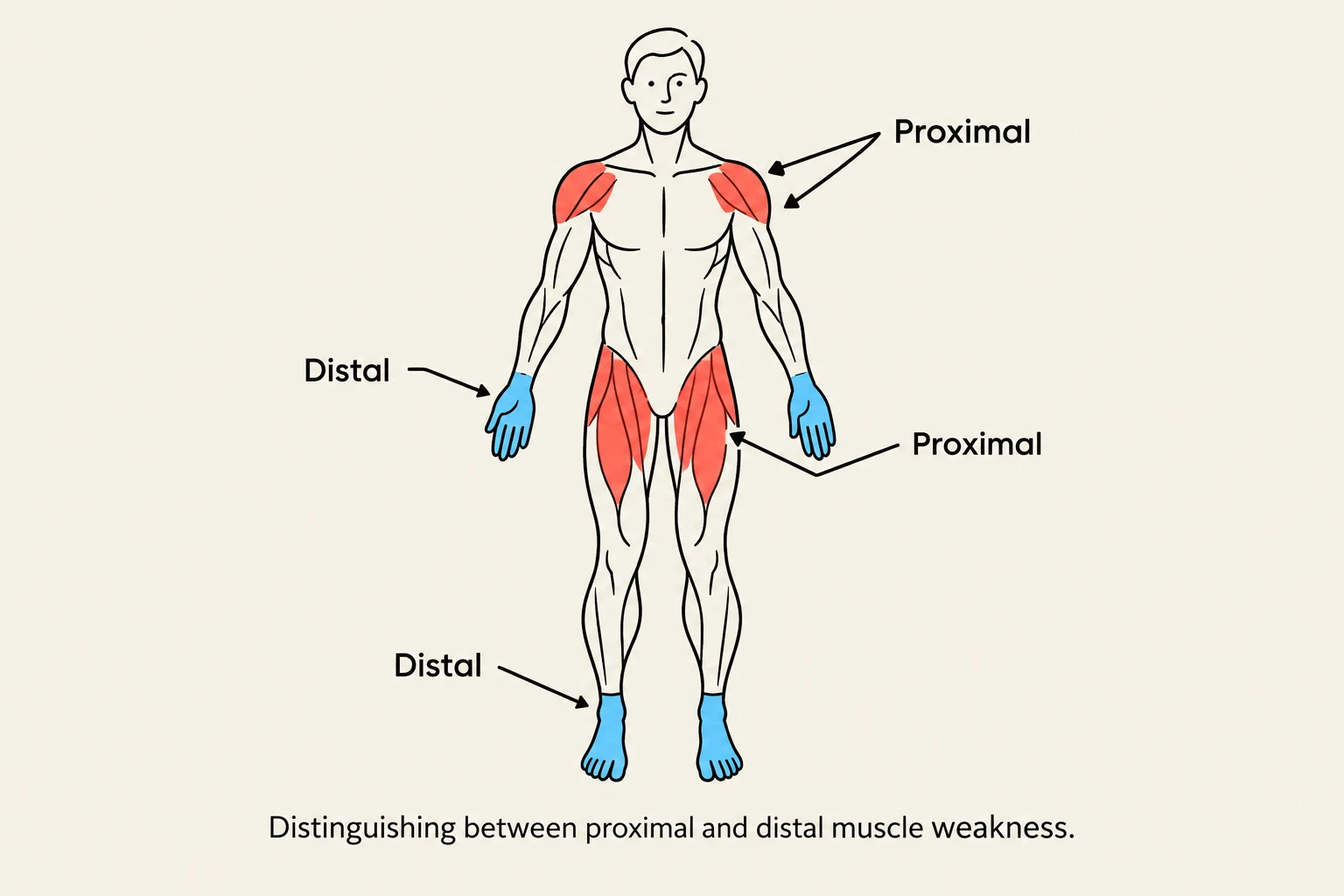
Distinguishing between proximal and distal muscle weakness.
When evaluating tremors, ask about the onset, type, duration, and frequency, as well as any factors that make the tremor better or worse.
For weakness, it is essential to determine if the sensation is localized (affecting one limb) or generalized (affecting the whole body), and whether it affects distal (hands/feet) or proximal (shoulders/hips) muscle groups. The clinician should also ask how this weakness impacts the patient's mobility or Activities of Daily Living (ADLs).
Incoordination and Numbness
Incoordination should be assessed by asking about balance issues while standing or walking, as well as instances of lateral drifting, stumbling, falling, or "legs giving way".
Numbness or tingling (paresthesia) requires questions regarding the onset, duration, and specific location of the sensation, and whether these feelings are triggered by specific activities.
Communication and Swallowing
Neurological deficits often manifest in the cranial nerves responsible for speech and swallowing.
Dysphagia: Ask the patient if they have difficulty swallowing solids or liquids, or if they experience frequent drooling.
Dysphasia: Assess for difficulty in forming words or patterns of speech, noting the onset and duration of these communication challenges.
Risk Factors and History
A complete neurological profile must include a review of environmental and lifestyle factors that may contribute to neurological decline or injury. This includes:
Environmental/Occupational Hazards: History of exposure to toxins or trauma.
Medication History: Both prescription and over-the-counter (OTC) medications.
Substance Use: History of alcohol use and drug/substance abuse.
Special Considerations for the Aging Adult
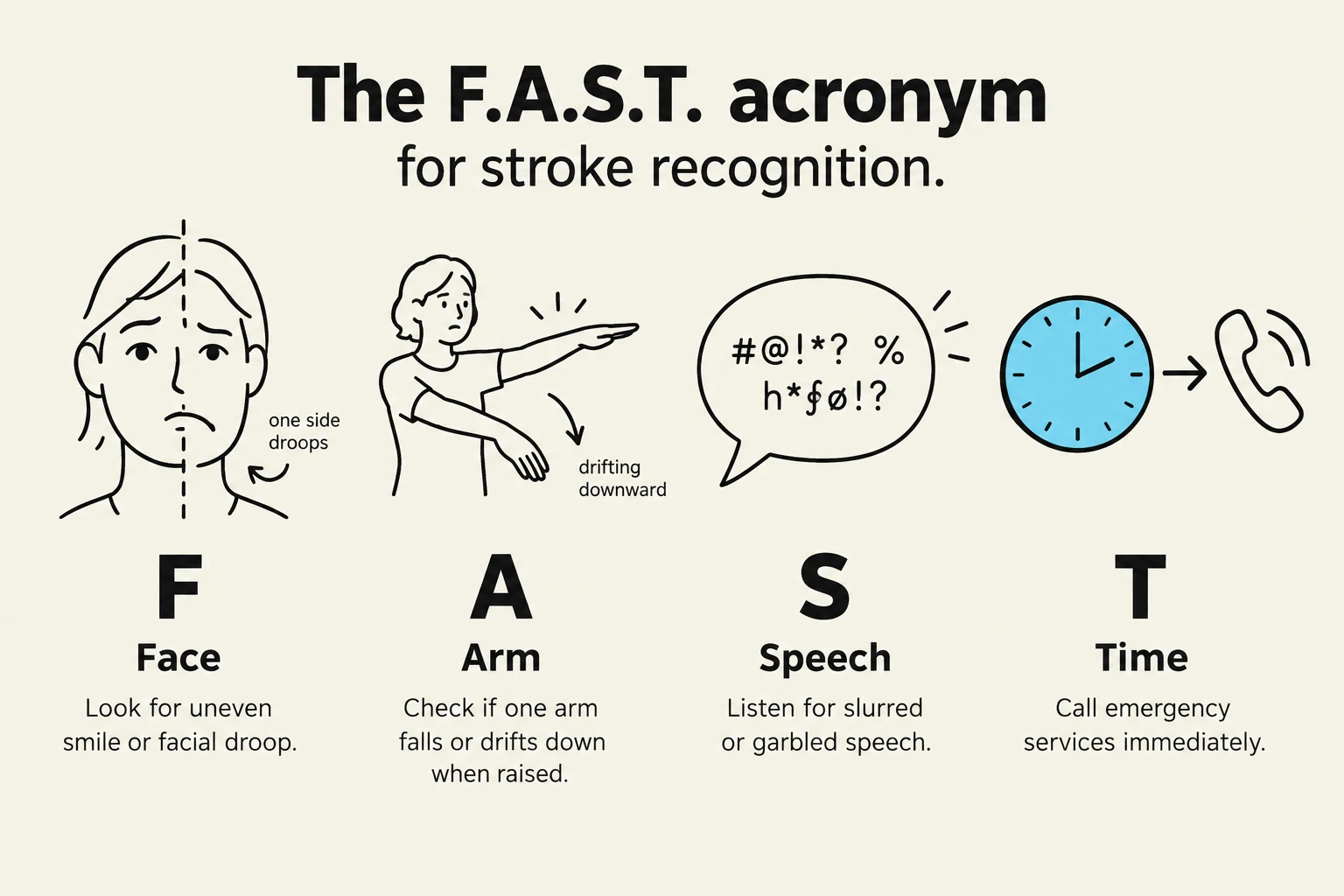
The F.A.S.T. acronym for stroke recognition: Face, Arm, Speech, Time.
As patients age, neurological symptoms must be evaluated through the lens of safety and independence. For the aging adult, priority is placed on how the following impact their Activities of Daily Living (ADLs):
Dizziness: Is it related to medication, activity, or position? What safety modifications (e.g., grab bars) are in place?
Memory: Is there a decrease in mental function or increased confusion?
Tremors: Where is the tremor located, and how does it affect daily tasks?
Vision Changes: Are there sudden changes in vision that impact safety or cause falls?
Clinical Tip: The F.A.S.T. Plan
When assessing for a potential stroke, remember the American Heart Association's F.A.S.T. acronym:
Face drooping
Arm weakness
Speech difficulty
Time to call 9-1-1
Summary Table: Key Subjective Indicators
Symptom Category
Key Assessment Focus
Pain/Injury
Onset, location, severity, and mechanism of injury
Balance
Vertigo type, positional triggers, and stumbling
Motor
Localized vs. generalized, distal vs. proximal, and tremor triggers
Sensory
Location, duration, and relationship to activity
Cognitive/Safety
Impact on ADLs, memory changes, and vision loss
Keep reading for free.
Create an account to finish this reading and make it part of your study routine.