Structure and Functions of American Political Party Organizations
Examines the multi-layered structure of American political parties, from local to national levels, and their core functions including candidate recruitment, fundraising, and maintaining party loyalty. It also details the process of presidential nomination through caucuses and conventions.
In the complex landscape of American democracy, political parties serve as the essential machinery that turns diverse public opinions into actionable government policy. While often criticized for being divisive, these organizations are vital for coordinating behavior, nominating candidates, and mobilizing voters across a vast and geographically diverse nation. To understand how they function, one must look beyond the candidates on a television screen and examine the formal, multi-layered structure that supports them.
The Layers of Party Organization
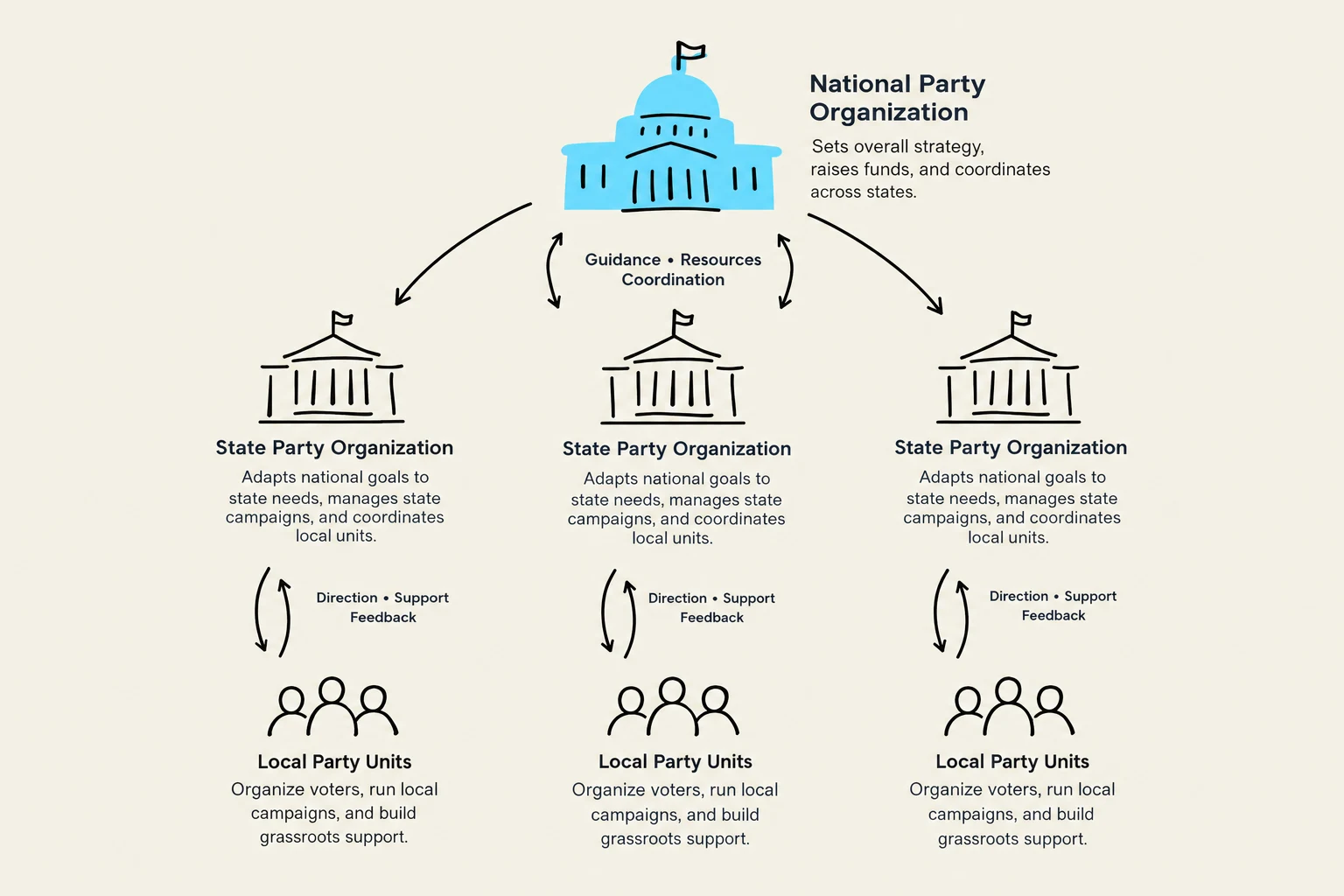
The American political party is not a single, monolithic entity; rather, it is a decentralized, bottom-up organization composed of various levels that work in concert. This structure allows the party to maintain a national presence while remaining responsive to local needs.
Local and County-Level Organization
At the most fundamental level is the party organization at the precinct and county-level organization. These local actors are the "boots on the ground." Their primary responsibilities include voter registration, grassroots mobilization, and ensuring that supporters show up at the polls on Election Day. Because many congressional elections are decided by narrow margins, the work done at the neighborhood level is often the difference between victory and defeat.
State-Level Organization
Moving up the hierarchy, the state-level organization acts as a bridge between local activists and national leaders. State parties are heavily involved in shaping the state platform—the formal document outlining the party's positions on key issues within that state. They also play a crucial role in managing the primary elections and coordinating efforts to elect state legislators and governors.
National Party Organization
The national party organization sits at the apex of the structure. Its primary focus is on high-stakes contests, most notably the presidential nomination. National leaders are responsible for shaping the overarching party ideology and managing the massive resources required for national campaigns.
This diagram illustrates the hierarchical structure of a political party organization, showing the relationship between the national, state, and local units, and their respective roles in strategy, resource allocation, and grassroots support.
Core Functions: Recruitment, Fundraising, and Loyalty
Beyond mere structure, party organizations exist to perform specific, high-pressure tasks that enable candidates to compete effectively.
Candidate Recruitment and Fundraising
One of the most critical roles of a party is candidate recruitment. Parties seek out individuals who align with their ideological goals and possess the charisma or experience to win elections. Once a candidate is selected, the party's organizational strength becomes vital for fundraising. In a modern political environment, the ability to raise and distribute vast amounts of capital is essential for running effective media campaigns and mobilizing staff.
Maintaining Party Loyalty
A successful party relies on party loyalty—the tendency of voters and elected officials to stick with the party's platform and candidates. This loyalty is often tested during elections when third parties emerge. While minor parties can act as "spoilers," the two-party system is reinforced by the fact that most voters prefer to support a candidate who has a realistic chance of winning.
Exam Tip: Remember the distinction between "party-in-government" (elected officials) and "party organization" (the formal structure and staff). While they work together, the organization provides the support that allows the party-in-government to implement policy.
The Path to the Presidency: Conventions and Caucuses
The process of selecting a national leader is perhaps the most visible demonstration of party structure in action. This process involves a series of steps designed to consolidate support and present a unified front to the electorate.
Caucuses and Primaries
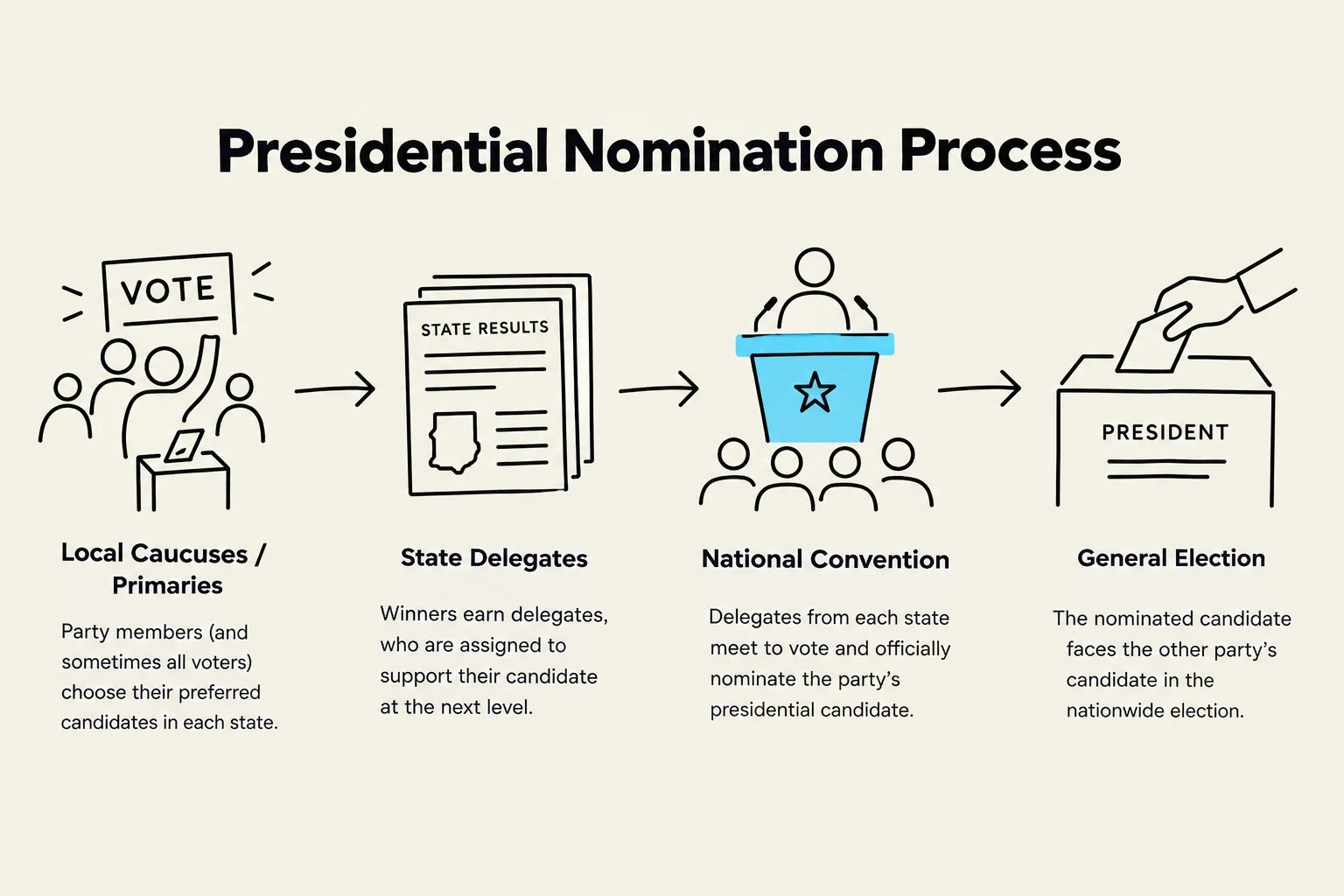
Before reaching the national stage, candidates must navigate a series of local and state-level contests. In some regions, this involves caucuses—meetings where party members gather to discuss candidates and select delegates. In other regions, voters participate in primary elections to express their preference.
Statewide Conventions and National Conventions
As the process moves toward the national level, parties hold statewide conventions to formalize their delegate counts. These delegates then travel to the national conventions, which are massive, highly choreographed events.
The national convention serves two primary purposes:
The Presidential Nomination: Formally announcing the party's nominee for President and Vice President.
Adopting the Platform: Finalizing the party platform, which serves as the official guide for the party's policy goals for the upcoming four years.
This diagram illustrates the process of presidential nomination in the United States, starting from local caucuses and primaries, moving to state delegates, then the national convention, and finally the general election.
Summary of the Organizational Flow
To visualize how these components interact, consider the following relationship between the different levels of activity:
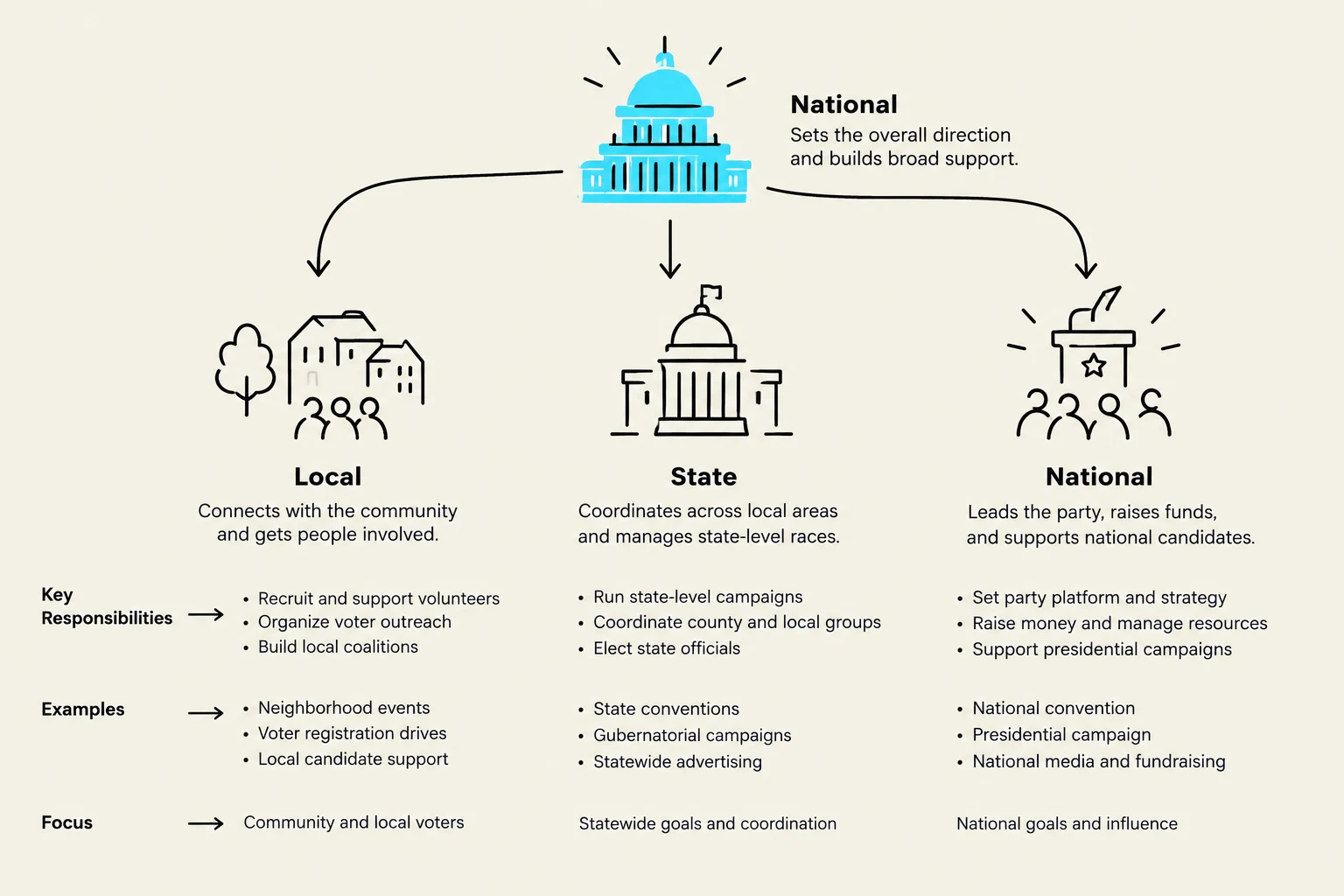
Local Mobilization→Statewide Coordination→National Consolidation
While the national level sets the vision and the platform, the success of that vision depends entirely on the ability of the local and state organizations to recruit candidates, raise funds, and maintain the loyalty of the electorate.
This diagram illustrates the hierarchical structure and responsibilities of political party operations at the local, state, and national levels.
Keep reading for free.
Create an account to finish this reading and make it part of your study routine.