


The primary goal of the pulmonary system is the exchange of gases between the external environment and the blood. To achieve this, the body relies on a complex integration of anatomical structures and physiological processes that ensure oxygen is delivered to tissues while carbon dioxide is efficiently removed. This article explores the mechanical, anatomical, and cellular components that make respiration possible.

The Three Pillars of Gas Exchange
Effective gas transport requires three distinct but interconnected processes:
- Ventilation: The mechanical movement of air into and out of the lungs.
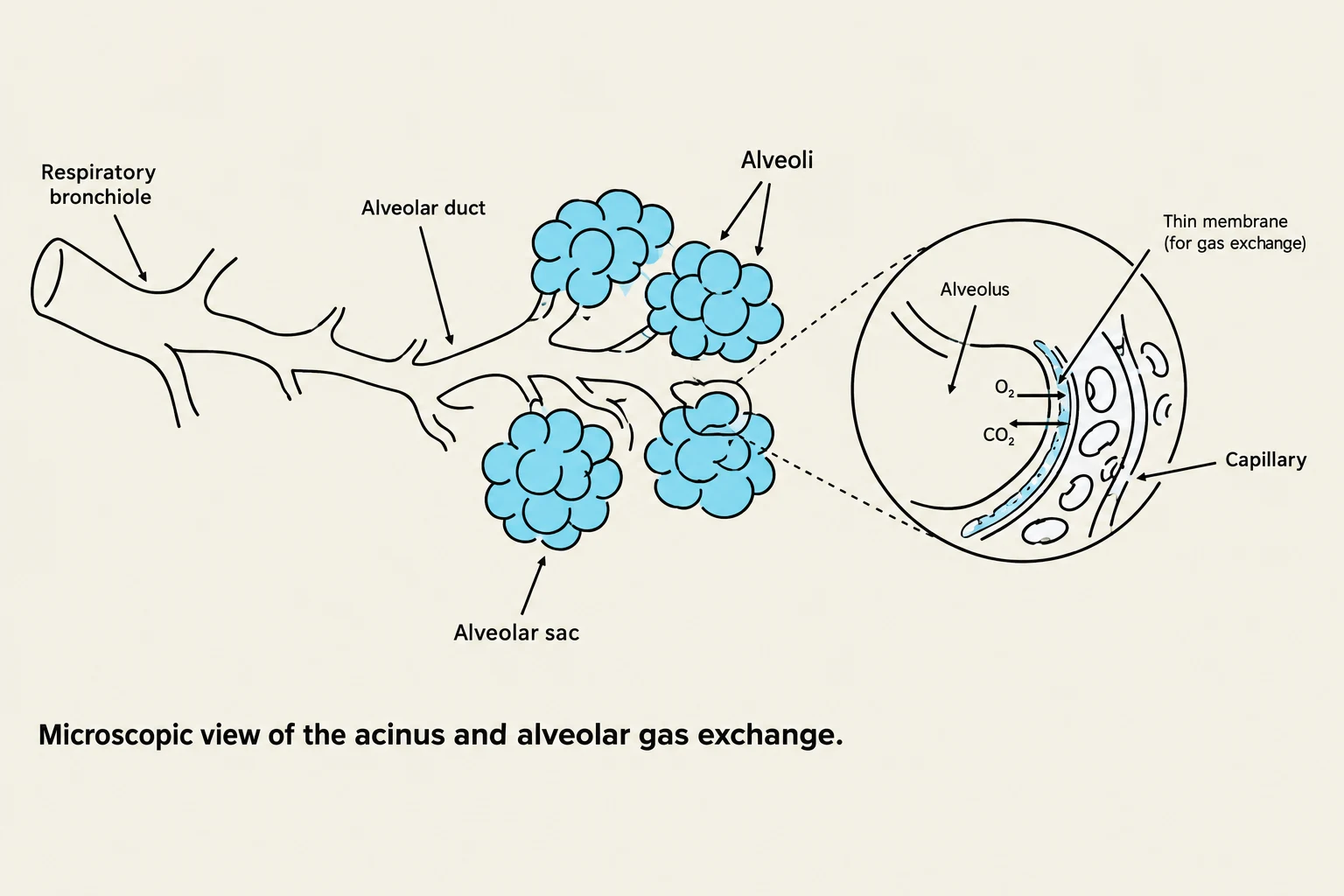
- Diffusion: The movement of gases across the alveolar-capillary membrane between the lung air spaces and the bloodstream.
- Perfusion: The movement of blood through the pulmonary capillary beds, facilitated by the cardiovascular system.
For gas exchange to be successful, there must be an even distribution of both air (ventilation) and blood (perfusion) throughout the lungs. This relationship is expressed as the V/Q ratio. A normal V/Q ratio is approximately 0.8.

Keep reading for free.
Create an account to finish this reading and make it part of your study routine.
Continue reading freeAlready have an account? Log in
Updated