


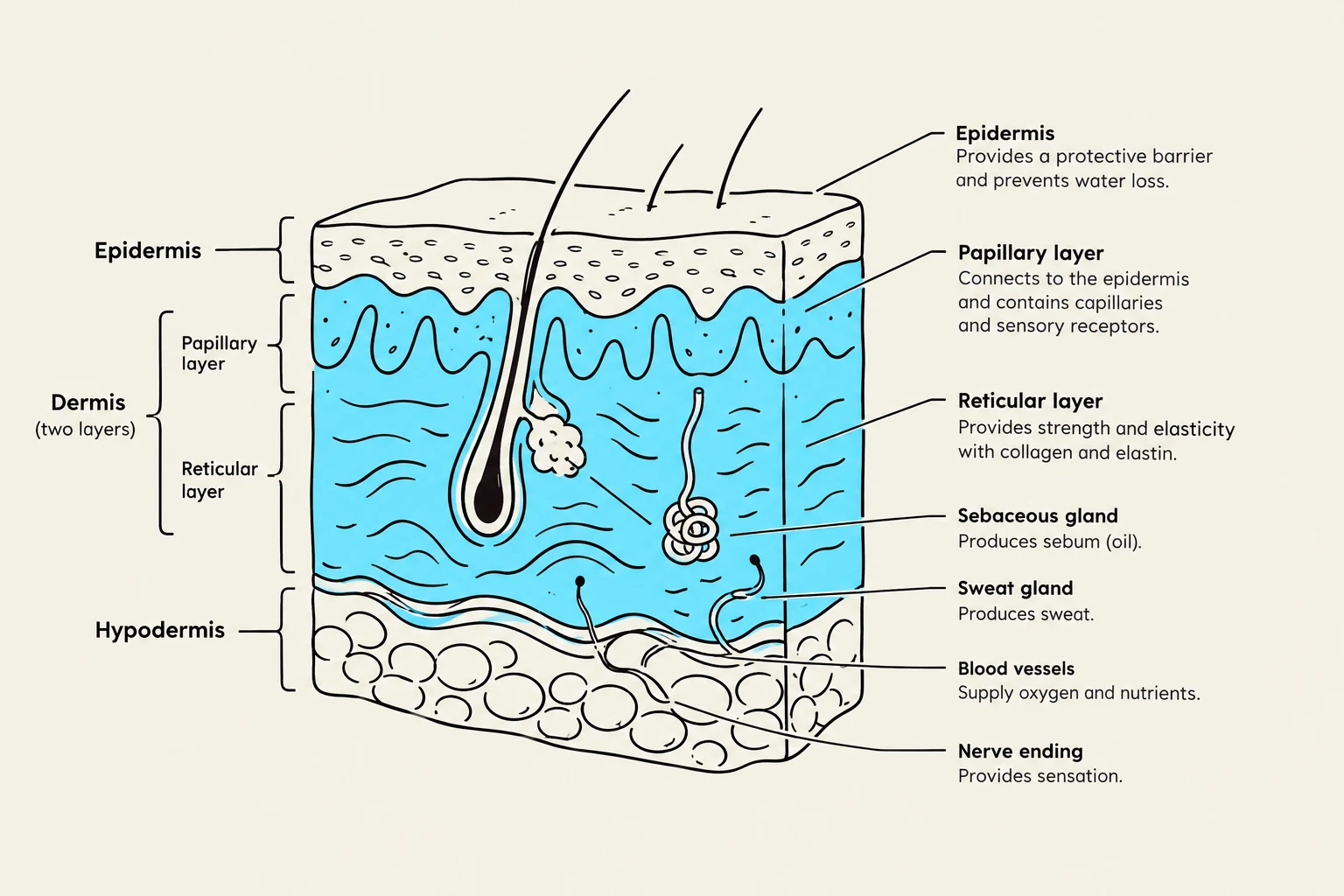
The skin, or integument, is the largest organ of the human body, accounting for approximately 16% of total body weight. While we often think of skin in terms of appearance, its biological role is far more profound: it acts as a vital protective covering that regulates temperature, provides sensation, and serves as a barrier against the environment. To understand how the skin protects us, we must examine its three primary layers: the epidermis, the dermis, and the hypodermis.
The Epidermis: The Protective Barrier
The outermost layer of the skin is the epidermis. This layer is composed of stratified squamous epithelium, a "stacked" arrangement of cells that creates a tough, resistant tissue. A critical characteristic of the epidermis is that it is avascular, meaning it lacks its own blood vessels. Because there is no direct blood supply, cells in the upper layers must rely on diffusion—the movement of nutrients and oxygen from the blood vessels in the underlying dermis—to survive.
The epidermis is organized into distinct horizontal layers, or strata. Cells are born in the deepest layer, the stratum basale (also known as the stratum germinativum), through continuous cell division. As new cells are produced, they push older cells toward the surface. During this migration, the cells undergo significant changes: they become increasingly keratinized and eventually die as they reach the outermost layer, the stratum corneum.
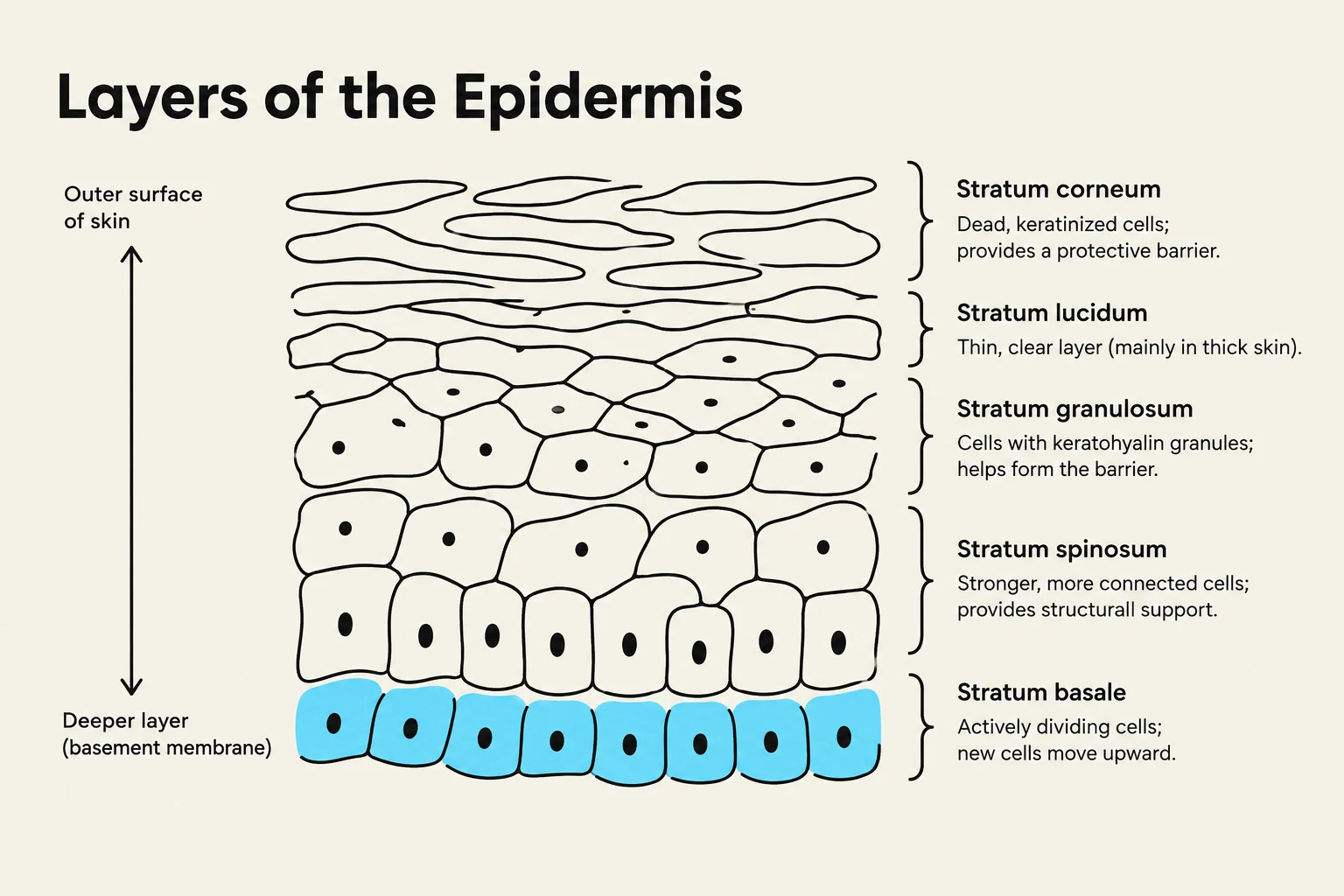
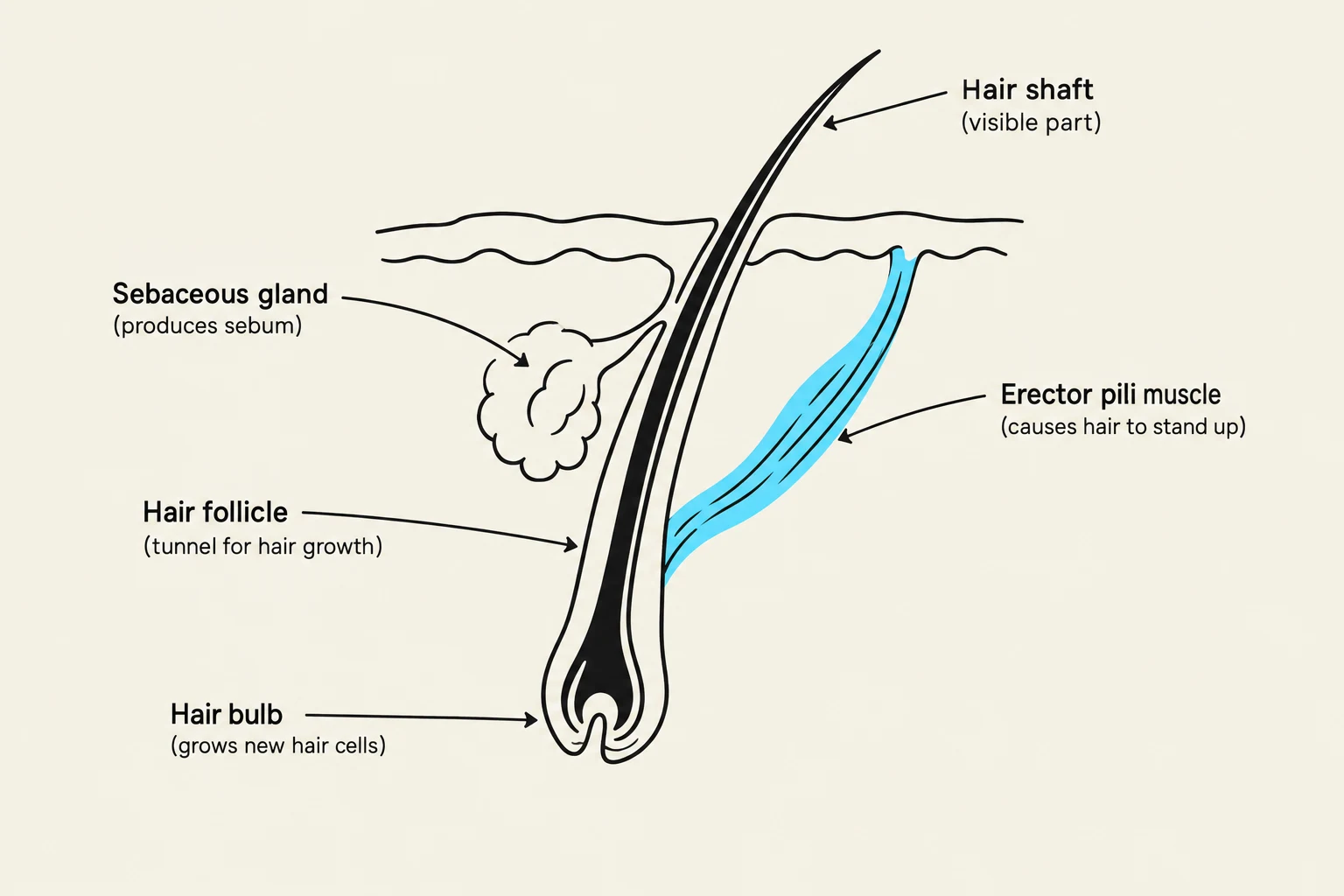
Study Tip: Thick vs. Thin Skin Not all skin is created equal. Thick skin, found on the palms of your hands and the soles of your feet, contains an additional clear layer called the stratum lucidum and a much thicker stratum corneum to provide extra padding and grip. In contrast, thin skin covers most of the body, lacks the stratum lucidum, and is associated with hair growth.
Keep reading for free.
Create an account to finish this reading and make it part of your study routine.
Continue reading freeAlready have an account? Log in
Updated