


The central nervous system (CNS) is a marvel of biological engineering, characterized by highly specialized regions that manage everything from basic survival to complex thought. Among these, the cerebellum and the diencephalon stand out as essential hubs. While the cerebellum acts as the body's "autopilot" for movement and balance, the diencephalon serves as the central processing core of the forebrain, managing sensory traffic and internal homeostasis.
The Cerebellum: The Master of Coordination
Located dorsal to the pons and medulla, the cerebellum is a highly folded structure that plays a vital role in motor control. Its primary mission is to smooth out body movements, ensure precision, and maintain equilibrium.
Anatomical Structure
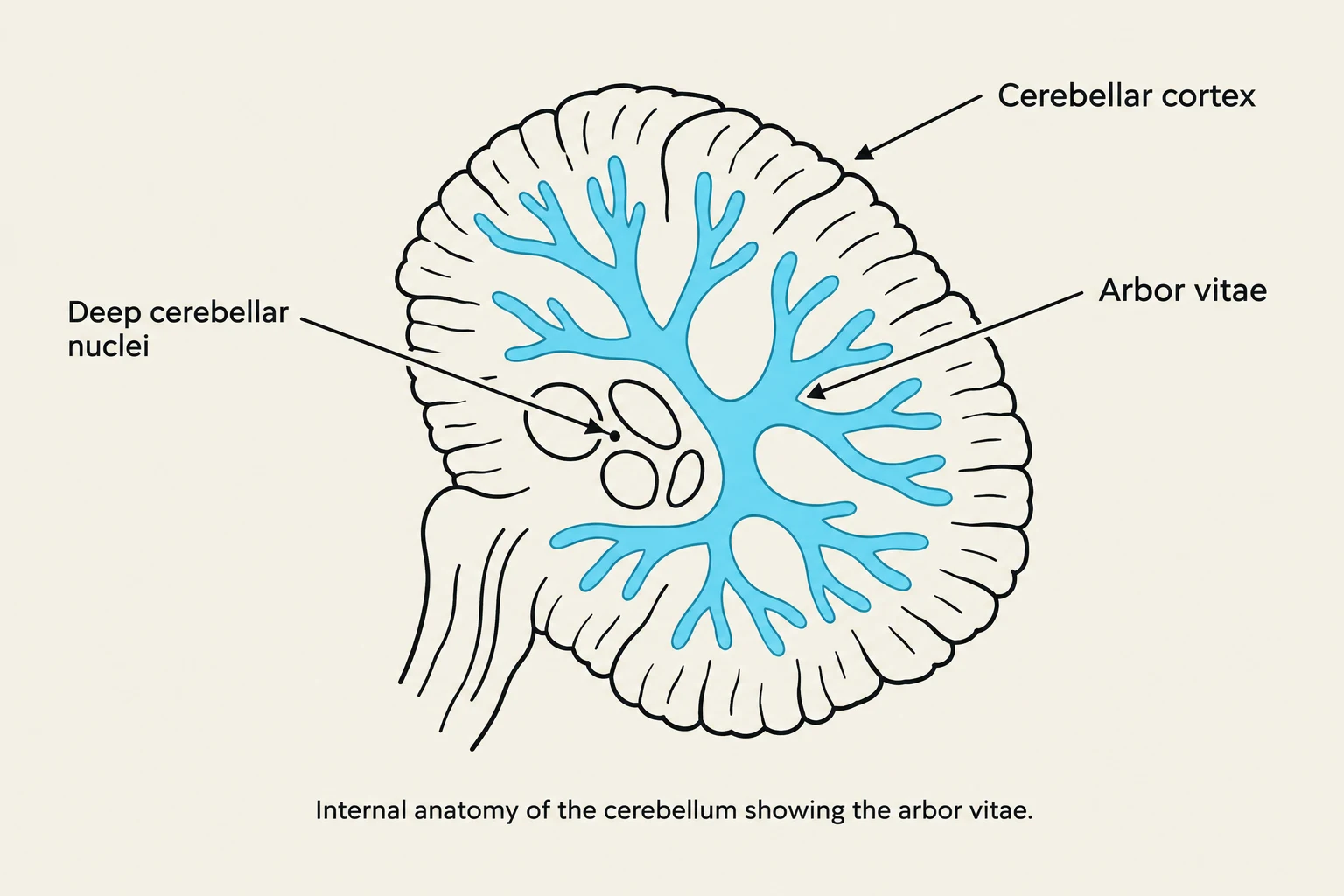
The cerebellum is organized into several distinct anatomical components:
- Cerebellar Hemispheres: Two large lateral structures that enclose the diencephalon and the rostral brainstem. Each hemisphere is further subdivided into an anterior lobe, a posterior lobe, and a small flocculonodular lobe.
- Cerebellar Cortex: The outer layer composed of gray matter, where much of the processing occurs.
- Arbor Vitae: The internal white matter that resembles the branching of a tree.
- Deep Cerebellar Nuclei: Deeply situated clusters of gray matter that serve as output centers.
Connectivity and Function
To perform its duties, the cerebellum must be "in the loop" with the rest of the nervous system. It receives constant sensory feedback regarding the position of the limbs, the movement of the neck and trunk, and the current state of equilibrium. It also receives significant input from the cerebral cortex to understand intended movements.

Keep reading for free.
Create an account to finish this reading and make it part of your study routine.
Continue reading freeAlready have an account? Log in
Updated