


The adrenal glands are essential components of the endocrine system, acting as critical regulators of both short-term and long-term physiological stress. Located superior to each kidney, these pyramid-shaped structures are unique because they function as two distinct organs merged into one: the outer adrenal cortex and the inner adrenal medulla. While the cortex functions as a classic endocrine gland by secreting steroid hormones, the medulla is a neuroendocrine organ that responds directly to the nervous system.
The Adrenal Cortex: Steroid Production
The adrenal cortex is the outer layer of the gland and is responsible for producing steroid hormones. Because these hormones are derived from cholesterol, they are hydrophobic (lipid-soluble). This solubility allows them to diffuse easily through the plasma membranes of target cells to bind with intracellular receptors in the cytosol or nucleus, where they initiate changes in gene expression.
The cortex is histologically organized into three distinct functional zones:
1. Zona Glomerulosa: Mineralocorticoids and Fluid Balance
The outermost layer, the zona glomerulosa, produces mineralocorticoids, the most significant of which is aldosterone. Aldosterone is a primary driver of fluid, electrolyte, and acid-base homeostasis.
When the body experiences decreased plasma volume or increased solute concentration, the Renin-Angiotensin-Aldosterone System (RAAS) is activated. Aldosterone acts on the kidneys to stimulate the reabsorption of sodium () and chloride ($Cl^-$) ions while promoting the excretion of potassium ($K^+$). Because water follows sodium via osmosis, this process increases blood volume and, consequently, blood pressure.
2. Zona Fasciculata: Glucocorticoids and Stress Response
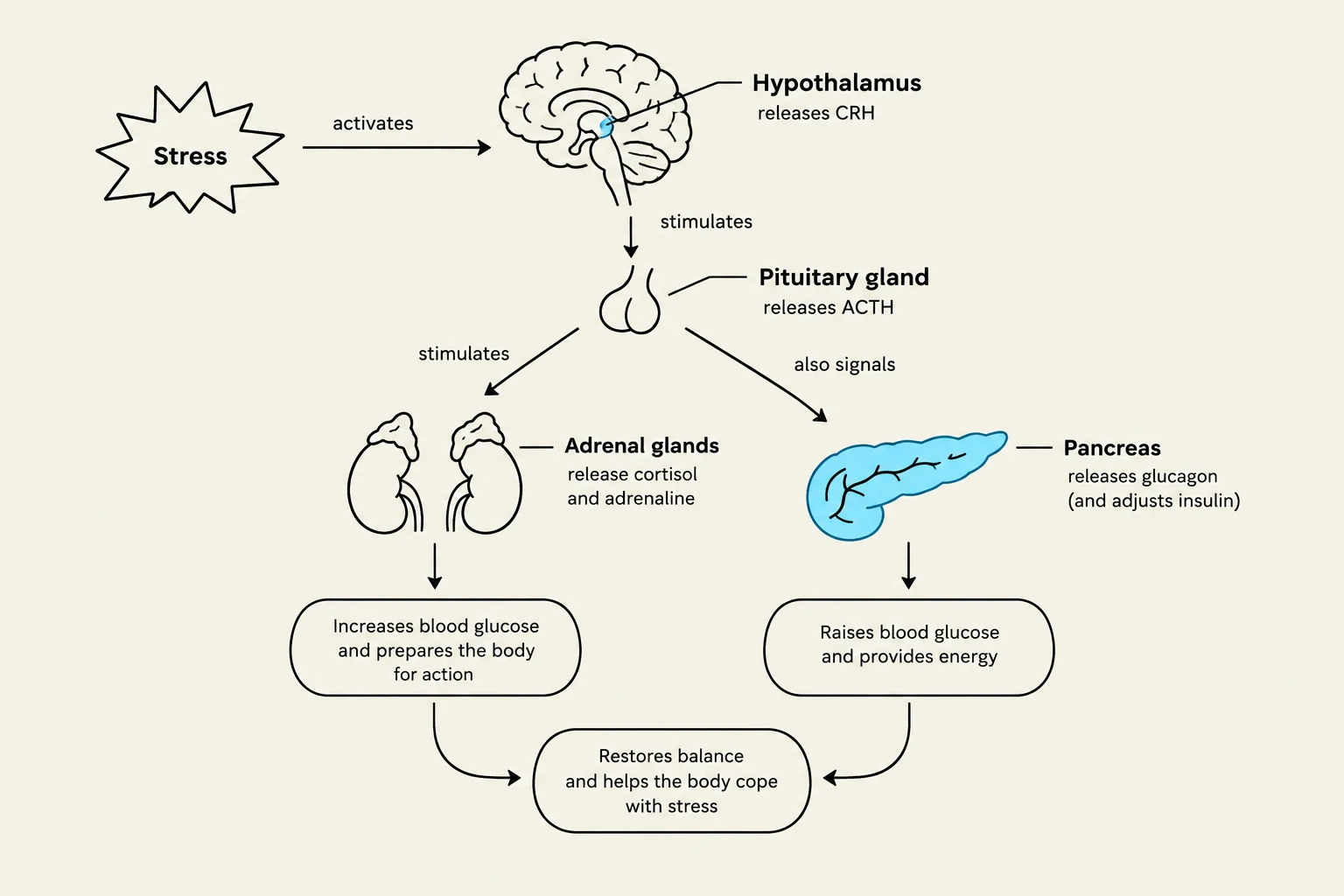
The middle and largest layer, the zona fasciculata, produces glucocorticoids, primarily cortisol. Cortisol is essential for managing long-term stress and metabolic fuel availability.

Keep reading for free.
Create an account to finish this reading and make it part of your study routine.
Continue reading freeAlready have an account? Log in
Updated