


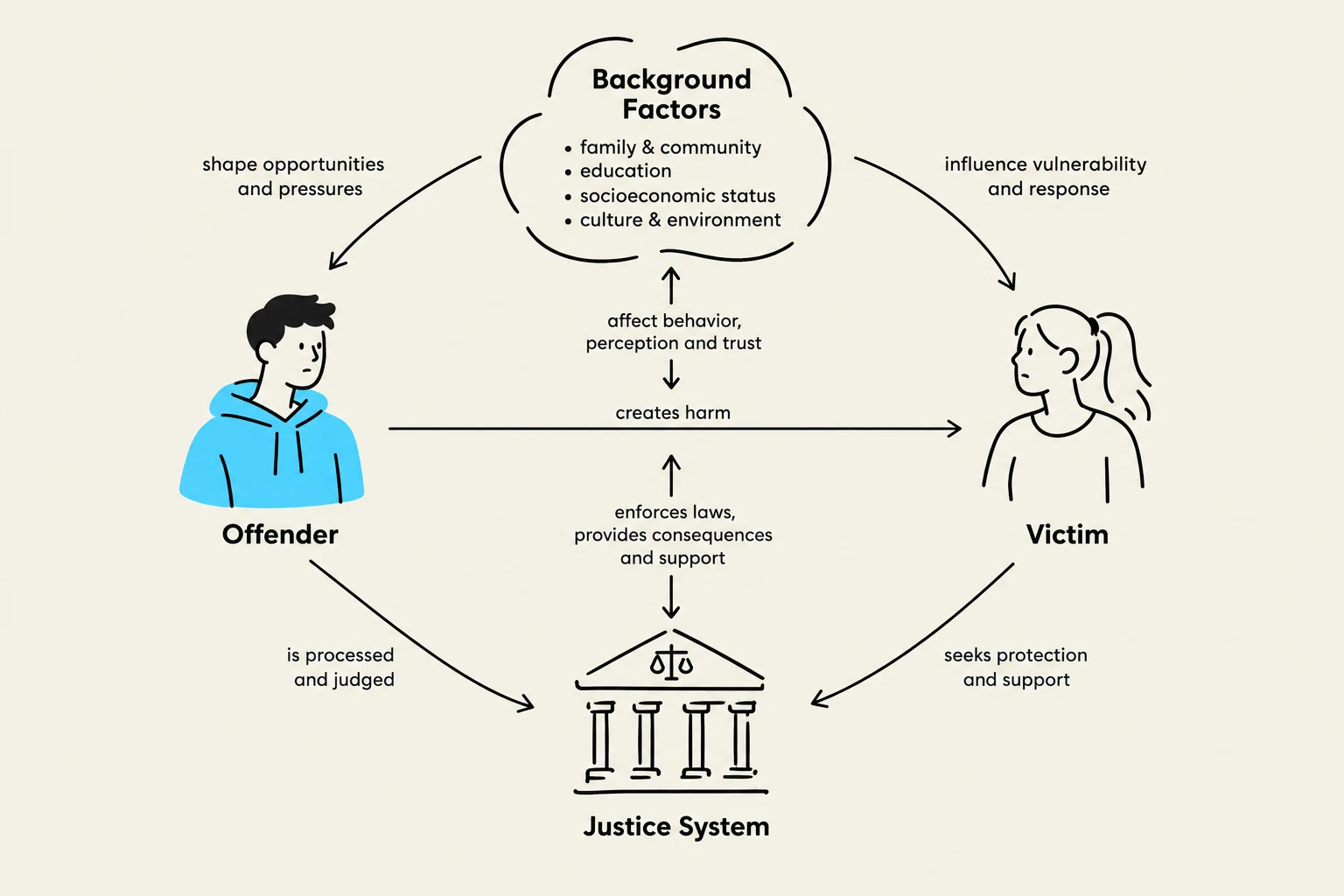
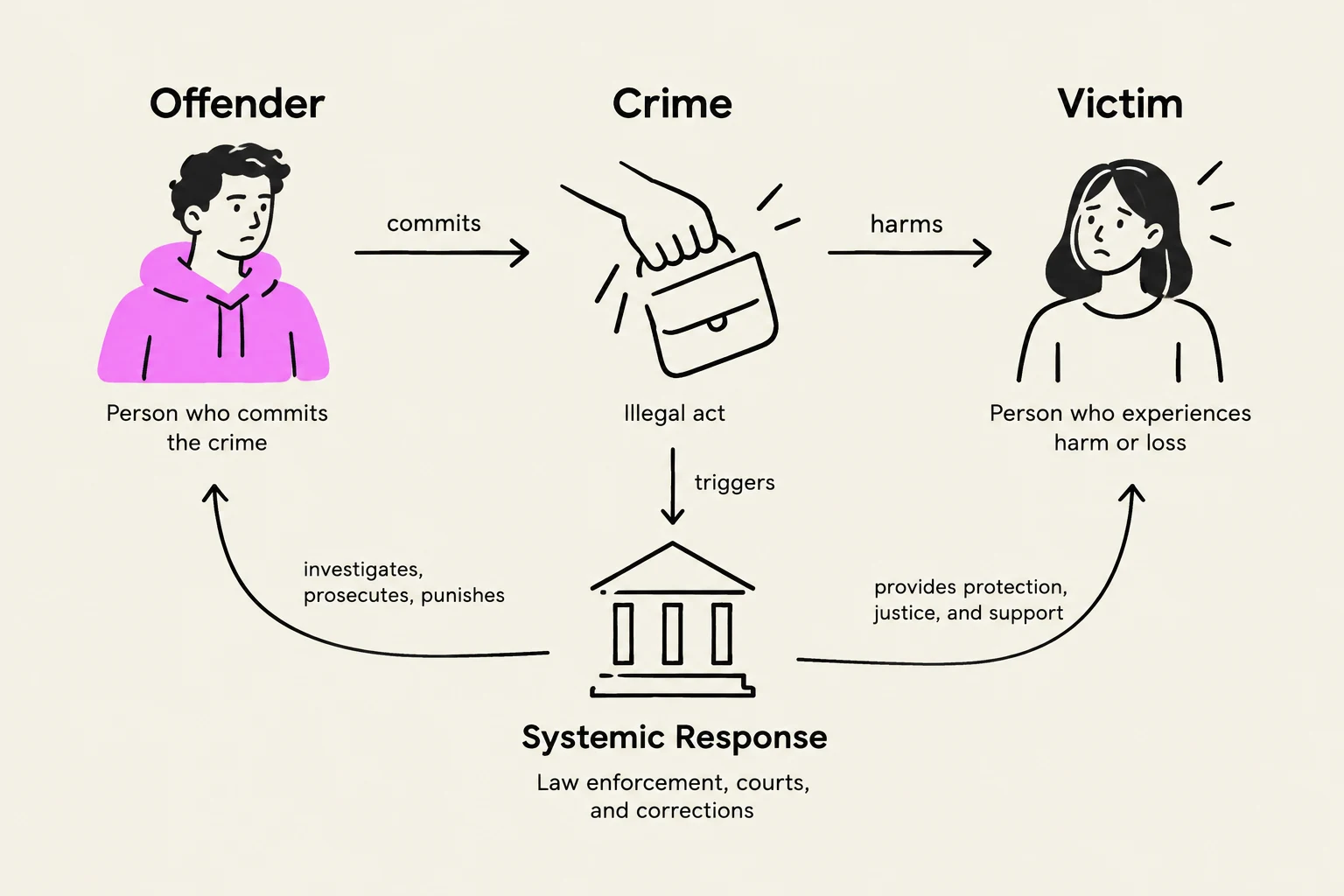
In sociology, the study of how society maintains order—and what happens when that order is disrupted—is central to understanding human interaction. Rather than viewing "right" and "wrong" as fixed, universal truths, sociologists examine how societies organize themselves through shared expectations and how these expectations are enforced, challenged, or redefined by those in power.
The Organization of Society and Social Norms
Society is not a random collection of individuals; it is a structured organization held together by shared patterns of behavior. This organization relies on social norms, which are the expected patterns of behavior within a group.
Norms exist on a broad spectrum. On one end, we have minor, day-to-day social etiquettes, such as maintaining appropriate eye contact or standing in a queue. On the other end, we have larger, more formal societal rules that govern fundamental interactions. When these norms are followed, society feels "normal" and predictable; when they are breached, it creates friction or social correction.
Exam Tip: When discussing norms, distinguish between informal norms (social etiquette, unwritten rules) and formal norms (laws, official policies).
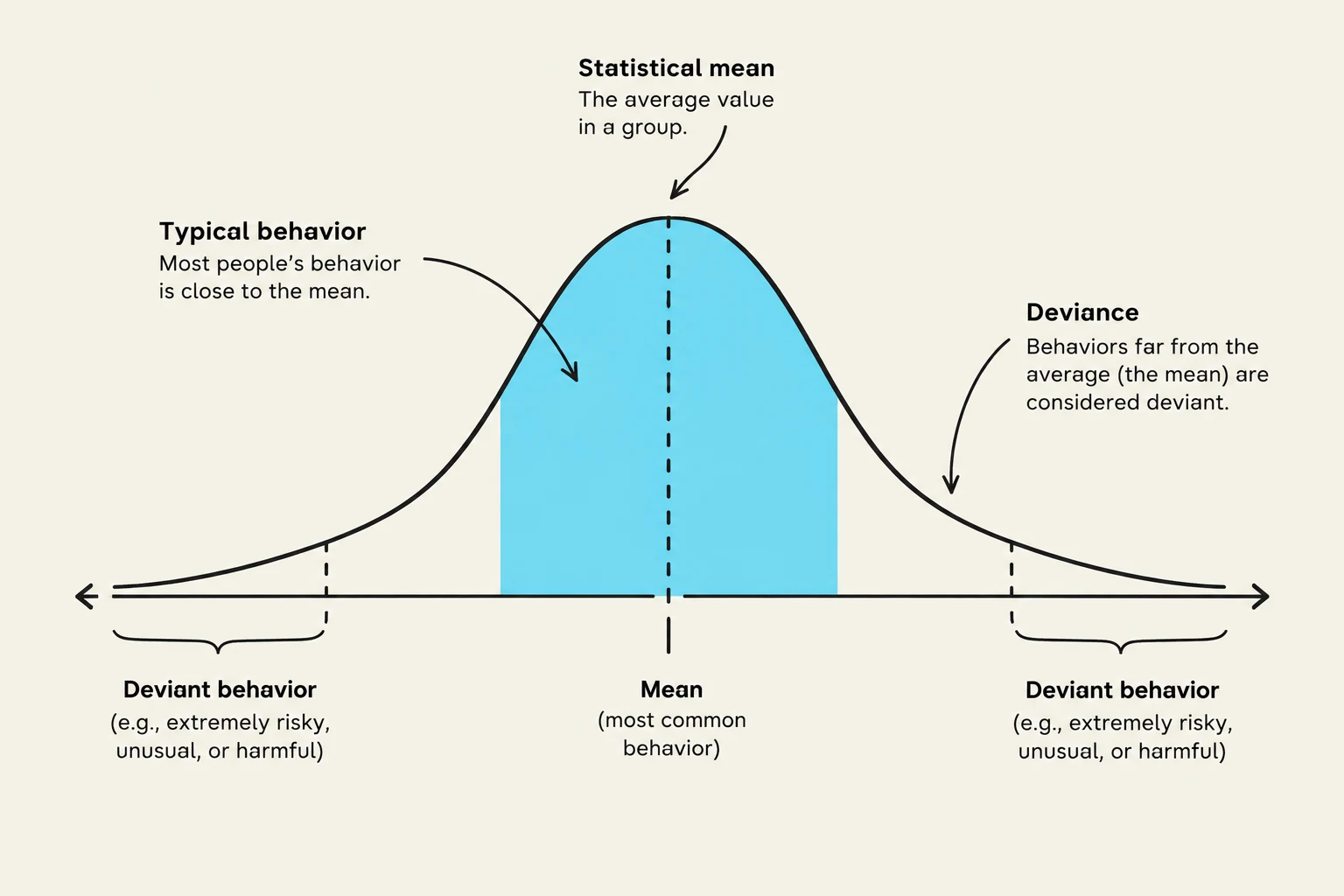
Understanding Deviance: The Statistical View
From a purely statistical perspective, deviance can be understood through the concept of the "mean". In any distribution of behavior, the "mean" represents the average or most common way people act. Deviance is any behavior that falls outside this statistical average.
It is important to note that being "deviant" does not automatically mean being "bad" or "criminal." For example, having red hair is statistically deviant because it is rare (affecting perhaps only 1% of the population), but it is not socially harmful. Sociologists categorize deviance into different levels:
Keep reading for free.
Create an account to finish this reading and make it part of your study routine.
Continue reading freeAlready have an account? Log in
Updated