Skin, Hair, and Nails Assessment: A Clinical Guide
This guide details the assessment of the integumentary system, including skin, hair, and nails. It covers subjective data collection using the PQRST(A)U mnemonic and objective assessment techniques like inspection and palpation. It also explains the ABCDE criteria for skin cancer screening and discusses risk factors an
The integumentary system—comprising the skin, hair, and nails—serves as the body's largest organ and the first line of defense against environmental hazards. While often viewed as purely aesthetic, a thorough assessment of these structures is vital for detecting systemic illnesses, infections, and malignancies such as melanoma. A successful assessment requires a dual approach: gathering detailed subjective history to understand the patient's experience and performing a systematic objective physical examination using standardized clinical tools.
The Rationale for Subjective Data Collection
Before touching the patient, the clinician must conduct a focused health history interview. The rationale for collecting subjective data is to identify predispositions, recognize patterns of change, and uncover risk factors that may not be immediately visible during inspection.
Key areas of inquiry include:
Pigmentation and Lesions: Assessing for changes in color (such as pallor, jaundice, or cyanosis) helps distinguish between localized issues and systemic diseases. Inquiring about changes in moles (size, shape, or bleeding) is critical for early cancer detection.
Texture and Moisture: Identifying xerosis (excessive dryness) or seborrhea (oiliness) can provide clues regarding hydration status, temperature regulation, or glandular function.
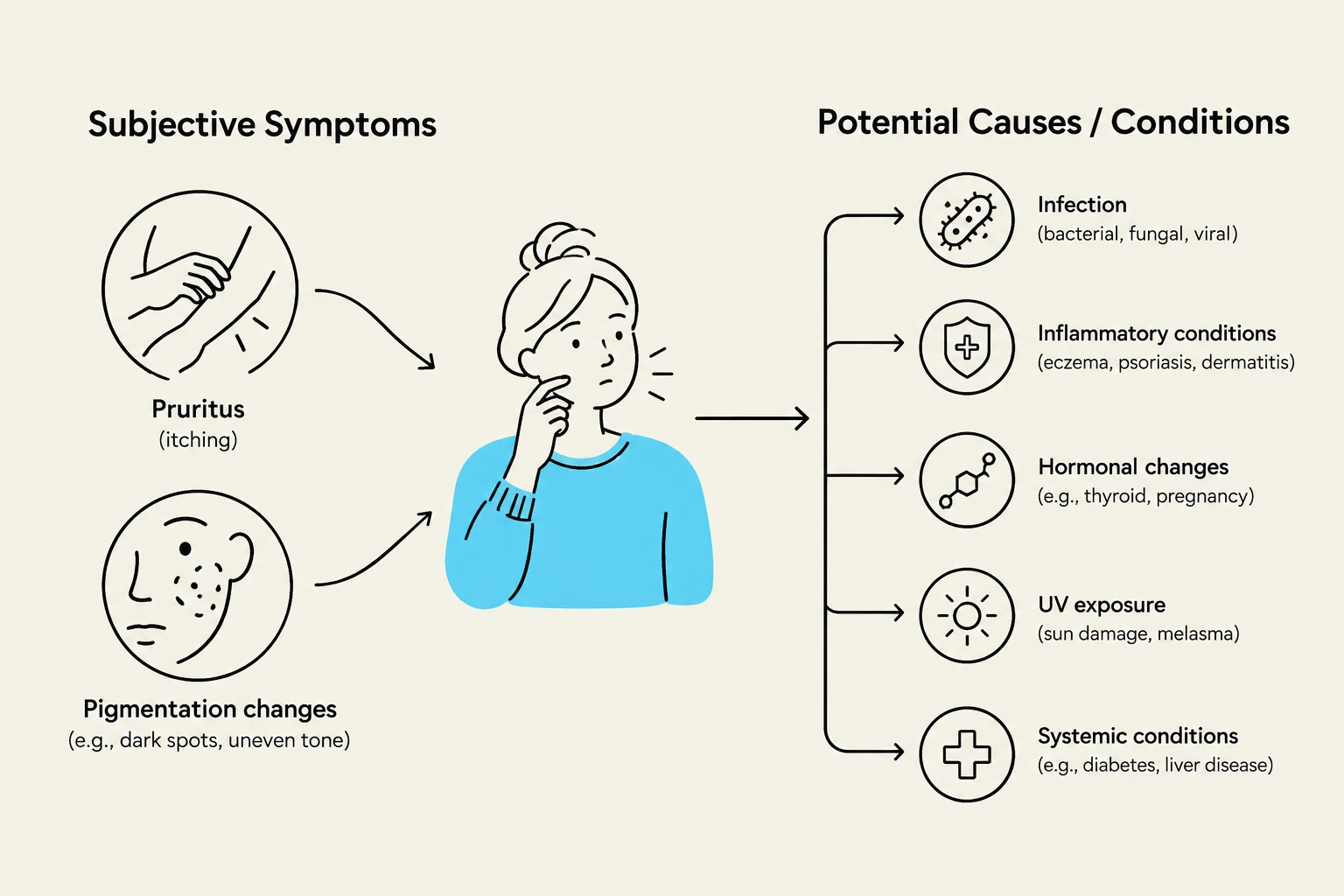
Sensory Changes: Patients often report pruritus (itching), pain, or burning. Understanding these sensations can point toward allergies, infestations, or systemic issues.
Hair and Nails: Inquiries regarding alopecia (hair loss) or changes in nail thickness and brittleness can reveal endocrine imbalances, nutritional deficiencies, or trauma.
Risk Factors and Lifestyle: Assessing environmental or occupational hazards (e.g., UV exposure, chemical contact) and self-care behaviors (e.g., sun protection use) allows the clinician to provide targeted education and prevention strategies.
Clinical Tip: Always ask about medications. Many drugs can cause skin reactions, increase sun sensitivity, or lead to unexplained bruising.
This diagram illustrates subjective symptoms such as pruritus and pigmentation changes, and their potential causes and conditions including infection, inflammatory conditions, hormonal changes, UV exposure, and systemic conditions.
Managing Specific Symptoms: The PQRST(A)U Guide
When a patient presents with a specific concern, such as a new rash, a painful lesion, or an itchy area, clinicians should use the PQRST(A)U mnemonic to ensure no detail is missed. This structured approach helps characterize the symptom and its impact on the patient's life.
P (Provocation/Palliation): What triggers the symptom, and what makes it better or worse (e.g., sun, certain products, or scratching)?
Q (Quality/Quantity): What does it look or feel like (e.g., burning, scaly, raised, or dry)?
R (Region/Radiation): Where is the lesion located, and has it spread from the original site?
S (Severity): On a scale of 0–10, how much discomfort is felt, and how much does it interfere with sleep or daily activities?
T (Timing): When did it start? Is it constant or intermittent?
A (Associated symptoms): Are there other signs like fever, swelling, or discharge?
U (Understanding): What does the patient believe is causing the issue?
Objective Assessment: Inspection and Palpation
The objective portion of the exam follows the IPPA (Inspection, Palpation, Percussion, Auscultation) framework. For the integumentary system, inspection and palpation are the primary techniques used.
Inspection
The clinician must inspect the entire skin surface, hair, and nails under adequate lighting. During inspection, you are looking for symmetry, color distribution, and visible abnormalities in the hair (texture and distribution) and nails (shape and color).
Palpation
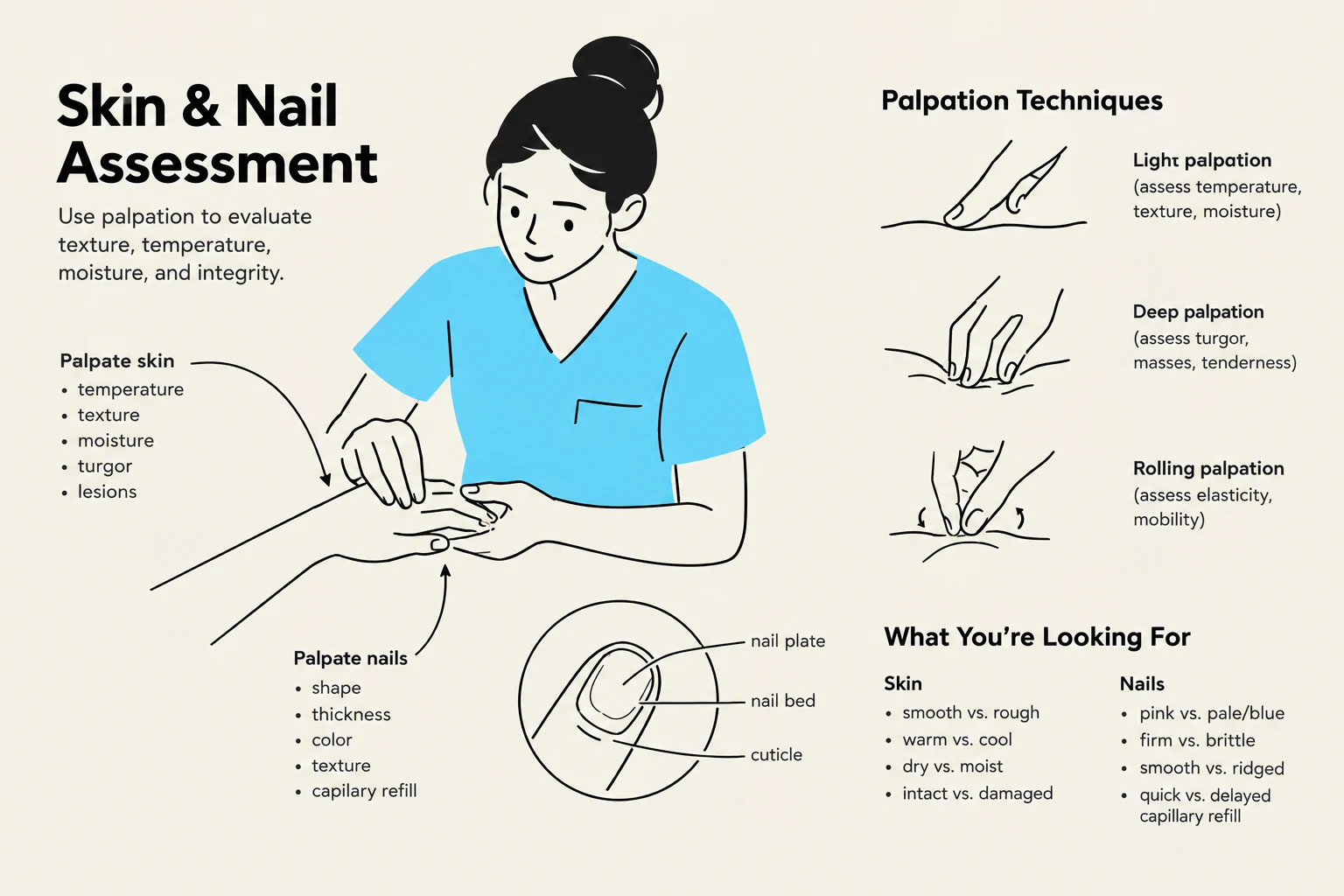
Using touch, the clinician assesses the physical characteristics of the skin.
Temperature and Moisture: Use the back of the hands to assess temperature and the fingertips for fine details of moisture.
Texture and Turgor: Palpate to determine skin smoothness and turgor (elasticity), which is an indicator of hydration status.
Nails: Assess nail thickness, brittleness, and the presence of clubbing (a change in the angle of the nail bed). Additionally, check capillary refill by applying pressure to the nail bed to ensure blood returns quickly.
This illustration details the techniques for skin and nail assessment, including palpation methods and criteria for evaluating skin and nail condition.
Skin Cancer Screening: The ABCDE's
A critical component of the skin assessment is screening for malignant melanoma. While the ABCDE criteria are a screening aid and not a definitive diagnosis, they are essential for identifying lesions that require prompt medical investigation.
Letter
Criteria
Description
A
Asymmetry
One half of the lesion does not match the other.
B
Border
Edges are irregular, ragged, notched, or poorly defined.
C
Colour
The lesion contains variegated shades (brown, black, red, white, or blue).
D
Diameter
The diameter is greater than 6 mm (though melanomas can be smaller).
E
Evolution
Any change in size, shape, color, elevation, or symptoms like itching/bleeding.
Risk Factors and Prevention
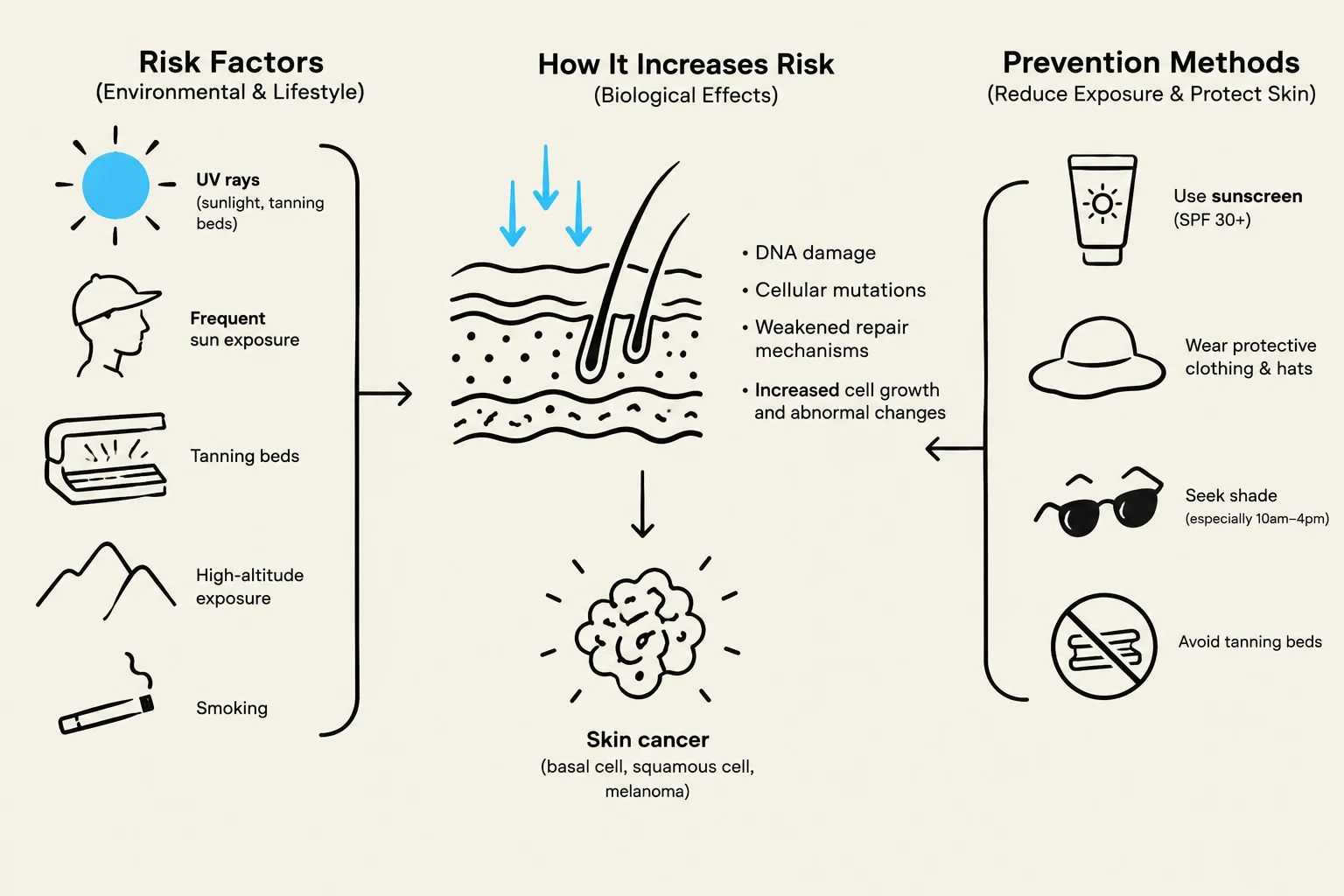
Recognizing high-risk patients is the first step in skin cancer prevention. Patients at increased risk include those with:
Excessive UV exposure (e.g., repeated sunburns, tanning bed use).
Fair skin, light hair, or light eye coloring.
Numerous or atypical (dysplastic) moles.
A personal or family history of skin cancer.
Immunosuppression.
Prevention Strategy: Emphasize the use of broad-spectrum SPF 30+ sunscreen, seeking shade, wearing protective clothing (like wide-brimmed hats), and avoiding indoor tanning.
This diagram illustrates the risk factors for skin cancer, how they increase risk through biological effects on the skin, and prevention methods to reduce exposure and protect the skin.
By combining a thorough subjective history using PQRST(A)U with a systematic objective examination using the ABCDE criteria, clinicians can effectively monitor skin health and intervene early in the presence of potentially life-threatening conditions.
Keep reading for free.
Create an account to finish this reading and make it part of your study routine.