


In the complex environment of a multicellular organism, cells are constantly bombarded by chemical messages from their neighbors. These messages, known as ligands, tell the cell when to divide, when to move, or when to produce specific proteins. However, a signal cannot simply "enter" a cell and perform a task directly; it must be interpreted and converted into a meaningful action. This process is known as signal transduction.
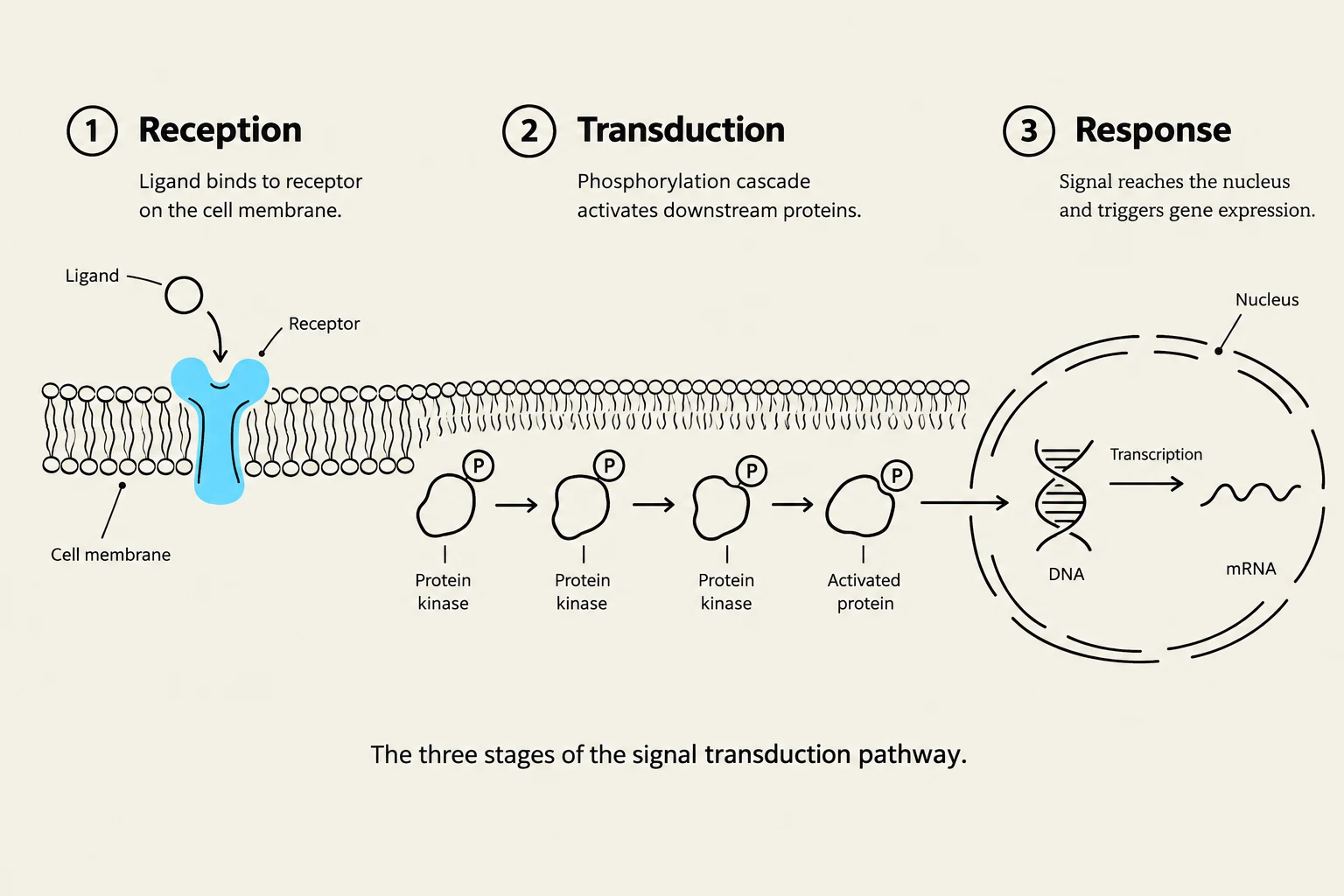
Understanding signal transduction requires looking at the journey a signal takes through three distinct stages: reception, transduction, and response.
The Three Stages of Cell Signaling
To ensure that a cell reacts appropriately to its environment, signaling follows a highly regulated three-step pathway.
1. Reception
The process begins with reception, where a signaling molecule (the ligand) binds to a specific receptor protein located on the cell surface or within the cytoplasm. The relationship between a ligand and its receptor is highly specific, much like a lock and key. When the ligand binds, it induces a conformational change (a change in shape) in the receptor, which "activates" it and prepares it to pass the message forward.
2. Transduction
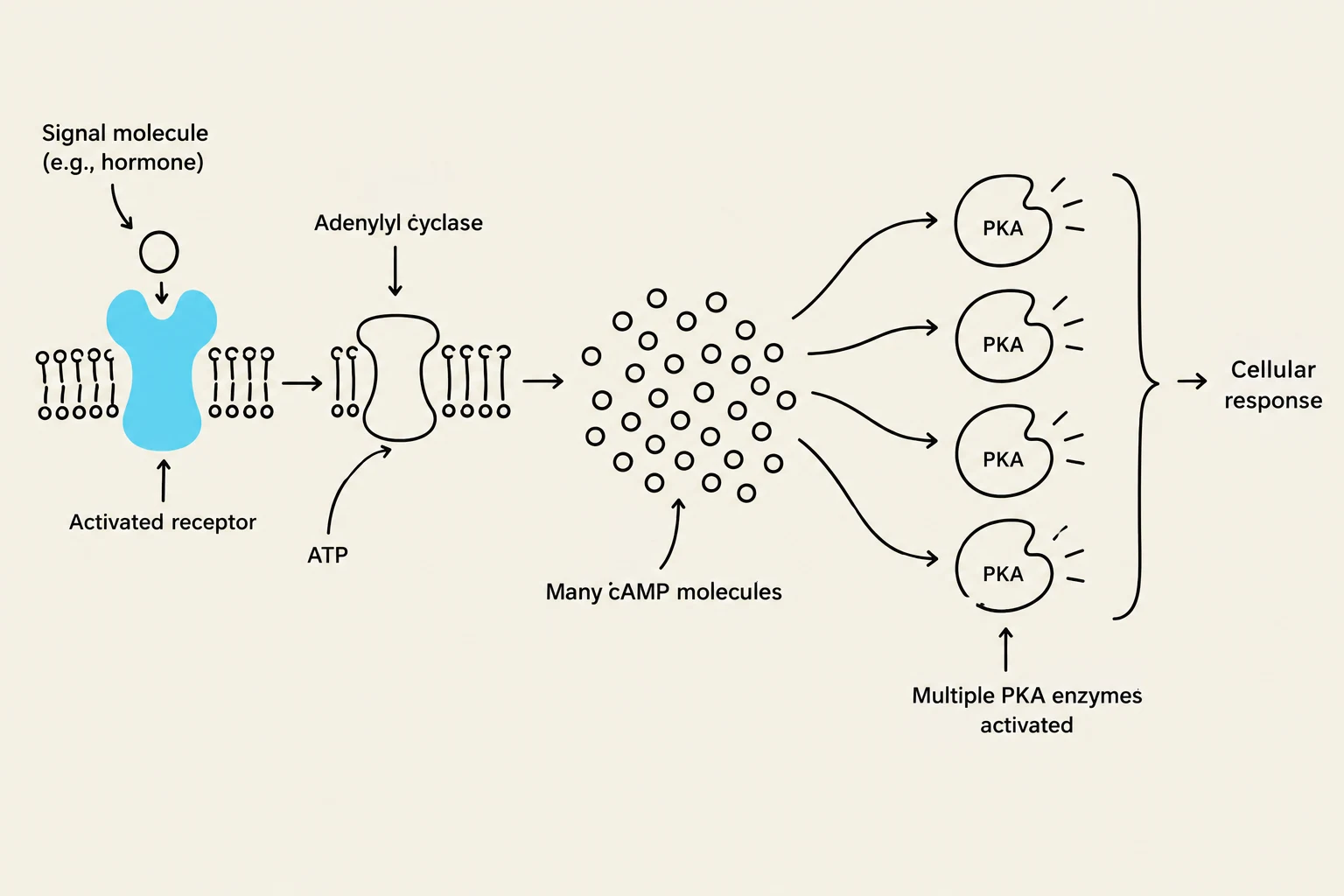
Once the receptor is activated, the message must be transmitted from the membrane into the interior of the cell. This is the transduction phase. Transduction often involves a "signaling cascade," where one molecule activates another, which activates another, and so on. This stage is not just about moving the message; it is about converting the extracellular signal into a form that the cell's internal machinery can understand.
Keep reading for free.
Create an account to finish this reading and make it part of your study routine.
Continue reading freeAlready have an account? Log in
Updated