


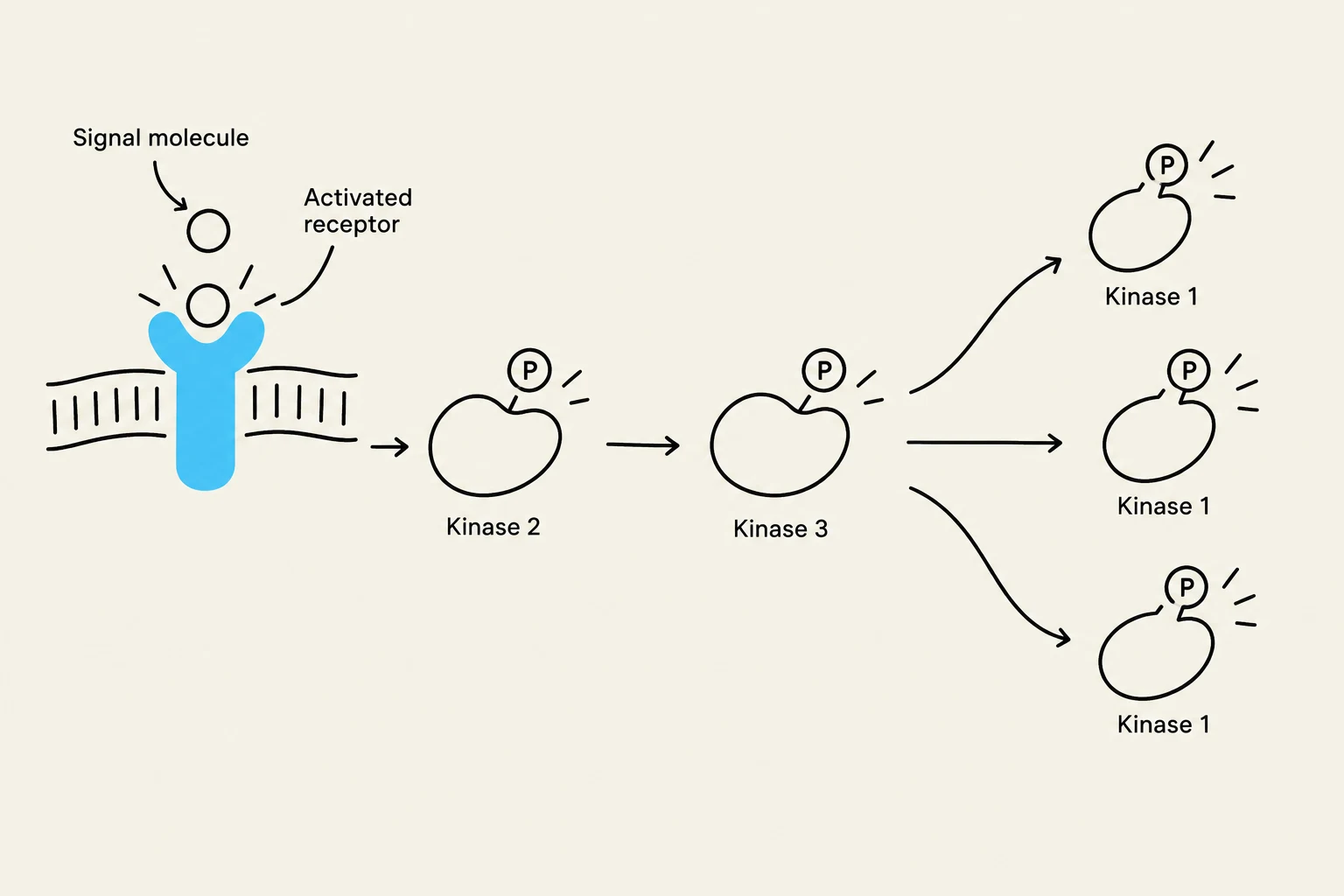
Cells are not isolated units; they are constantly interacting with their environment. To survive and function, they must perceive external signals—such as hormones, neurotransmitters, or growth factors—and convert those signals into specific cellular actions. This process is known as signal transduction: a sequence of molecular events and chemical reactions that lead from the initial reception of a signal to a final cellular response.
The Basics of Signal Reception
A signal transduction pathway typically follows a three-step logic: Reception Transduction Response.
The process begins when a specific molecule, called a ligand, binds to a receptor protein. The ligand fits into a three-dimensional binding site on the receptor, much like a key fits into a lock, causing the receptor protein to undergo a change in its conformation, or shape. This shape change is the critical "switch" that allows the signal to be passed from the outside of the cell to the inside.
Receptors are classified by their location, which is determined by whether the signal can cross the cell membrane. Nonpolar (hydrophobic) signals can diffuse through the lipid bilayer to bind to intracellular receptors, which often act as transcription factors to alter gene expression. Conversely, large or polar signals cannot cross the membrane and must bind to membrane receptors.
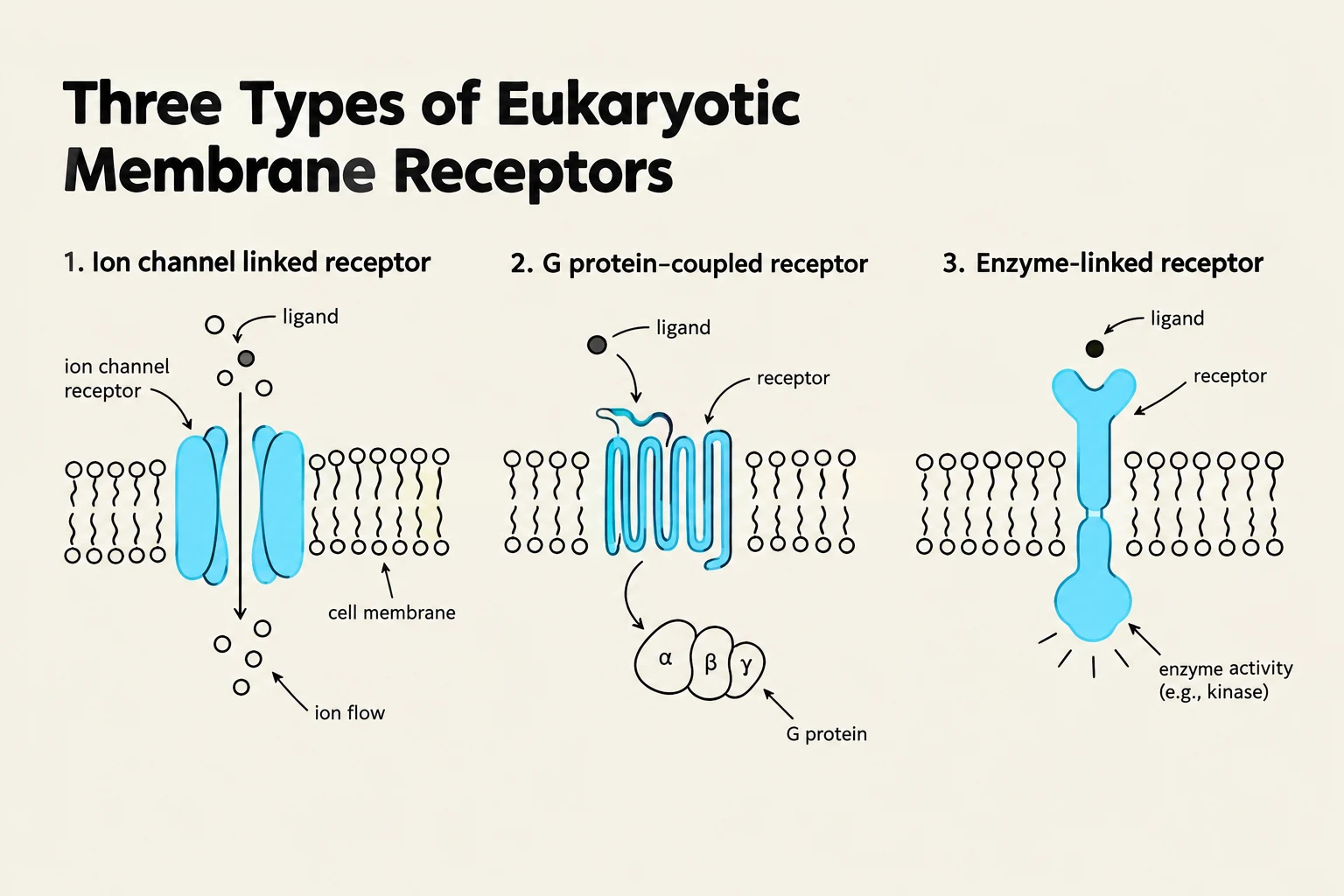
There are three primary types of eukaryotic membrane receptors:
- Ion channel linked receptors: These act as gates. When a ligand binds, the protein changes shape to open a channel, allowing specific ions (like ) to flow into or out of the cell. An example is the acetylcholine receptor on muscle cells.
- G-protein coupled receptors (GPCRs): These interact with membrane-associated proteins to initiate signaling.
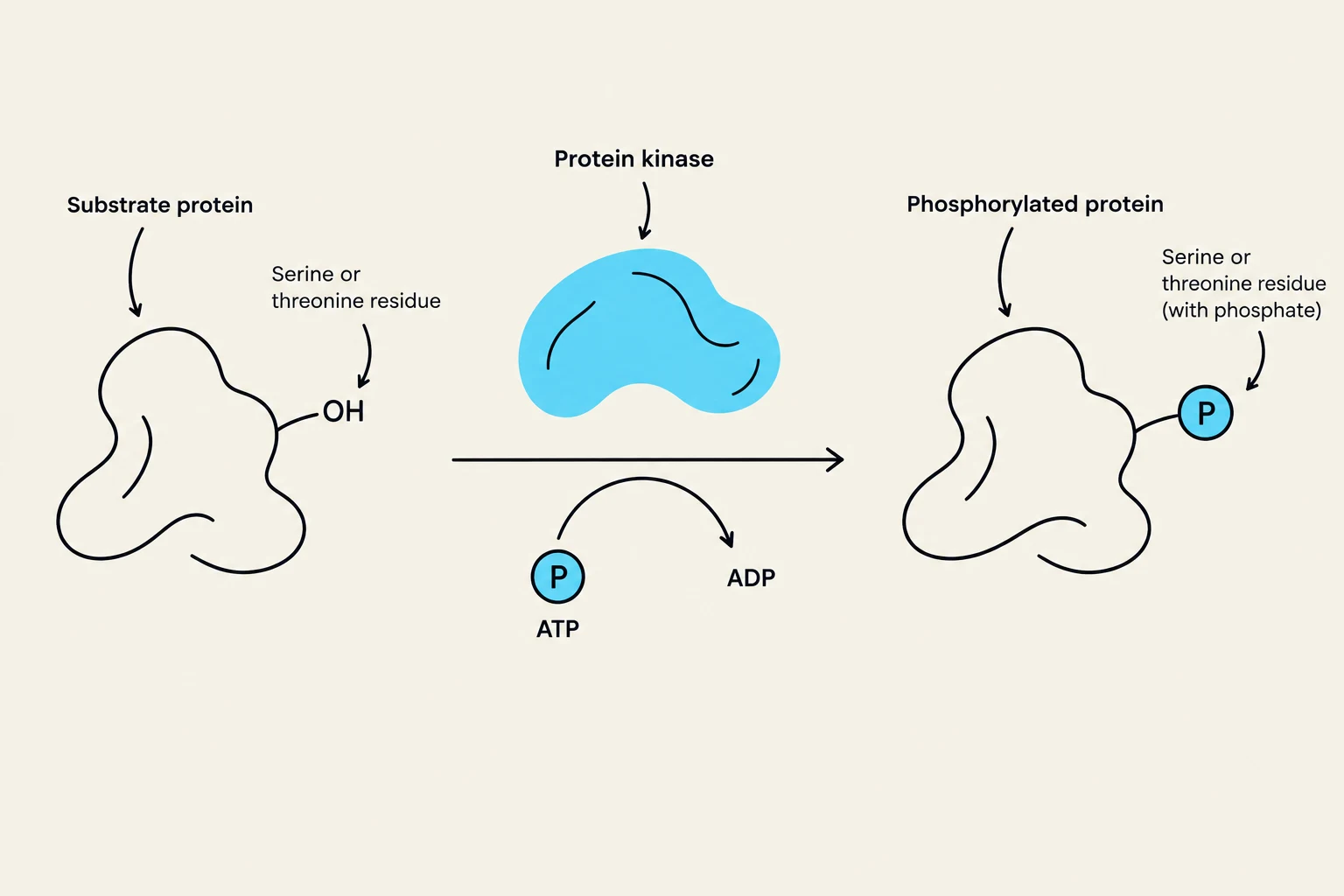
- Protein kinase receptors: These function as enzymes to initiate phosphorylation.
Keep reading for free.
Create an account to finish this reading and make it part of your study routine.
Continue reading freeAlready have an account? Log in
Updated