


In the complex environment of a multicellular organism, cells must constantly sense and respond to their surroundings. This communication is made possible through signal transduction—the process by which an extracellular signal (a ligand) is converted into a specific cellular response. To achieve this, cells utilize specialized proteins embedded in their membranes known as receptors. These receptors act as the bridge between the outside world and the internal machinery of the cell.
The Three Classes of Eukaryotic Membrane Receptors
Eukaryotic cells primarily utilize three distinct types of membrane receptors to initiate signaling pathways:
- Ion channel-linked receptors: These receptors act as gates that open or close in response to ligand binding, allowing specific ions to flow across the membrane.
- Protein kinase receptors: These receptors possess enzymatic activity and directly influence protein function through phosphorylation.
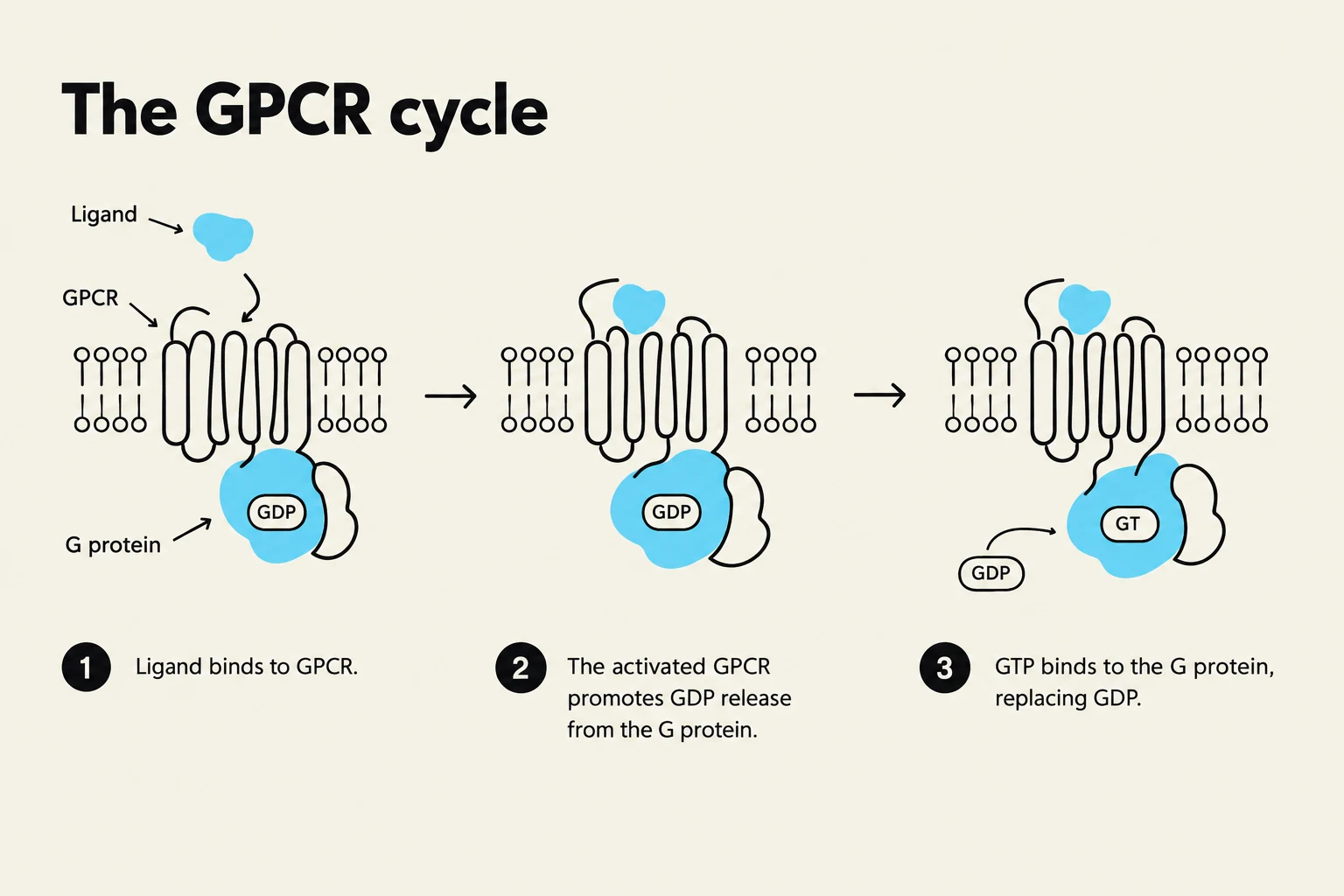
- G protein-coupled receptors (GPCRs): These receptors interact with an intermediary protein called a G protein to trigger downstream effects.
Protein Kinase Receptors and the Power of Cascades
Protein kinase receptors are unique because they catalyze the phosphorylation of themselves and other proteins to change their shape and activity. When a signaling molecule binds to the receptor, the receptor undergoes a conformational change that activates its protein kinase domain in the cytoplasm. A critical step in this process is autophosphorylation, where the receptor phosphorylates its own amino acid residues to become fully active.
Once activated, these receptors often initiate a protein kinase cascade. In a cascade, one protein kinase activates a second kinase, which in turn activates a third, and so on.

Keep reading for free.
Create an account to finish this reading and make it part of your study routine.
Continue reading freeAlready have an account? Log in
Updated