


How do we make sense of the world around us? Whether it is the warmth of the sun, the smell of coffee, or the sound of music, our brain relies on a sophisticated biological translation process. This article reviews the fundamental principles of how sensory systems convert environmental stimuli into meaningful neural signals.
The Fundamentals of Sensory Processing
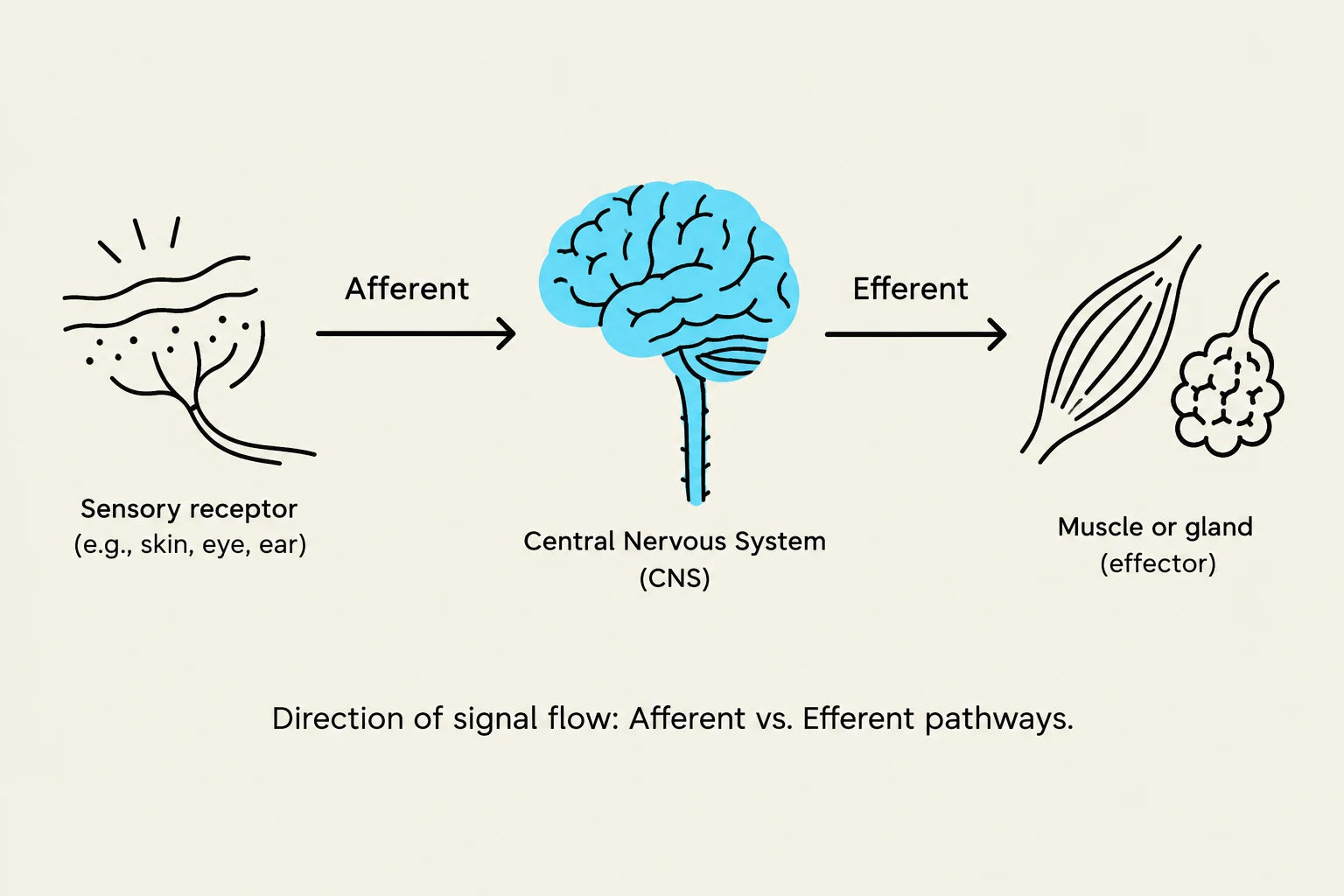
The core of sensory perception is encoding—the process of converting information about a stimulus into a language the brain understands: action potentials. To create a complete picture of the world, the nervous system must encode four specific dimensions of every stimulus:
- Modality: What kind of stimulus is it?
- Location: Where is it coming from?
- Intensity: How strong is it?
- Duration: How long does it last?
Modality and Perception
Modality refers to the specific type of energy being detected. Receptors are specialized to respond to different forms of energy, including:
- Chemo-receptors: Chemical concentrations (e.g., taste and smell).
- Thermo-receptors: Temperature changes.
- Mechano-receptors: Physical deformation, pressure, or vibration (e.g., touch and hearing).
- Photo-receptors: Light.
- Magneto-receptors: Magnetic fields.
A key principle in sensory biology is that a specific afferent pathway is typically associated with a specific receptor modality. This means that perception—our conscious experience of a stimulus—is largely determined by which specific pathway the signal travels through. For example, if a signal travels via the optic nerve, the brain perceives light, even if the original stimulus was a physical pressure on the eye.
Keep reading for free.
Create an account to finish this reading and make it part of your study routine.
Continue reading freeAlready have an account? Log in
Updated