This content covers the management of patients who have ingested depressant substances, focusing on sedatives and hypnotics. It details their classification, clinical effects, and prehospital care strategies for overdose situations, including airway management and differential diagnosis.
In the field of toxicology, managing patients who have ingested depressant substances requires a high index of suspicion and a systematic approach to life-threatening complications. Sedatives and hypnotics are a broad class of medications that function primarily as central nervous system (CNS) depressants. While they are clinically useful for reducing anxiety, calming agitated patients, or serving as sleep aids, their potential for misuse and overdose poses a significant risk to patient stability.
Understanding Sedatives and Hypnotics
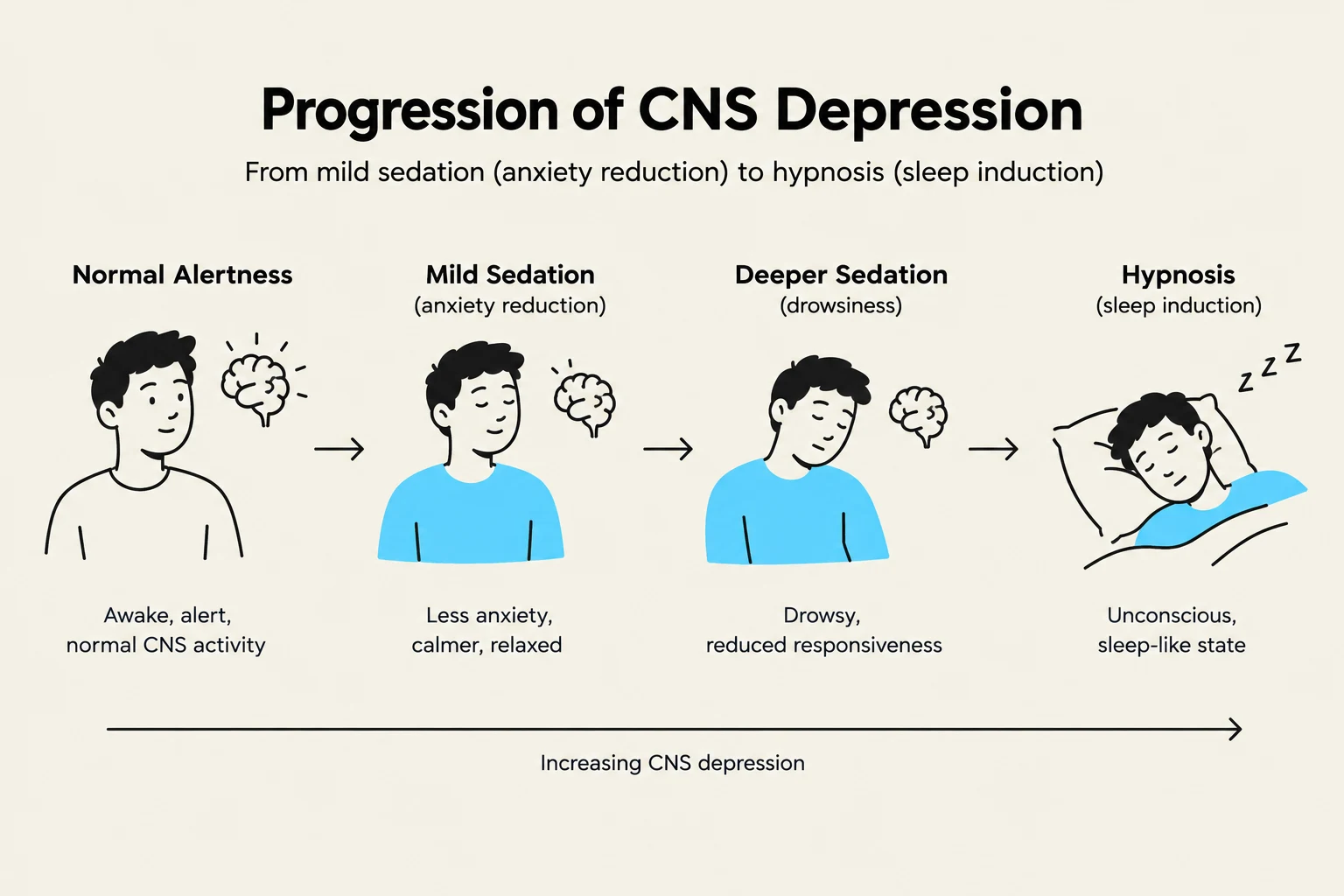
Sedatives and hypnotics are categorized by their intended effect on the patient. A sedative is typically used to reduce anxiety and promote calmness, whereas a hypnotic is used to induce sleep. Because these drugs depress the CNS, they can lead to a progressive decline in mental status, respiratory drive, and consciousness.
The clinical presentation of an overdose often depends on the specific substance ingested, but a common thread among many depressants is the risk of respiratory depression and airway compromise.
This illustration depicts the progression of Central Nervous System (CNS) depression, ranging from normal alertness to unconsciousness, with stages including mild sedation, deeper sedation, and hypnosis.
Barbiturates: High-Risk Depressants
Barbiturates were once widely used as sleep aids, antianxiety medications, and seizure-control agents. However, due to their narrow therapeutic index and high potential for toxicity, their use has declined in favor of safer alternatives.
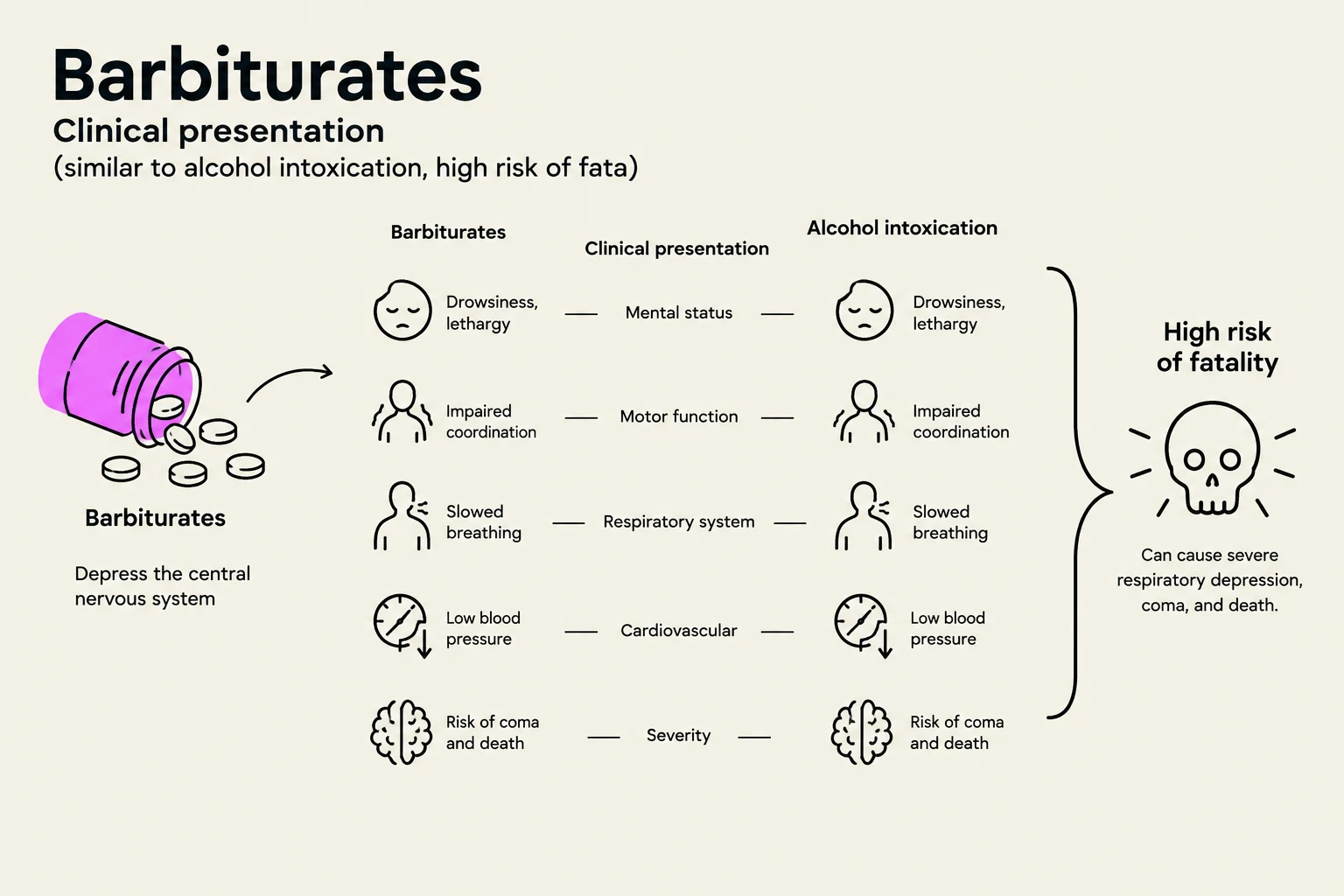
One of the most dangerous aspects of barbiturate toxicity is the synergistic effect when combined with alcohol; this combination is a frequent mechanism in fatal suicides. Patients presenting with barbiturate overdose often exhibit symptoms similar to severe alcohol intoxication.
Tolerance and Withdrawal
Chronic users of barbiturates often face two major physiological hurdles:
Tolerance: Users quickly develop a need for larger doses to achieve the same therapeutic or euphoric effect.
Withdrawal Syndrome: Abruptly stopping the medication can trigger a significant and potentially life-threatening withdrawal syndrome.
Exam Tip: If a patient presents with altered mental status and a history of heavy sedative use, always consider the possibility of an impending withdrawal seizure or the synergistic effects of co-ingested alcohol.
Benzodiazepines
Benzodiazepines are currently among the most common medications used to treat anxiety, seizures, and withdrawal symptoms. While generally safer than barbiturates, they still pose significant risks in overdose scenarios.
Clinical Effects
The clinical presentation of benzodiazepine toxicity typically includes:
Altered mentation and confusion
Drowsiness
Slurred speech
Ataxia (general incoordination)
CNS depression
In the prehospital setting, management focuses on supportive care. This includes assessing and managing the airway, providing high-concentration supplemental oxygen, establishing vascular access, and continuous monitoring via ECG, pulse oximetry, and capnometry.
Note on Antagonists: While flumazenil is a specific antagonist for benzodiazepines, its use is generally not advised in the prehospital setting due to the risk of inducing seizures, especially in patients with chronic use or co-ingestants.
This diagram illustrates the clinical presentation of barbiturates, comparing its effects to alcohol intoxication and highlighting the high risk of fatality associated with barbiturate use, including symptoms like drowsiness, impaired coordination, slowed breathing, low blood pressure, and risk of coma and death.
Gamma-Hydroxybutyrate (GHB)
Often referred to as "liquid ecstasy," GHB is a potent substance that can be used both recreationally and as a sedative. It is unique because it induces hypnotic effects alongside disinhibition (loss of social inhibitions) and anterograde amnesia (inability to form new memories).
GHB overdose is particularly dangerous because it can cause rapid and severe CNS depression and airway compromise. Patients suspected of GHB ingestion require immediate transport to a hospital facility.
Toxicology Management and Prehospital Care
When managing a patient with a suspected sedative or hypnotic overdose, the priority is always the stabilization of vital functions.
Airway Protection and Ventilatory Support
The most immediate threat to life in sedative/hypnotic overdose is the loss of the airway and subsequent respiratory failure. Providers must:
Maintain the airway: Use basic maneuvers or advanced techniques like endotracheal intubation if necessary.
Provide ventilatory support: Use a bag-valve-mask (BVM) device to ensure adequate ventilation.
Administer Oxygen: Provide high-concentration supplemental oxygen to maintain maximal saturation.
Differential Diagnosis: When Naloxone Fails
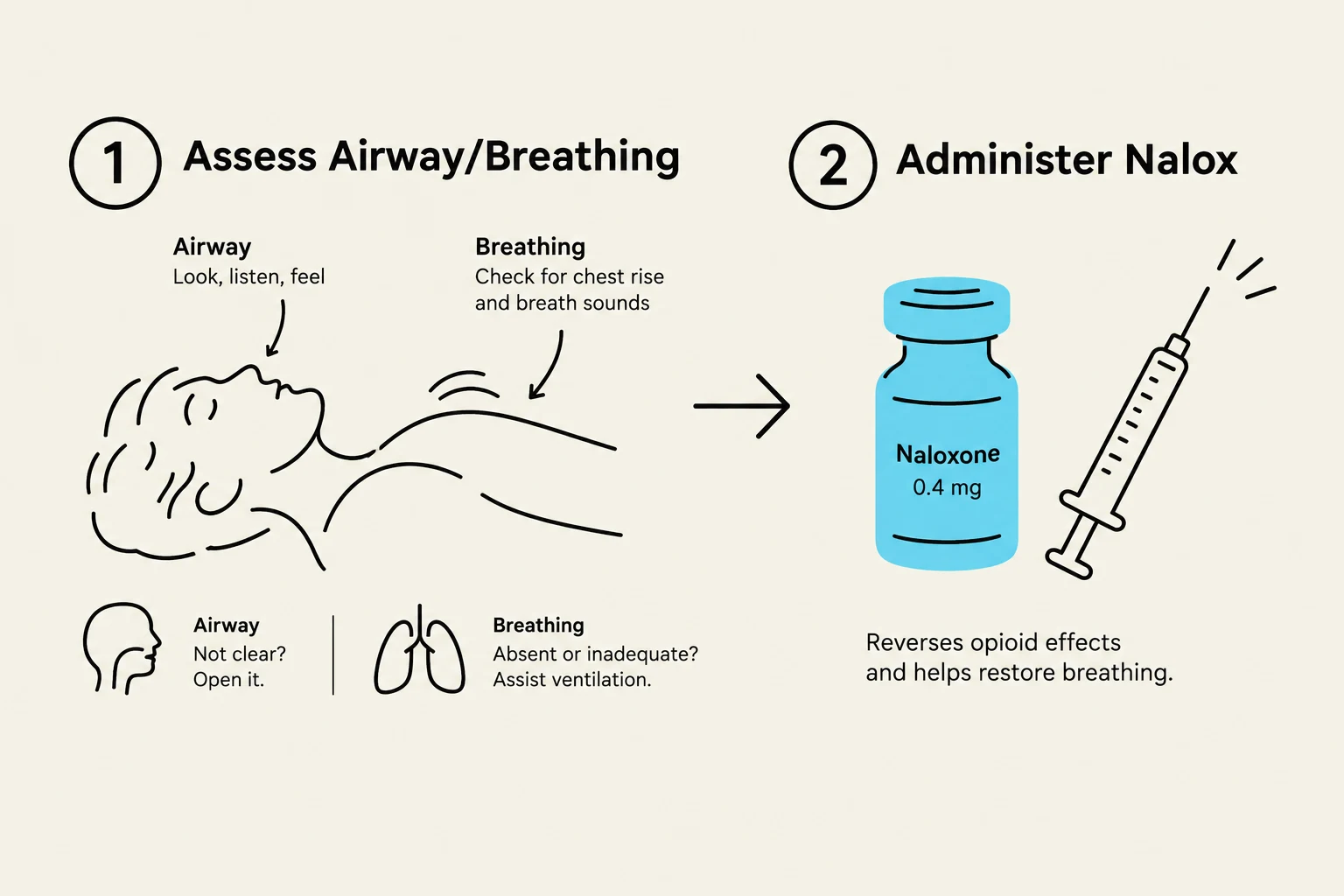
In many overdose cases, clinicians will administer naloxone (Narcan) to rule out opioid toxicity. If the patient does not respond to naloxone, the provider must expand their differential diagnosis to include other toxins.
A critical consideration is the ingestion of tricyclic antidepressants (TCAs), such as amitriptyline. TCAs can cause severe toxicity, including cardiac arrhythmias and altered mental status. If amitriptyline is suspected, management should focus on continuous ECG monitoring and potential administration of sodium bicarbonate under medical control.
This illustration shows the steps for assessing airway and breathing and administering Naloxone, which reverses opioid effects and helps restore breathing.
Summary of Prehospital Interventions
For any suspected overdose involving altered mental status, follow these core principles:
Scene Safety: Ensure the environment is safe for providers.
Vascular Access: Establish IV access for fluid resuscitation and medication administration.
Monitoring: Use ECG, pulse oximetry, and capnometry to track respiratory and cardiac stability.
Rapid Transport: Move the patient to a definitive care facility as quickly as possible.
Keep reading for free.
Create an account to finish this reading and make it part of your study routine.