


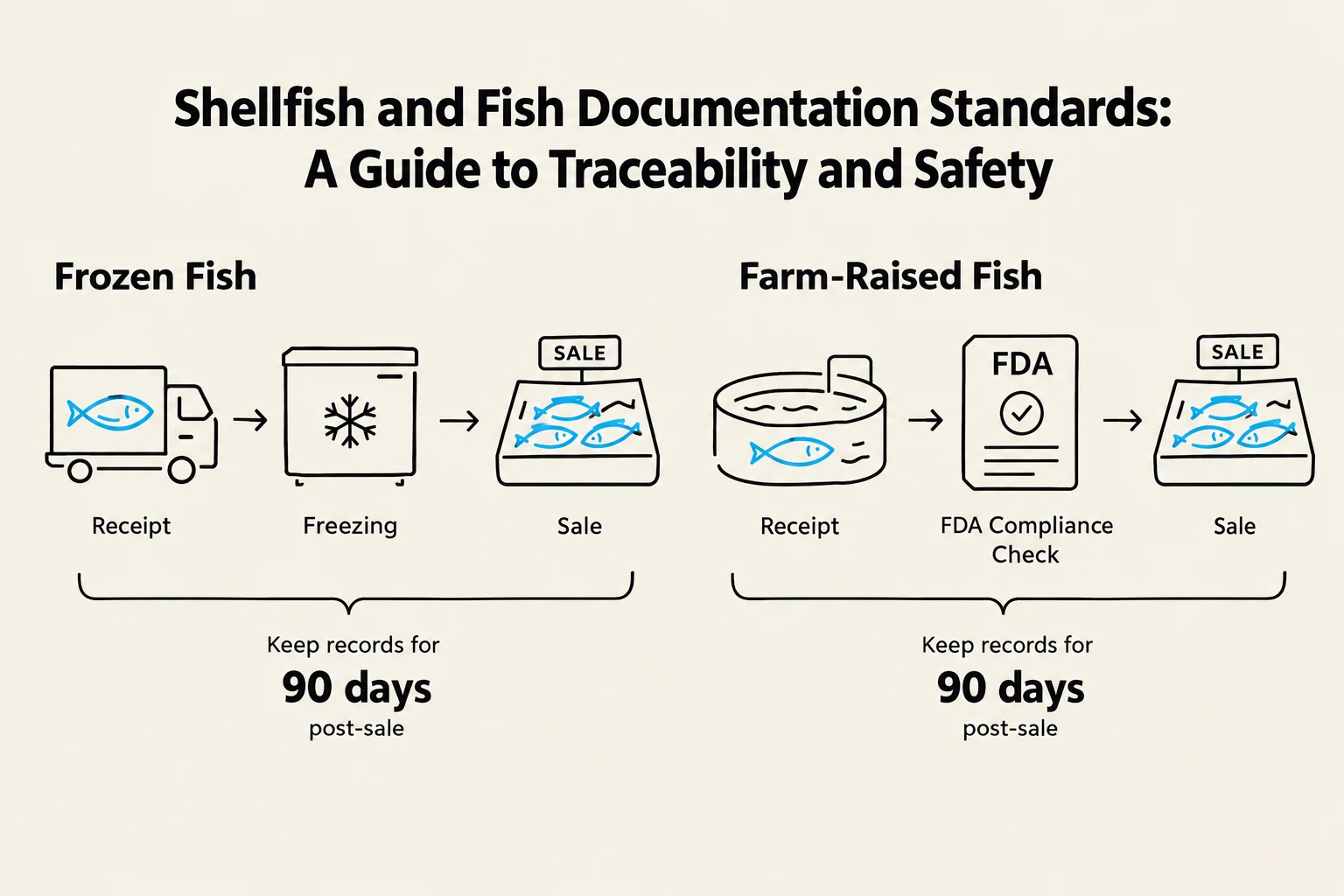
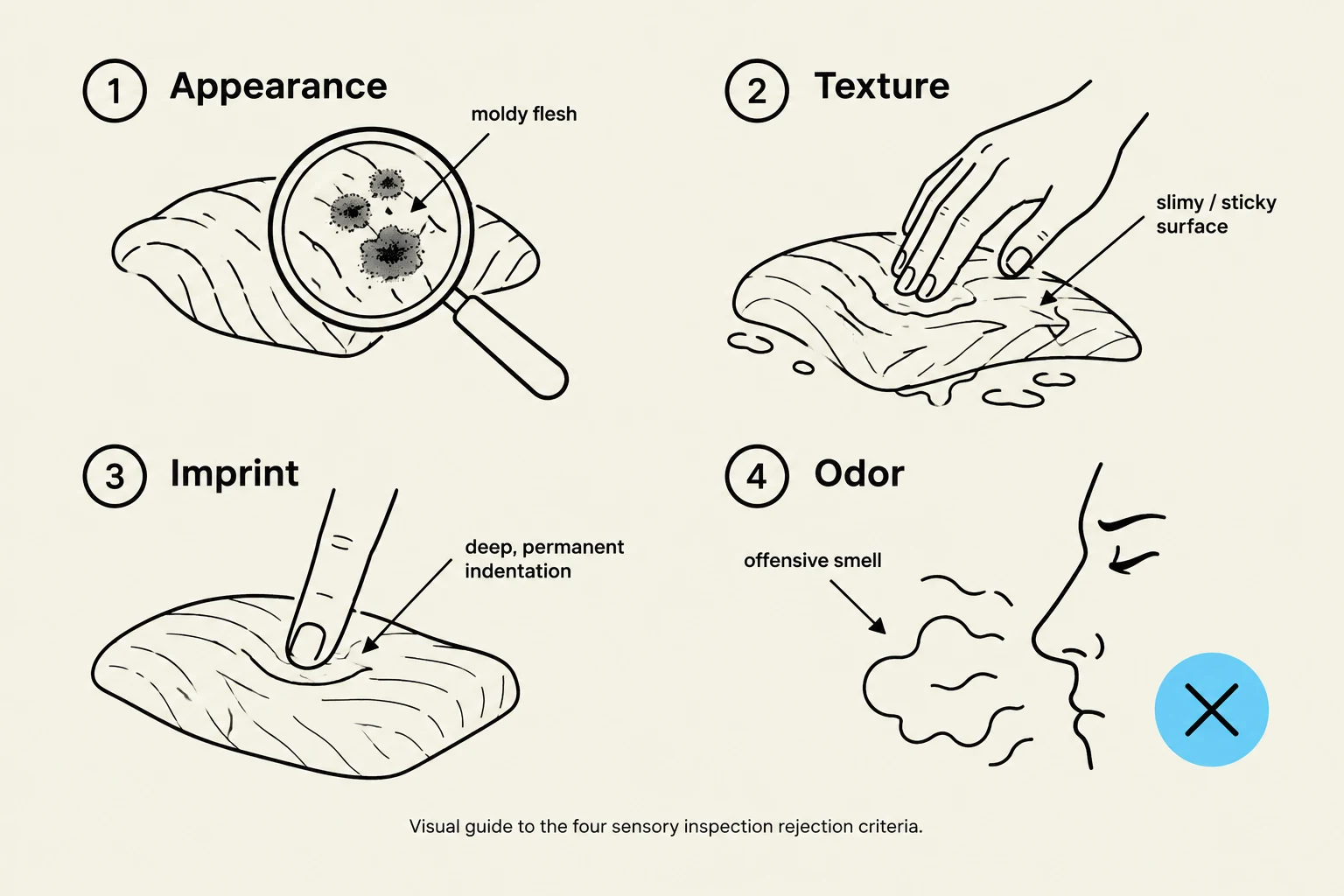
In the seafood industry, documentation is more than just paperwork; it is a critical component of food safety, traceability, and consumer protection. Whether dealing with wild-caught shellfish or farm-raised fish, strict adherence to record-keeping protocols ensures that every product can be traced back to its origin in the event of a health concern. This article explores the specific documentation requirements for different types of seafood, the role of inspection stamps, and the sensory standards used to assess product quality.
Shellfish Documentation and Harvest Tags
Shellfish products are subject to unique regulatory requirements due to their high risk of carrying pathogens. To manage this risk, all shellfish must be received with specific shell stock information provided via tags.
The Role of Harvest Tags
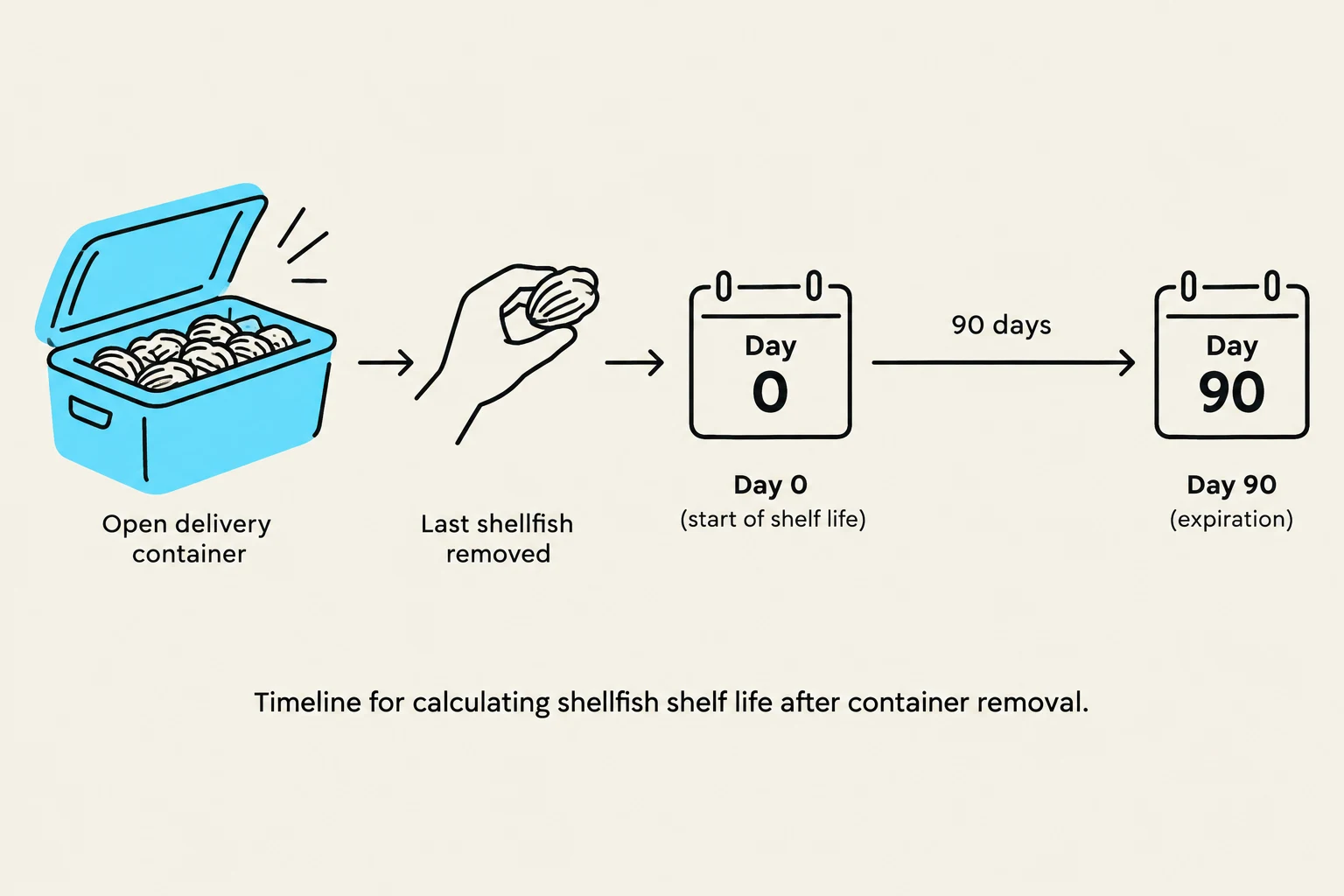
- Traceability: They provide precise data regarding the specific time and the exact location where the shellfish were harvested.
- Shelf Life Management: The tags establish a mandatory shelf life of 90 days. This period is calculated starting from the date the last shellfish is removed from its original delivery container.
Exam Tip: When calculating the expiration of shellfish, remember that the 90-day clock does not necessarily start when the shipment arrives, but rather when the last individual unit is removed from the original delivery container.
Fish Documentation Standards
Keep reading for free.
Create an account to finish this reading and make it part of your study routine.
Continue reading freeAlready have an account? Log in
Updated