


Schizophrenia is a complex, chronic mental health disorder characterized by a disorganization of personality, deterioration in social functioning, and a loss of contact with reality. Because the etiology involves a combination of genetic predisposition, biochemical dysfunction, physiological factors, and psychosocial stress, there is no single "cure". Instead, management requires a comprehensive, multidisciplinary approach tailored to the individual's specific needs and phase of illness.
Psychopharmacological Treatment
The cornerstone of managing the acute psychotic phase of schizophrenia is psychopharmacological intervention, specifically the use of antipsychotic medications to decrease agitation and psychotic symptoms.
Antipsychotic Medications
Antipsychotics are categorized into two main types:
- Typical Antipsychotics: These act as dopaminergic blockers with varying affinities for cholinergic, -adrenergic, and histaminic receptors.
- Atypical Antipsychotics: These are generally weak dopamine antagonists and potent antagonists, while also exhibiting antagonism for cholinergic, histaminic, and adrenergic receptors.
While effective, these medications carry significant risks of side effects. Patients may experience anticholinergic effects, nausea, sedation, weight gain, and orthostatic hypotension.
Managing Side Effects: EPS and NMS
A critical concern for clinicians is the development of Extrapyramidal Symptoms (EPS). These include dystonia, pseudoparkinsonism, oculogyric crisis, and akinesia.
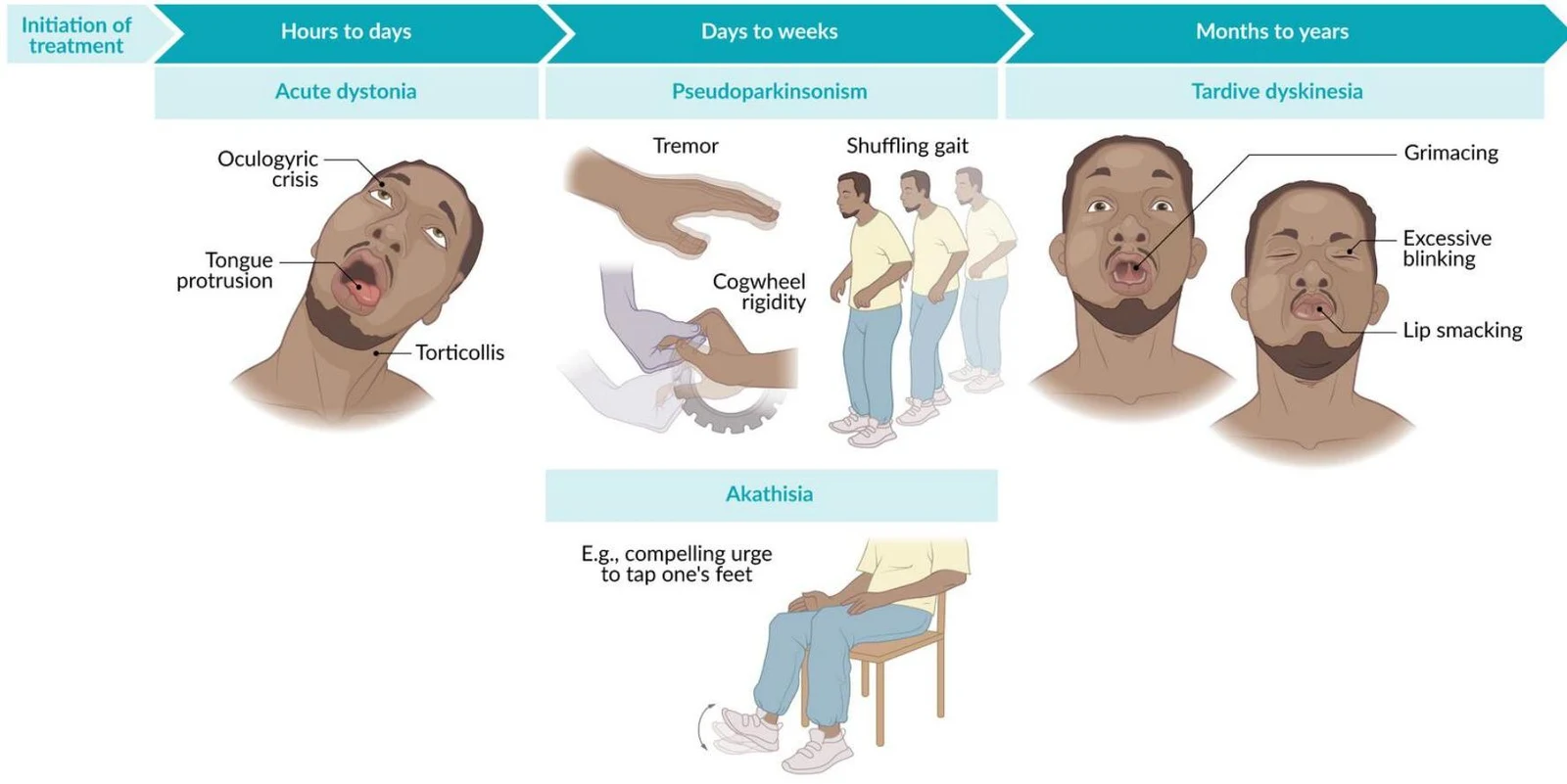
Clinical Tip: If a patient presents with restlessness, tremors, or drooling (EPS), anticholinergic medications like Benztropine (Cogentin) are often the drugs of choice to counteract these symptoms.
Keep reading for free.
Create an account to finish this reading and make it part of your study routine.
Continue reading freeAlready have an account? Log in
Updated