


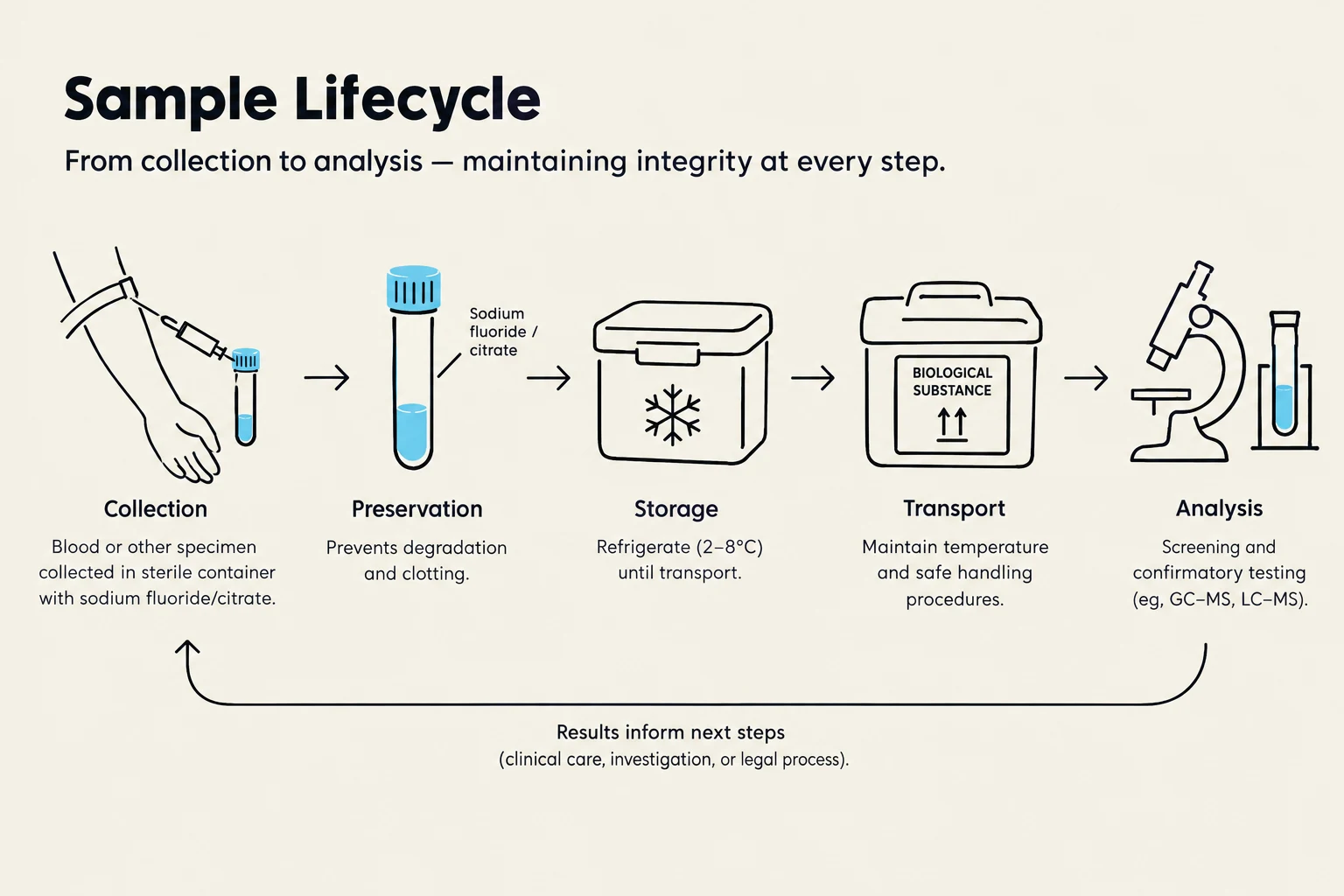
In forensic toxicology, the integrity of an investigation depends heavily on the quality of the specimens collected during an autopsy or crime scene investigation. Because toxicological analysis is used to determine the cause and manner of death, any error in how a sample is collected, preserved, or stored can lead to inaccurate results, potentially misrepresenting the physiological or behavioral state of the deceased at the time of death. This article outlines the rigorous procedures required to manage both biological and non-biological samples to ensure analytical accuracy and legal continuity.
Biological Sample Collection
Biological samples are the cornerstone of toxicological analysis. Different matrices provide different types of information regarding drug exposure and its effects.
Blood and Other Fluids
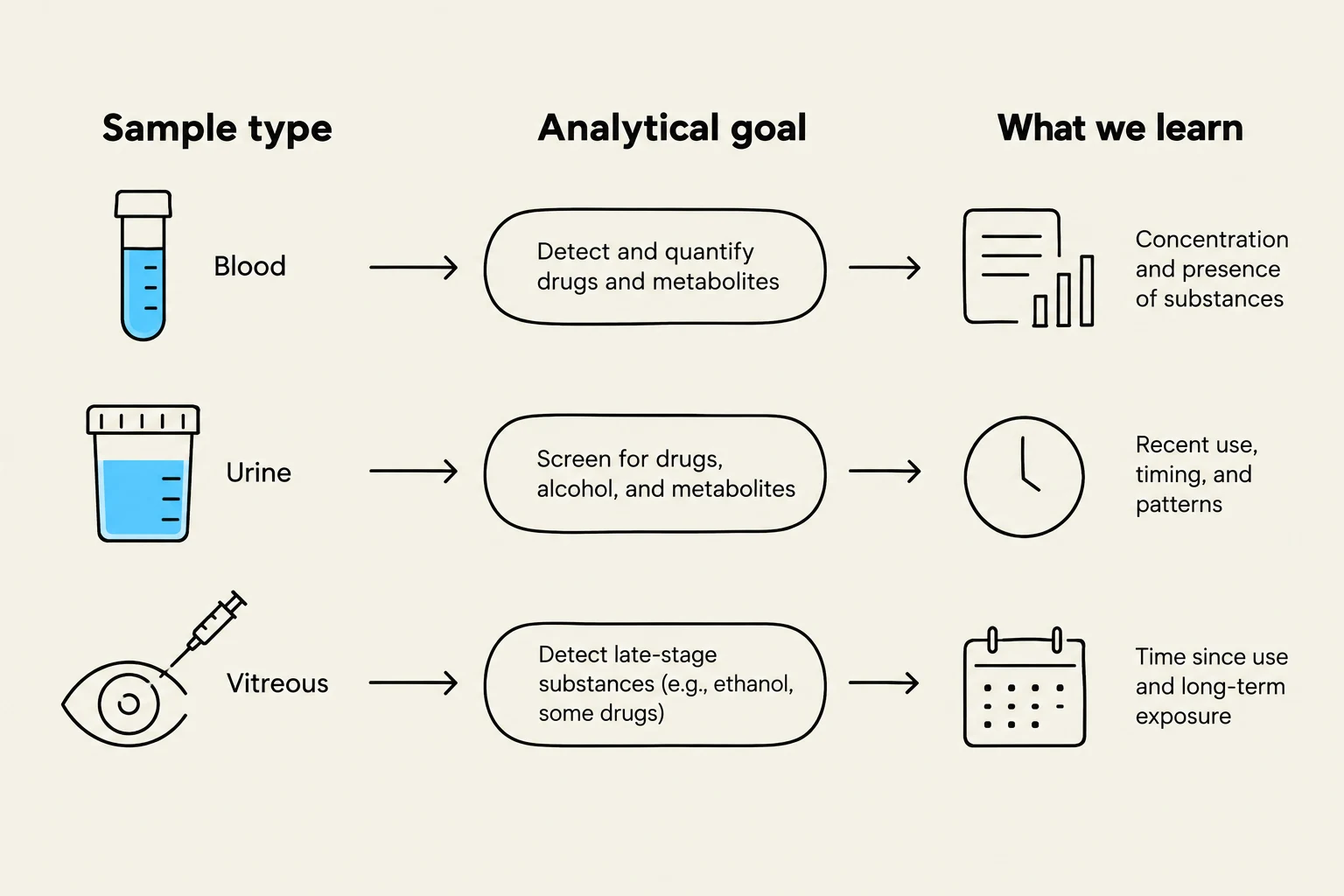
Blood is considered the most useful specimen for determining the pharmacological effect of a drug at the time of death, as drug concentrations can often be correlated to its physiological impact. However, postmortem blood is not "true" blood due to autolysis—the breakdown of cellular material by the body's own enzymes.
When collecting blood, the anatomical site is critical. Peripheral sites, such as the femoral or iliac veins, are preferred because they are less susceptible to Postmortem Redistribution (PMR)—the process where drugs diffuse from organs into the blood after death. Central sites, like the heart, are more prone to PMR because they are in close proximity to drug-rich organs like the liver or the stomach.
Other useful biological matrices include:
- Vitreous Humour: The fluid between the eye's lens and retina. It is sequestered from putrefaction, trauma, and microorganisms, making it excellent for ethanol analysis.
- Urine: A pooled sample that can indicate drug exposure hours or even days prior to death, though it has little correlation to the immediate effect at the time of death.
- Liver: Useful for detecting drugs that have undergone metabolism, though distribution within the organ is non-uniform, often limiting analysis to qualitative results.
Keep reading for free.
Create an account to finish this reading and make it part of your study routine.
Continue reading freeAlready have an account? Log in
Updated