


Unlike monogastric animals, ruminants possess a complex, multi-compartmentalized gastrointestinal tract designed to ferment fibrous plant material. This specialized anatomy allows them to extract energy from cellulose and hemicellulose through microbial fermentation. The digestive process involves a sophisticated sequence of storage, fermentation, mechanical breakdown, and enzymatic digestion across several distinct organs.
The Forestomachs: Rumen and Reticulum
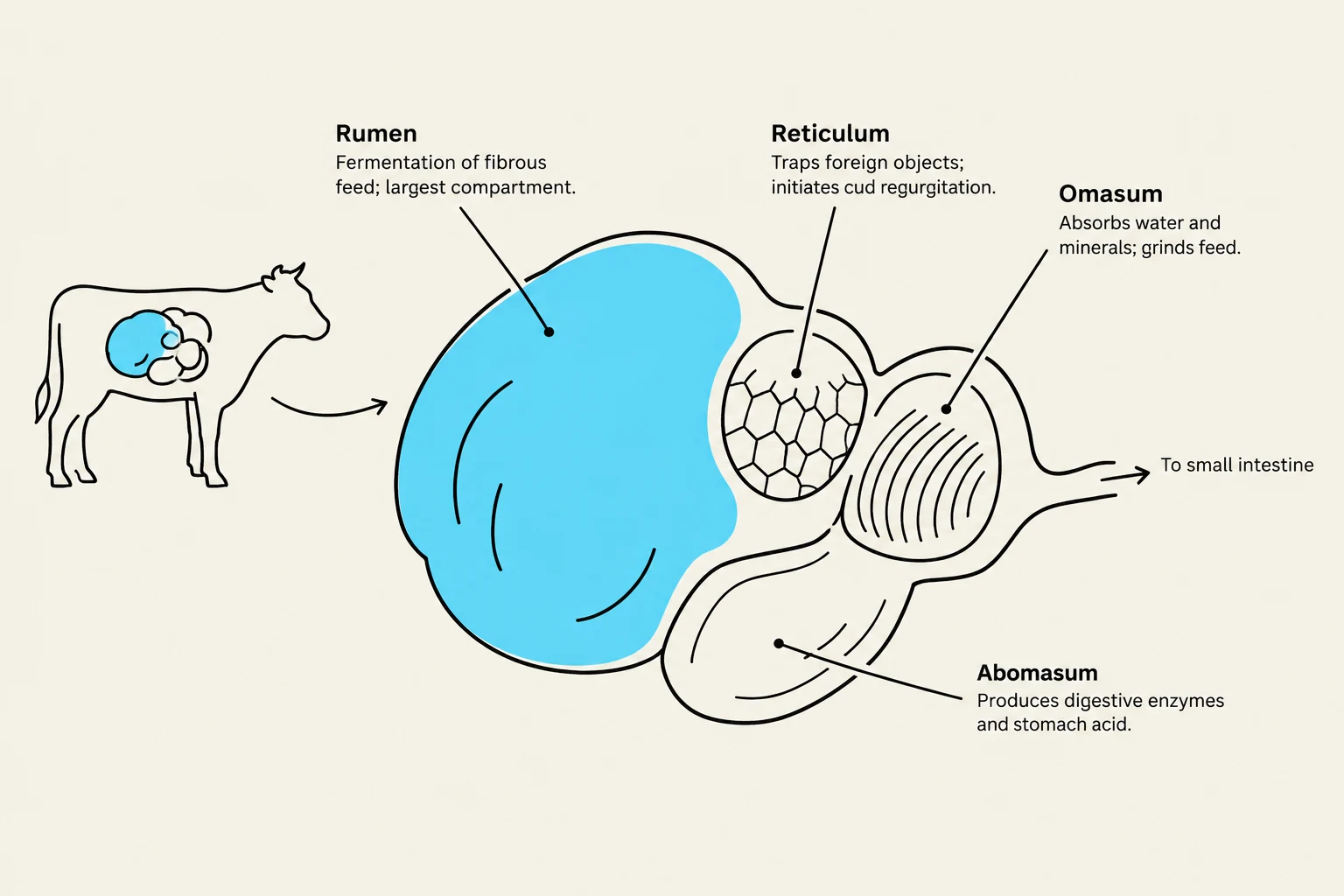
The "forestomachs" consist of the rumen, reticulum, and omasum. These compartments precede the true stomach and are essential for the breakdown of complex carbohydrates.
The Rumen
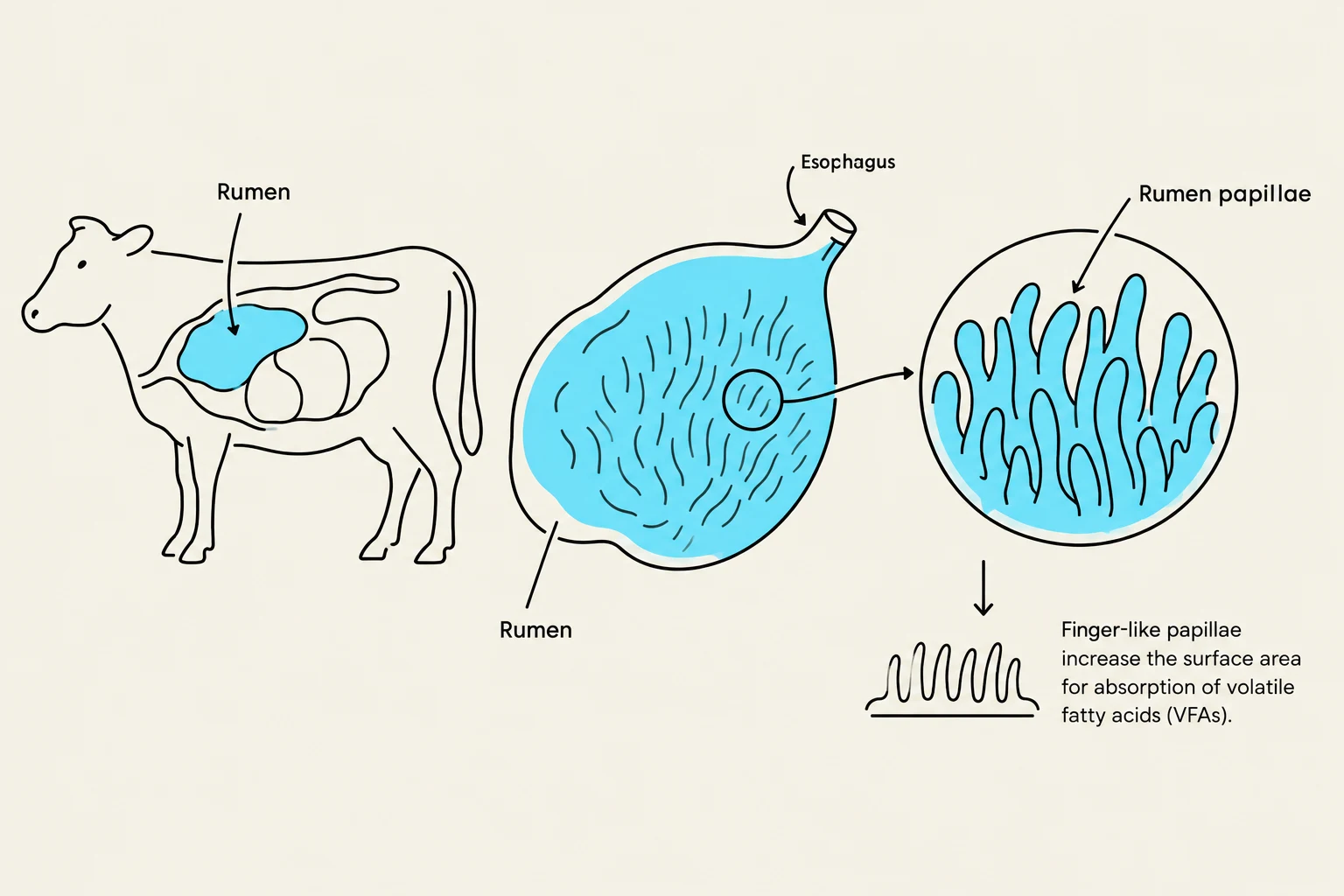
The rumen is the largest compartment and serves as the primary site for microbial fermentation. As feed enters, it undergoes a process of fermentation where microbes break down plant matter. A "rumen mat" typically forms, where partially digested feed settles at the bottom while gases rise to the surface.
A critical feature of the rumen is its lining. The rumen is covered in rumen papillae, which are small, finger-like projections that significantly increase the surface area available for absorption. These papillae are vital for the absorption of Volatile Fatty Acids (VFAs), which are the primary energy source for the animal.
Exam Tip: Remember that the rumen is not just a storage tank; it is a massive fermentation vat where the absorption of VFAs via the papillae is a key metabolic driver for the cow.
The Reticulum
The reticulum is the first compartment of the forestomach. It is characterized by a "honeycomb" lining. The reticulum plays a fundamental role in the process of rumination (cud-chewing). It helps facilitate the regurgitation of feed back to the mouth so it can be re-masticated to further reduce particle size.
Keep reading for free.
Create an account to finish this reading and make it part of your study routine.
Continue reading freeAlready have an account? Log in
Updated