


Nursing is a multifaceted profession that extends far beyond the traditional image of bedside care. In the modern healthcare delivery system, nurses function as the backbone of various institutions, ranging from high-acuity hospitals to community-based primary care centers. As the complexity of patient needs increases, the roles of nurses have expanded to include leadership, education, research, and advanced clinical practice.
Understanding these roles is essential for nursing students and healthcare professionals to recognize how they contribute to the multidisciplinary team and how they can advance their own careers.
The Role of Nurses in Hospital Settings
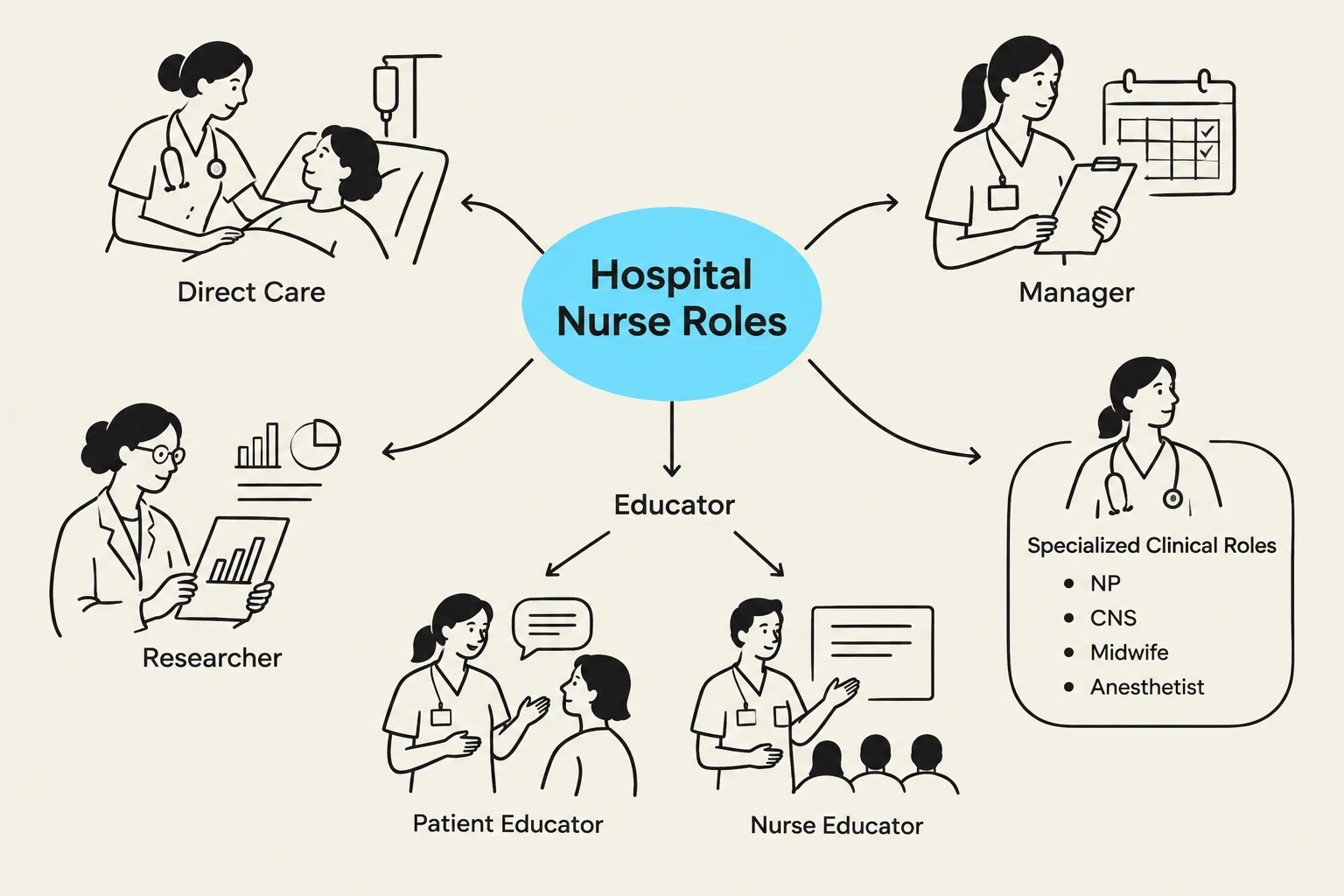
- Direct Care Providers: This is the most visible role, where nurses provide hands-on clinical care, administer medications, and monitor patient physiological status.
- Managers: Nurses often oversee unit operations, coordinate staff assignments, and ensure that the care environment remains safe and efficient.
- Educators: This includes both Patient Educators, who teach patients and families how to manage illnesses or post-discharge care, and Nurse Educators, who focus on training the next generation of nursing professionals.
- Researchers: Nurses contribute to the profession by conducting studies to improve clinical outcomes and evidence-based practices.
- Specialized Clinical Roles: Within the hospital, certain nurses hold advanced responsibilities, such as Nurse Practitioners, Clinical Nurse Specialists, Nurse Midwives, and Nurse Anesthetists.
Keep reading for free.
Create an account to finish this reading and make it part of your study routine.
Continue reading freeAlready have an account? Log in
Updated