


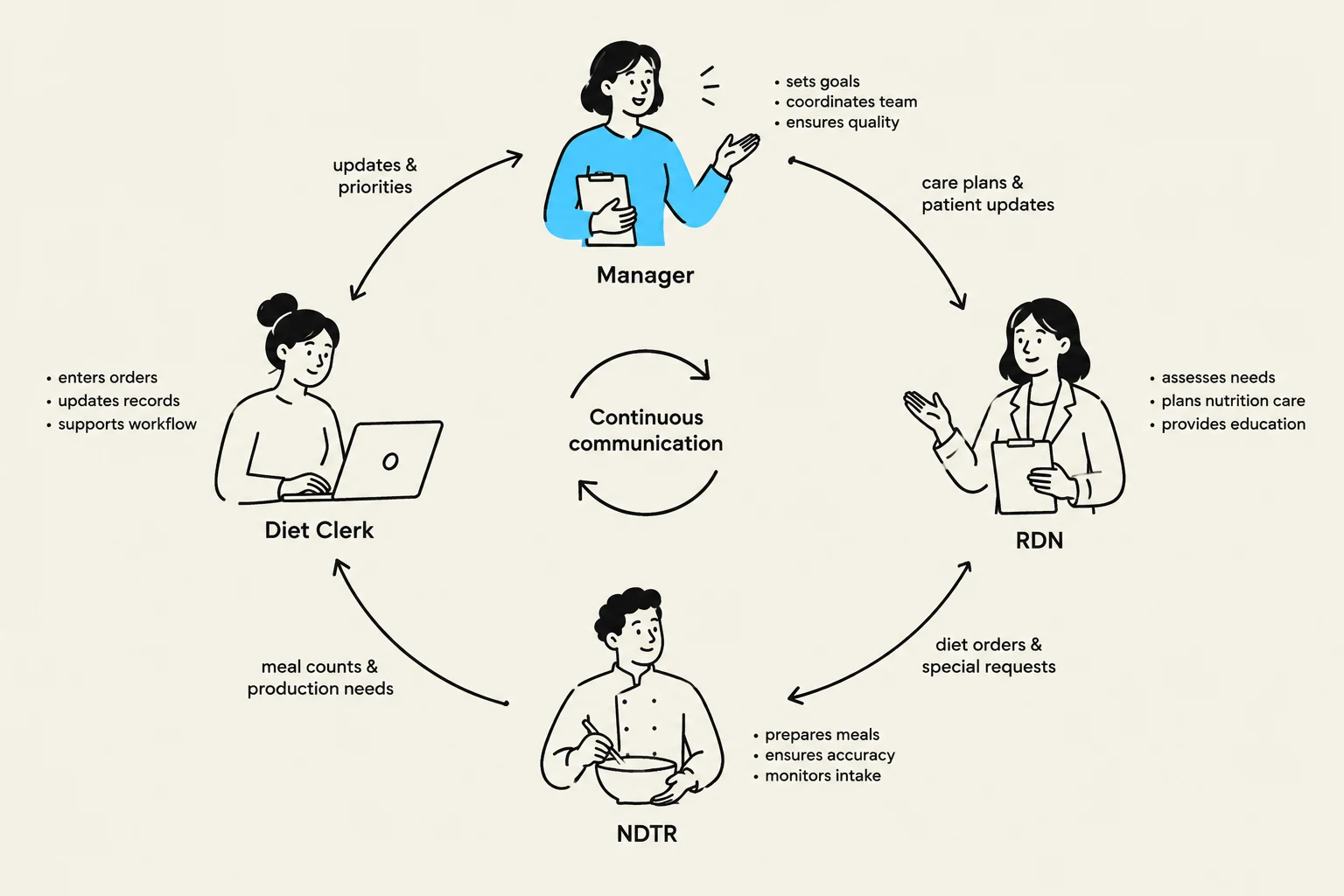
In the complex ecosystem of a modern healthcare facility, patient outcomes are rarely the result of a single individual's effort. Instead, they depend on a highly coordinated multidisciplinary approach. Within this ecosystem, the Clinical Nutrition Team plays a pivotal role in managing medical nutrition therapy (MNT), preventing malnutrition, and supporting the overall recovery process. Understanding the specific responsibilities and the hierarchical yet collaborative relationship between Managers, Registered Dietitian Nutritionists (RDNs), Nutritionist Dietetic Technicians, Registered (NDTRs), and Diet Clerks is essential for any student entering the field.
The Leadership: Nutrition Managers
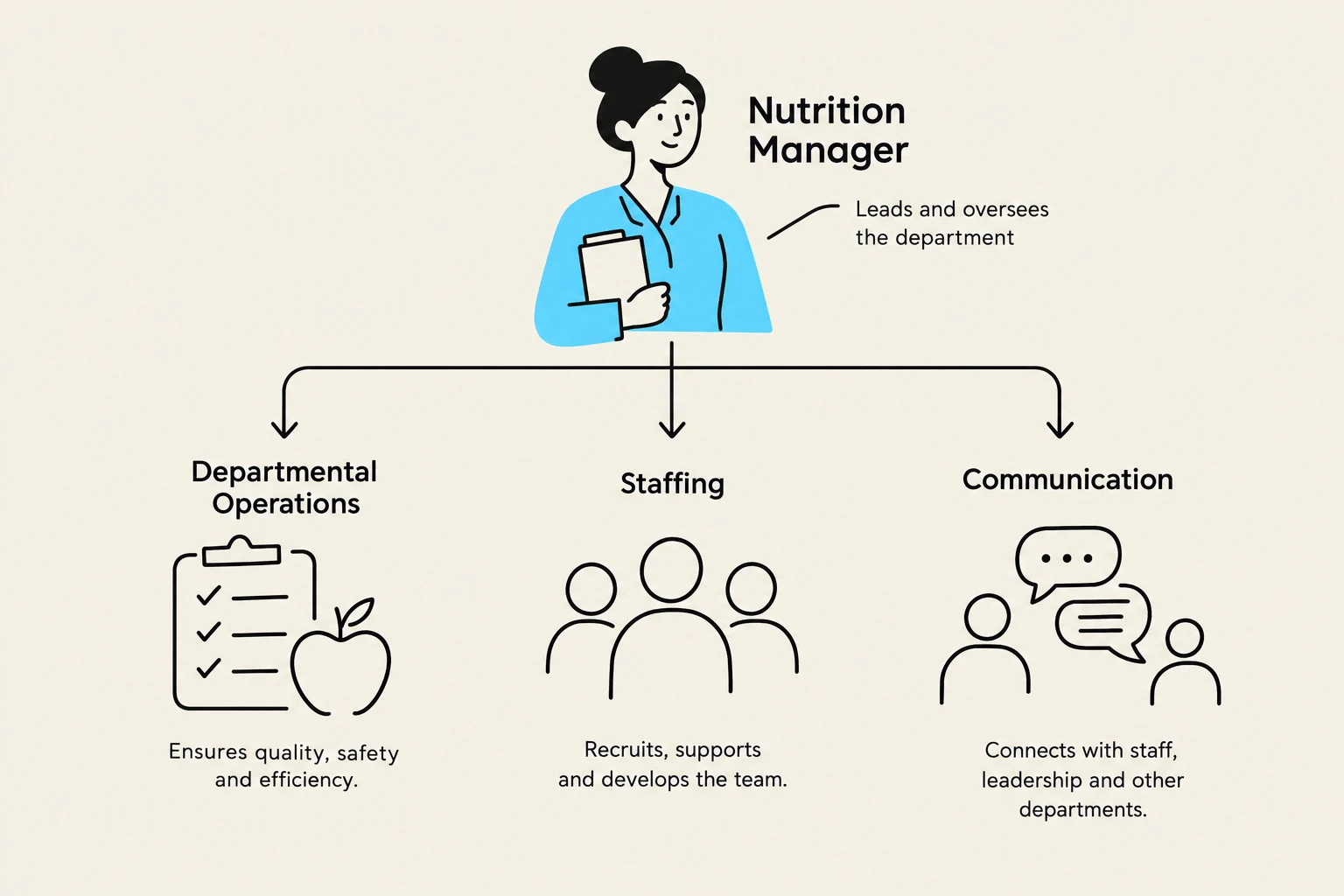
At the helm of the clinical nutrition department is the Nutrition Manager (or Foodservice/Clinical Manager). While they may possess clinical expertise, their primary focus often shifts toward the operational and administrative success of the department.
The Manager is responsible for the "big picture." This includes budgeting, staffing, ensuring compliance with regulatory agencies (such as The Joint Commission), and coordinating between the nutrition department and other hospital administration. They ensure that the RDNs and NDTRs have the resources necessary to provide high-quality care.
Exam Tip: If a question asks about "resource allocation," "departmental budgeting," or "regulatory compliance," the answer is likely related to the Managerial role rather than a direct clinical role.
The Clinical Core: RDNs and NDTRs
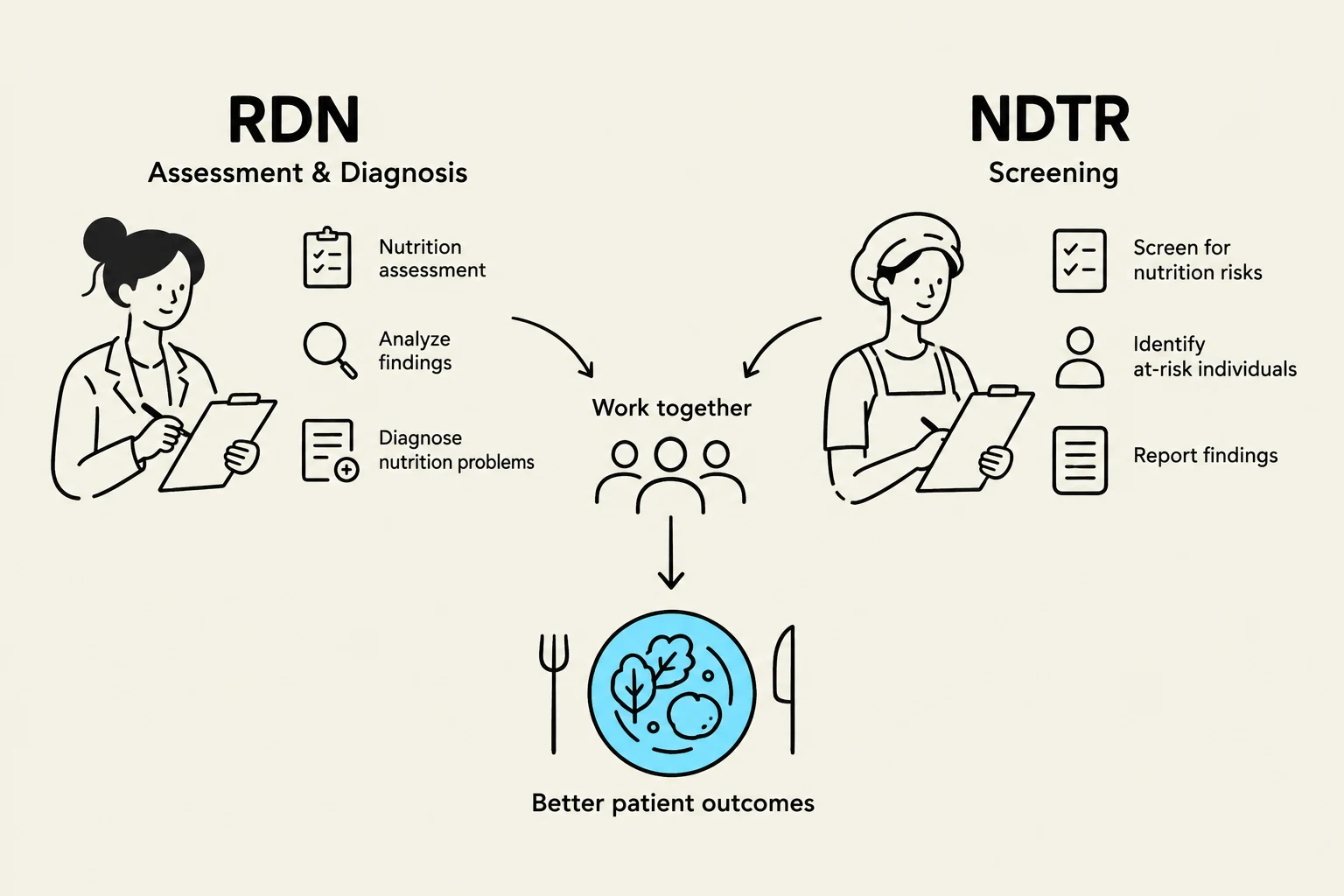
The clinical work of the team is primarily carried out by the Registered Dietitian Nutritionist (RDN) and the Nutritionist Dietetic Technician, Registered (NDTR). While their goals are aligned—improving patient nutrition—their scope of practice differs significantly.
Keep reading for free.
Create an account to finish this reading and make it part of your study routine.
Continue reading freeAlready have an account? Log in
Updated