


In the pursuit of scientific discovery, researchers often face a fundamental ethical dilemma: how much risk is acceptable to ask of a participant in exchange for the potential knowledge gained from a study? This process of weighing the potential harm to individuals against the potential benefits to society is known as Risk Assessment. It is a cornerstone of ethical research design and is a critical component of the review process conducted by Institutional Review Boards (IRBs).
The Core Equation of Ethical Research
At its heart, risk assessment is not about eliminating risk entirely—which is often impossible in psychological science—but about ensuring that the risks are minimized and justified. The ethical validity of a study rests on the balance between two competing factors:
- Potential Participant Risk: This includes physical harm, psychological distress, social stigmatization, or legal risks to the individual being studied.
- Scientific Benefit: This refers to the value of the knowledge produced, such as improving mental health treatments, understanding cognitive processes, or informing public policy.
The goal of a researcher is to ensure that the potential benefits to society or future participants outweigh the risks posed to the current participants.
Exam Tip: When evaluating a study's ethics, always ask: "Is the risk necessary to answer this specific research question, or could the same information be gathered using a lower-risk method?"

Categorizing Types of Risk
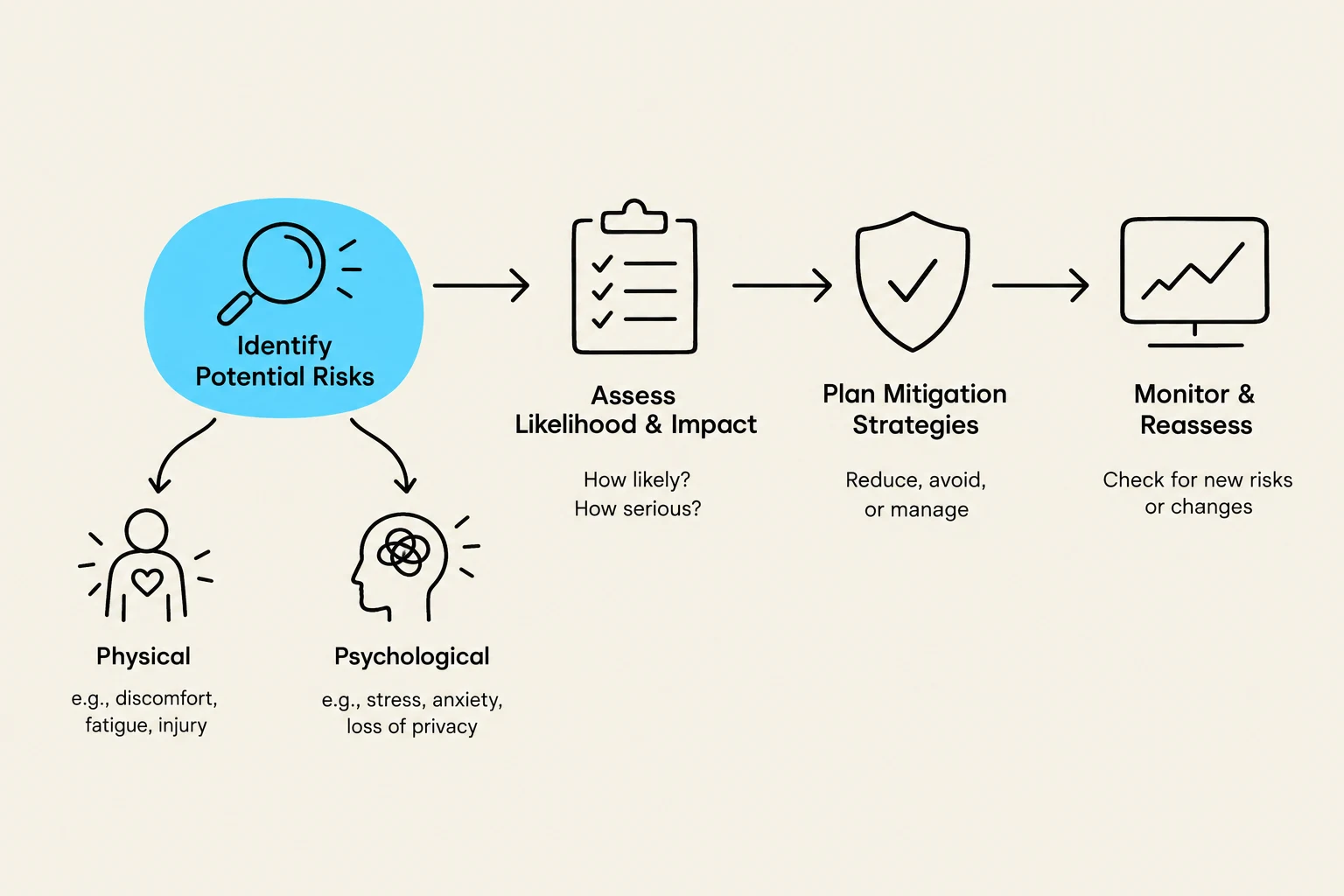
Risk is not a monolithic concept; it manifests in several different ways depending on the nature of the psychological study. To conduct a thorough assessment, researchers must categorize and evaluate the following types of harm:
Keep reading for free.
Create an account to finish this reading and make it part of your study routine.
Continue reading freeAlready have an account? Log in
Updated