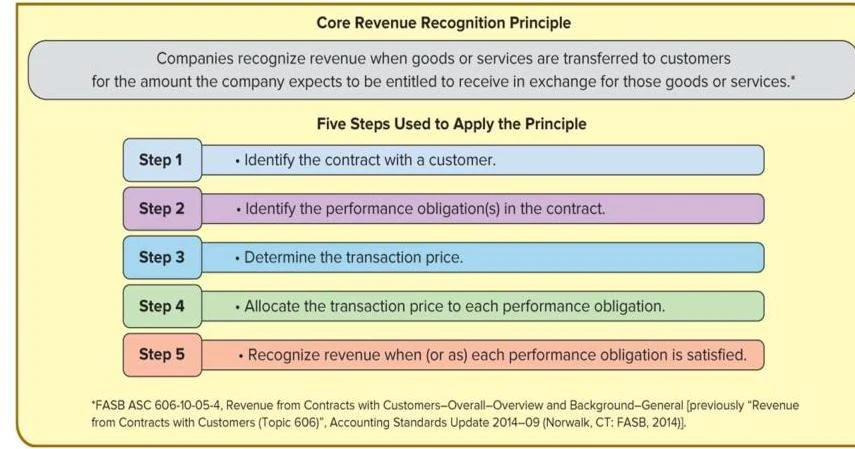
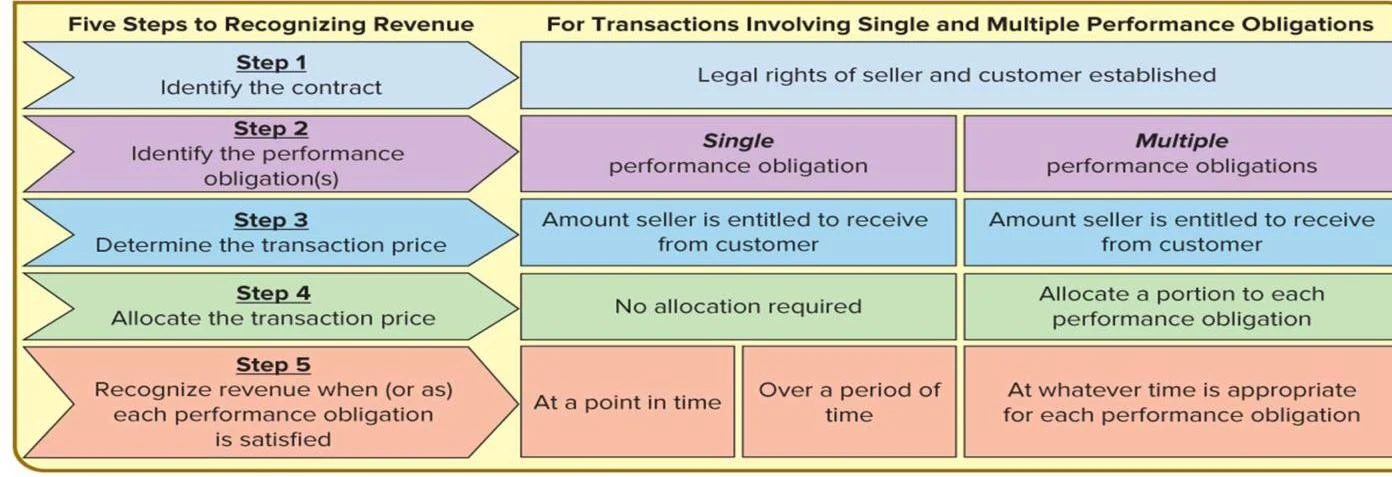
To estimate variable consideration, companies use either the expected value (the sum of all possible amounts multiplied by their probabilities) or the most likely amount.
Exam Tip: When estimating variable consideration, companies must apply a "constraint." They should only include amounts in the transaction price if it is "probable" that a significant revenue reversal will not occur later.
Step 4: Allocation and Stand-alone Selling Price
Once the total price is determined, it must be allocated to each performance obligation. This is typically done using the stand-alone selling price, which is the amount the good or service would be sold for if it were offered separately under similar circumstances.
Special Issues in Revenue Recognition
Real-world transactions often deviate from simple "cash-for-goods" exchanges. Accountants must navigate several specific scenarios:
Principal versus Agent
A company must determine if it is acting as a principal or an agent.
- A principal controls the goods or services before they are transferred and is primarily responsible for fulfilling the promise.
- An agent merely facilitates the transfer between the seller and the customer (like a real estate agent).
Warranties
Warranties are categorized into two types:
- Quality-assurance warranties: These ensure the product is free from defects and are not separate performance obligations.
- Service warranties (Extended warranties): These provide additional service beyond basic defect assurance and are treated as separate performance obligations if the customer can purchase them separately.
Complex Arrangements
- Consignment: The seller (consignor) transfers goods to another company (consignee) to sell, but the seller retains legal title until the goods are sold to a third party.
- Bill-and-hold: A customer buys goods but asks the seller to keep them for a later date. Revenue is generally not recognized until actual delivery occurs.
- Gift Cards: These represent prepayments that create a contract liability (deferred revenue) until the card is redeemed or the likelihood of redemption becomes remote.
Long-Term Contracts and Construction
For long-term projects, such as building a bridge or a custom aircraft, revenue is often recognized "over time" rather than at a single point in time.
Measuring Progress
To determine how much revenue to recognize in a given period, companies use two main methods:
- Output-based estimate: Measures progress based on the proportion of goods or services transferred to date.
- Input-based estimate: Measures progress based on the effort expended (e.g., costs incurred, labor hours) relative to the total expected effort. A common method is the cost-to-cost ratio.
The formula for the percentage of completion is:
Percentage of Completion=Total Estimated CostsCosts Incurred to Date
Accounting for Construction Costs
Companies use specific accounts to manage these long-term assets and liabilities:
- Construction in Progress (CIP): An asset account representing the cost of work performed.
- Billings on Construction Contracts: A contra-account to CIP that tracks how much the customer has been invoiced.
The balance sheet presentation depends on the relationship between these two:
- If CIP > Billings, the net amount is a contract asset.
- If Billings > CIP, the net amount is a contract liability.
Handling Losses
If a project is expected to result in an overall loss, that loss must be recognized in the period it becomes evident, regardless of the stage of completion.
Important Note: Even if a project was profitable in previous years, if new estimates show the total costs will exceed total revenue, the entire projected loss must be recognized immediately.
Financial Statement Disclosures
Transparency is critical in revenue reporting. Companies must include disclosure notes in their financial statements that describe:
- Outstanding performance obligations.
- Significant judgments used to estimate transaction prices and progress.
- Policies regarding refunds, returns, and warranties.
- Significant changes in contract assets and contract liabilities during the period.