


Pulmonary diseases are broadly categorized based on how they disrupt the mechanics of breathing. When a patient presents with dyspnea (the subjective sensation of uncomfortable breathing), the clinician must determine if the primary issue lies in the ability to move air through the tubes (obstruction) or the ability of the lungs to expand and take air in (restriction). Understanding these two distinct pathophysiological pathways is essential for accurate diagnosis and effective management.
Obstructive Lung Disease: The Difficulty of Exhalation
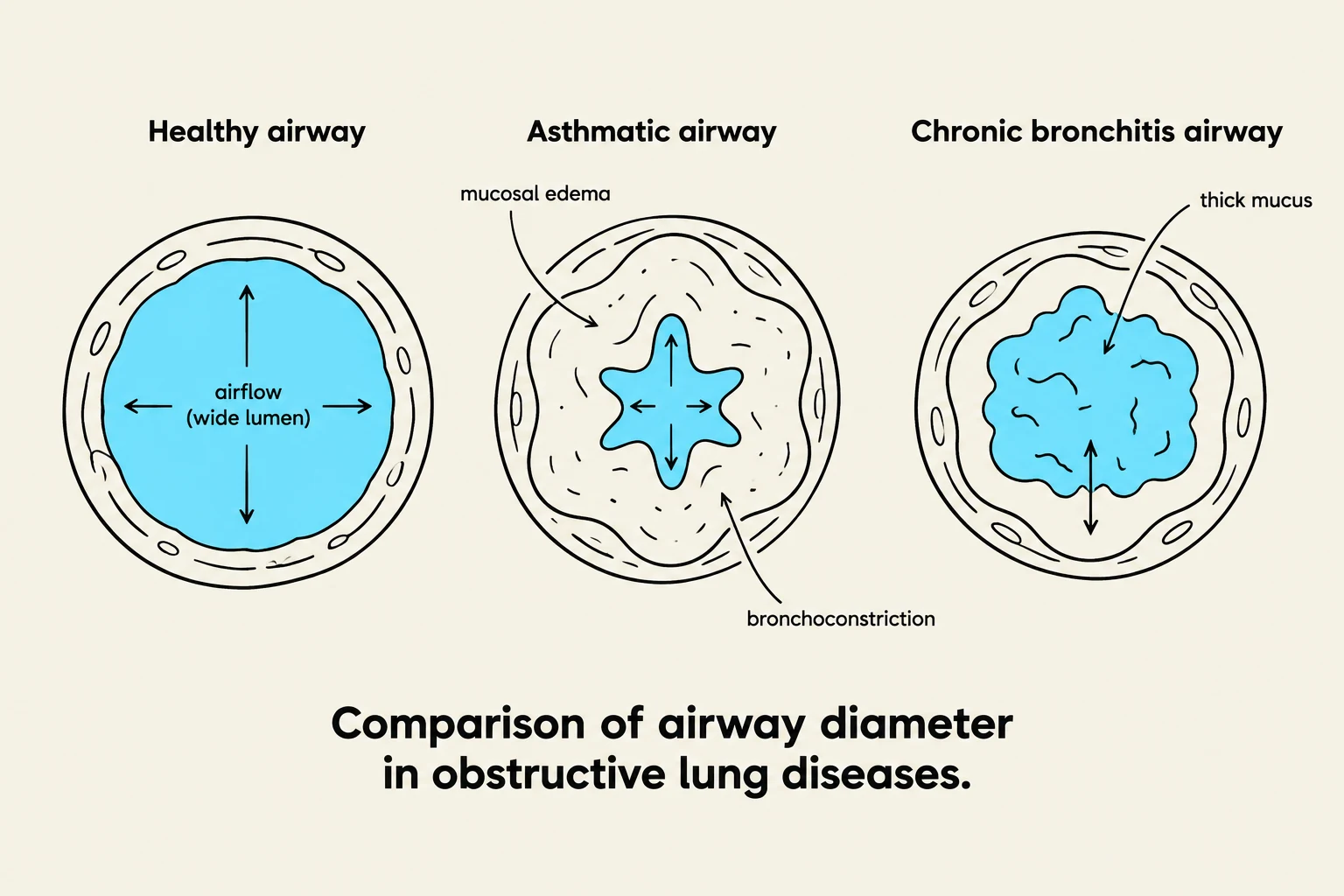
While a patient with obstructive disease may appear to breathe normally during slow, resting breaths, they face significant challenges during rapid breathing. In such instances, much higher pressures are required to overcome the resistance to airflow, which ultimately results in smaller breath volumes.
Common Obstructive Conditions
- Asthma: A chronic inflammatory disorder of the bronchial mucosa that causes reversible bronchoconstriction, mucosal edema, and increased mucus production.
- Chronic Bronchitis: Characterized by the hypersecretion of mucus and a chronic productive cough lasting at least 3 months for at least 2 consecutive years.
- Emphysema: Involves the abnormal, permanent enlargement of gas-exchange airways and the destruction of alveolar walls, often leading to a loss of elastic recoil.
- COPD (Chronic Obstructive Pulmonary Disease): This term is used when a patient suffers from both chronic bronchitis and emphysema.
- Cystic Fibrosis: A multisystem genetic disorder where defective chloride transport leads to abnormally thick mucus that obstructs the bronchioles.
Keep reading for free.
Create an account to finish this reading and make it part of your study routine.
Continue reading freeAlready have an account? Log in
Updated