


Understanding how much air moves in and out of our lungs is fundamental to assessing respiratory health. Clinicians use specific measurements to monitor the progression of diseases such as emphysema or pneumonia. By quantifying the different volumes and capacities of the lungs, we can gain a clear picture of a patient's pulmonary function and the efficiency of their gas exchange.
Measuring Lung Function: Spirometry
To measure these air movements, medical professionals use a device called a spirometer. This tool allows for the direct measurement of various volumes of air inhaled or exhaled during different phases of the respiratory cycle.
Respiratory Volumes
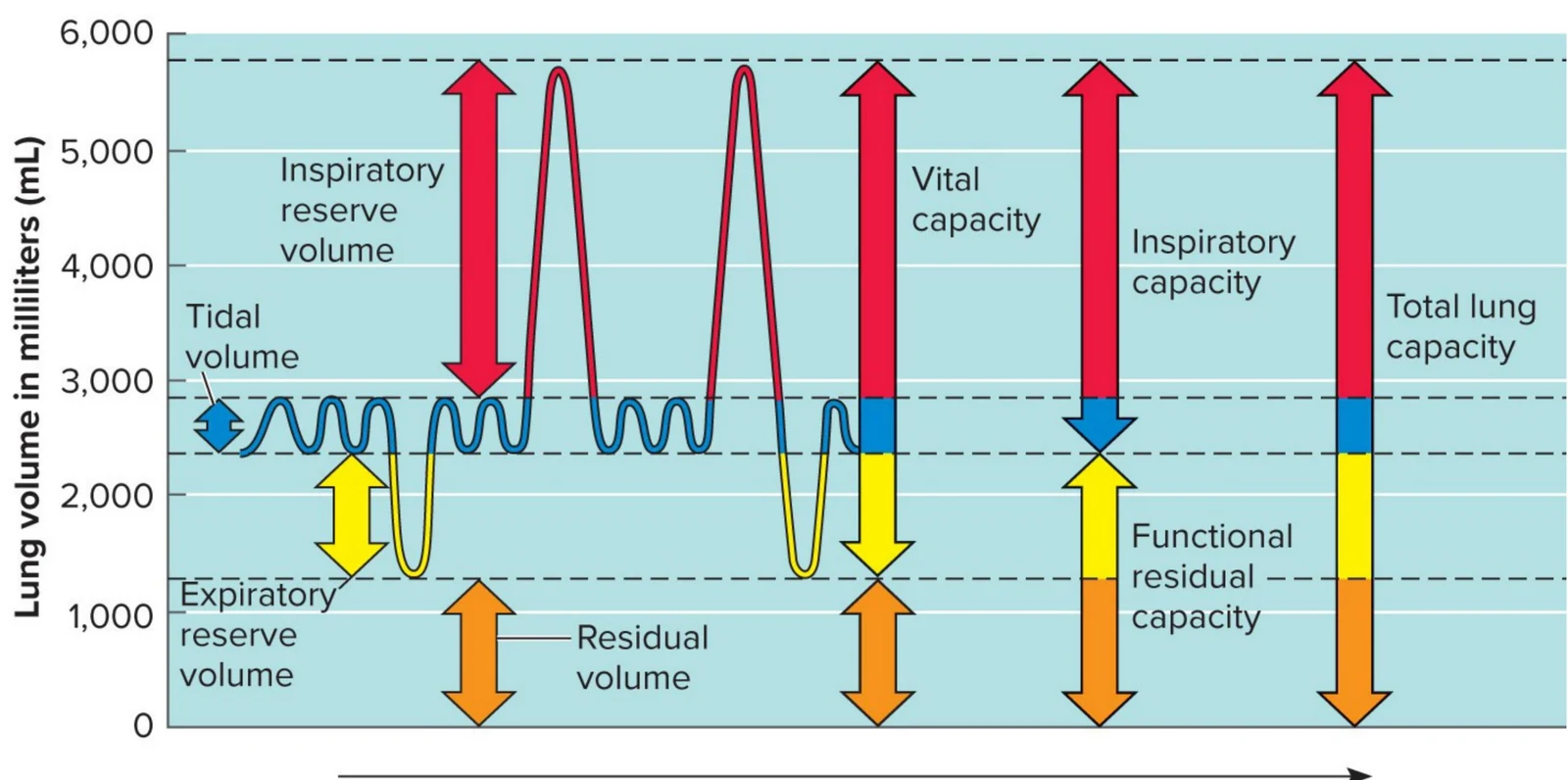
The movement of air is categorized into several distinct volumes. These represent the specific amounts of air moved during different types of breathing maneuvers.
- Tidal Volume (TV): This is the volume of air moved in or out of the lungs during a single, normal, resting respiratory cycle (approximately ).
- Inspiratory Reserve Volume (IRV): This is the maximum amount of additional air that can be inhaled following a normal, resting inspiration (approximately ).
- Expiratory Reserve Volume (ERV): This is the maximum amount of additional air that can be forcefully exhaled after a normal, resting expiration (approximately ).
- Residual Volume (RV): This is the air that remains in the lungs even after a maximal, forced expiration (approximately ).
Note: Because the residual volume cannot be exhaled, it cannot be measured directly using a standard spirometer.
Respiratory Capacities
Respiratory capacities are not measured directly; instead, they are calculated by summing specific respiratory volumes.
Keep reading for free.
Create an account to finish this reading and make it part of your study routine.
Continue reading freeAlready have an account? Log in
Updated