Respiratory Diagnostics and Upper Respiratory Infections
This guide covers essential respiratory diagnostic tools like the Mantoux test for tuberculosis, management of epistaxis (nosebleeds), and common upper respiratory infections (URIs) such as pharyngitis, influenza, rhinitis, and sinusitis. It details diagnostic criteria, risk factors, and nursing management strategies f
The respiratory system is a frequent site of both diagnostic investigation and infectious disease. For healthcare providers, distinguishing between diagnostic testing protocols, such as the Mantoux test for tuberculosis, and managing common inflammatory conditions like pharyngitis or influenza is essential for effective patient care. This article explores the clinical nuances of respiratory diagnostics and the management of various upper respiratory infections (URIs).
Tuberculosis Diagnostics: The Mantoux Test
When a patient is suspected of having been exposed to Tuberculosis (TB), the Mantoux Test (also known as the TB Skin Test) is a primary diagnostic tool. This test involves an intradermal injection of purified protein derivative (PPD).
A critical aspect of the Mantoux test is the timing of the reading. The test must be evaluated by a clinician within 48 to 72 hours of administration. If the patient fails to return within this specific window, the test is considered invalid and must be repeated.
It is vital to understand that a positive Mantoux test does not necessarily mean the patient has active, contagious tuberculosis. Instead, it indicates that the patient has been exposed to the bacteria. To differentiate between latent TB (where the bacteria are present but inactive) and active TB disease, clinicians must perform follow-up diagnostics, specifically a chest x-ray and a sputum culture.
Exam Tip: When reading a Mantoux test, do not measure the redness (erythema). You must measure the induration, which is the hard, raised, or swollen area at the injection site.
Measuring Induration and Risk Factors
The interpretation of the test is based on the size of the induration measured in millimeters (mm). The threshold for a "positive" result varies significantly depending on the patient's risk profile:
≥ 15 mm: Positive for all individuals, regardless of risk factors.
≥ 10 mm: Positive for high-risk groups, including immigrants, IV drug users, individuals living in crowded or tight living quarters (such as prisons or homeless shelters), or children under the age of 4.
≥ 5 mm: Positive for immunocompromised individuals, such as those with HIV, organ transplant recipients, or those in close contact with someone known to have active TB.
This diagram illustrates induration thresholds for TB skin tests and corresponding patient risk profiles. Different sizes of induration (5 mm, 10 mm, and 15 mm) are associated with varying risk factors and are used to interpret test results.
Management of Epistaxis
Epistaxis, commonly known as a nosebleed, can result from various causes including trauma, irritation, infection, hypertension, or the use of anticoagulants. Clinical management depends heavily on whether the bleed is anterior or posterior.
Anterior vs. Posterior Epistaxis
Anterior Epistaxis is the more common form. Nursing care focuses on immediate local intervention:
Position the patient upright and leaning forward to prevent swallowing blood.
Apply lateral pressure to the nostrils.
Apply ice to the area to promote vasoconstriction.
Use loose packing if necessary and instruct the patient to avoid blowing their nose.
Posterior Epistaxis is a much more serious condition and is considered a medical emergency. This type of bleed often requires hospitalization. Nursing priorities include:
Assessing the patient's respiratory status immediately.
Providing oxygen, humidification, and bedrest.
Managing pain and providing oral care.
To prevent future episodes, patients should be taught to use saline nasal sprays, utilize humidification, and avoid strenuous activities or the use of aspirin and NSAIDs.
Upper Respiratory Infections (URIs)
Upper respiratory infections encompass a variety of inflammatory conditions affecting the nose, throat, and sinuses.
Common Clinical Presentations
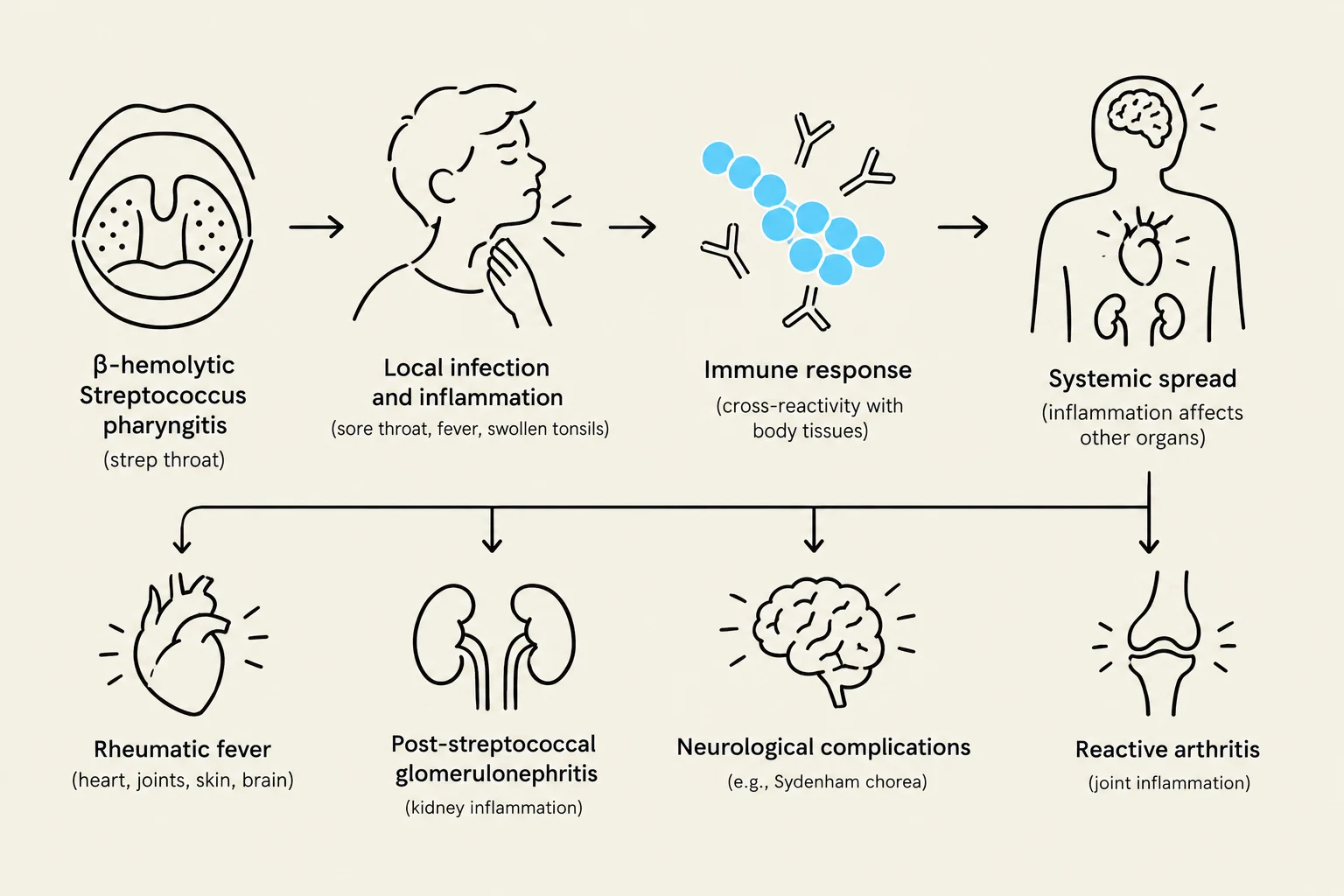
Pharyngitis: Inflammation of the pharynx. While 70% of cases are viral (such as the common cold or mononucleosis), 20% are bacterial, specifically caused by β-hemolytic Streptococcus. If bacterial pharyngitis is left untreated, it can lead to severe complications like acute glomerulonephritis (occurring 7–10 days later) or rheumatic fever (occurring 3–5 weeks later).
Influenza: A viral infection caused by Types A, B, or C. The most common and dangerous complication is pneumonia. Annual vaccination is recommended, particularly for high-risk groups.
Rhinitis: Inflammation of the nasal mucosa, which can be allergic (commonly known as hay fever) or viral/bacterial (the common cold).
Sinusitis: Inflammation of the sinuses, usually caused by a virus, though bacterial infections may develop if symptoms persist beyond 14 days.
Laryngitis: Inflammation of the larynx, often viral, resulting from either the infection itself or vocal abuse.
Tonsillitis: Inflammation of the tonsils that can be viral or bacterial (commonly Group A Strep).
Diagram illustrating the progression from a beta-hemolytic Streptococcus pharyngitis infection to potential systemic complications such as rheumatic fever, post-streptococcal glomerulonephritis, neurological complications, and reactive arthritis, mediated by an immune response and systemic spread.
Nursing Management of URIs
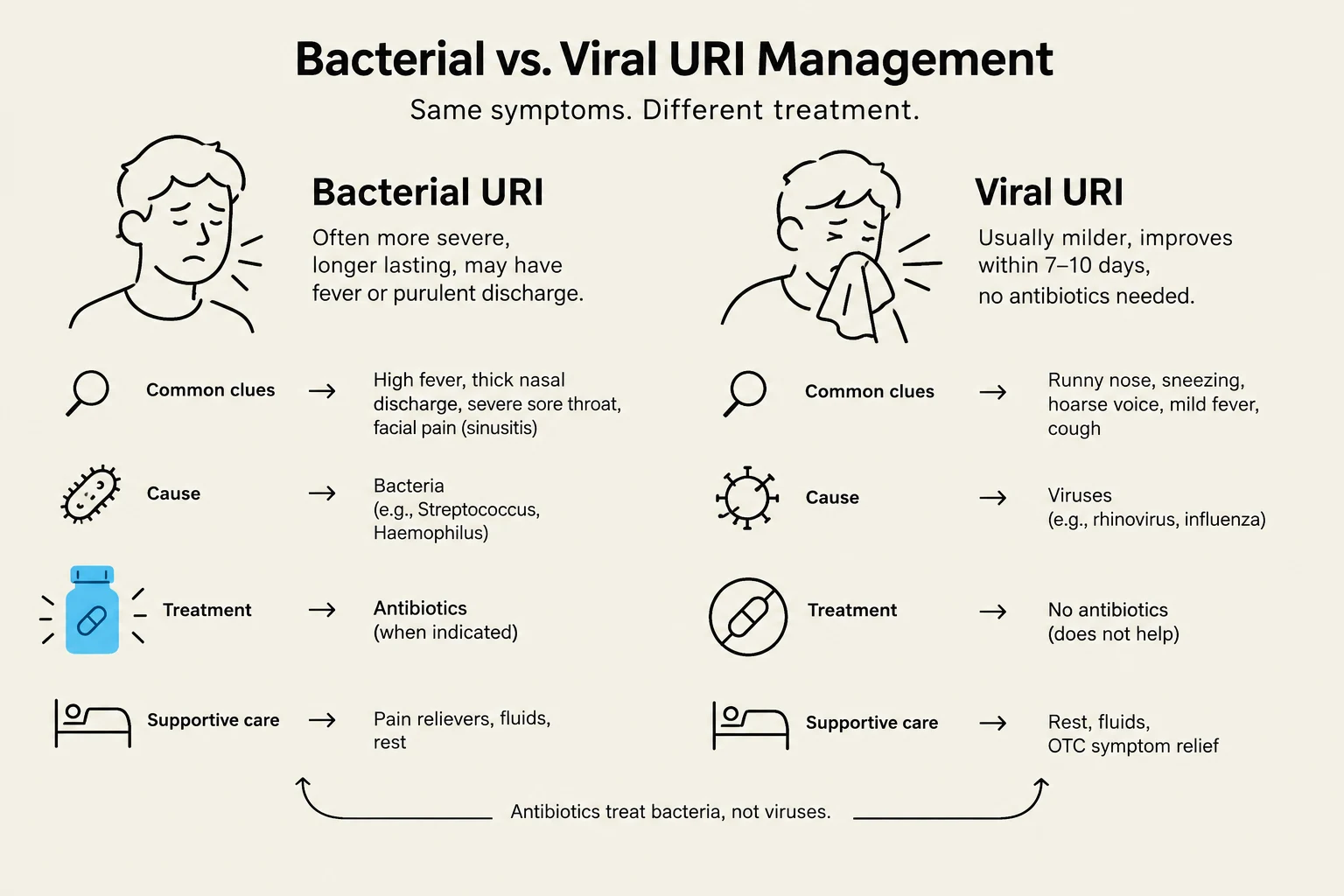
The primary goal of nursing management for URIs is to remove the causative agent and alleviate symptoms. The approach differs based on the etiology:
Bacterial Infections: These require pharmacological intervention with antibiotics.
Viral Infections: Antibiotics are ineffective against viruses. Management is strictly supportive, focusing on symptom relief.
Supportive Care Measures include:
Rest and Fluids: To support the immune system and prevent dehydration.
Medications:
Antihistamines for allergic rhinitis.
Analgesics for pain and fever.
Decongestants specifically for sinusitis.
Antivirals (e.g., Tamiflu) for specific viral infections like influenza.
This diagram illustrates the differences in management between bacterial and viral Upper Respiratory Infections (URIs), highlighting their respective causes, symptoms, and treatments.
Keep reading for free.
Create an account to finish this reading and make it part of your study routine.