


In the field of kinesiology, research is essential for advancing our understanding of human movement, health, and performance. However, the pursuit of scientific knowledge must never come at the expense of human dignity, safety, or honesty. Ethical standards are not merely bureaucratic hurdles; they are the fundamental framework that ensures research is conducted with respect, integrity, and accountability.
Research and Scientific Integrity
Research integrity refers to the ethical responsibility of researchers to uphold high standards of honesty and transparency throughout the entire scientific process. In Canada, this is guided by the Tri-Agency Research Integrity Policy, which mandates that all research processes must be open, honest, fair, and accountable.
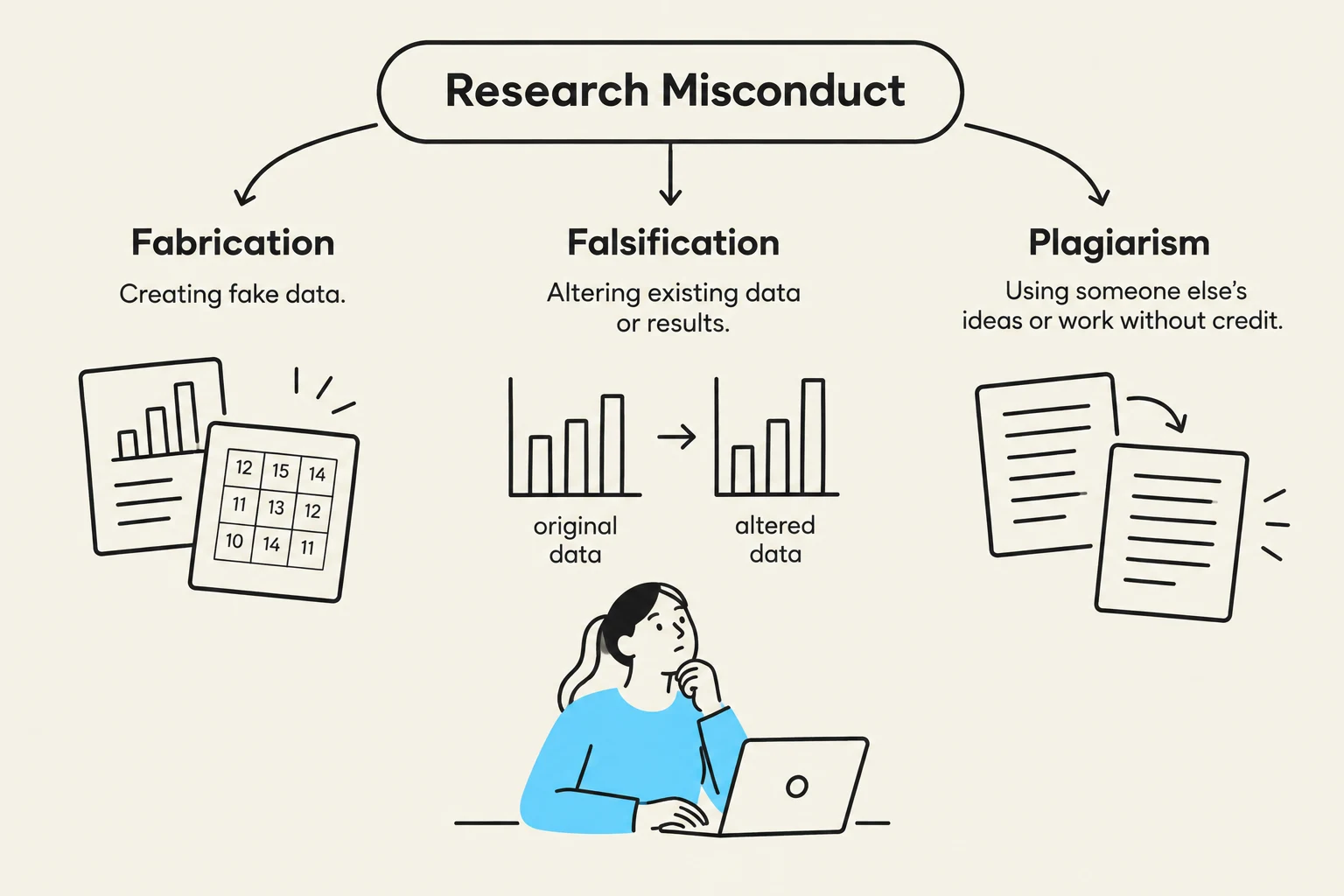
When these standards are violated, it is classified as research misconduct. Misconduct can occur at any stage of a study—from the initial design to the final publication—and typically falls into three categories:
- Fabrication: Making up data or results and recording or reporting them.
- Falsification: Manipulating research materials, equipment, or processes, or changing/omitting data such that the research is not accurately represented in the record.
- Plagiarism: The appropriation of another person's ideas, processes, results, or words without giving appropriate credit.
Exam Tip: Distinguish between fabrication and falsification. Fabrication is "making it up from scratch," while falsification is "changing what is already there" to fit a desired outcome.
Ethical Decision-Making and Dilemmas
Kinesiology professionals often encounter complex situations where the "right" path is not immediately clear. This is known as an ethical dilemma: a situation that requires ethical action, but where the professional is faced with two or more mutually exclusive actions.

Keep reading for free.
Create an account to finish this reading and make it part of your study routine.
Continue reading freeAlready have an account? Log in
Updated